


Enrique Peña Nieto's Bold Reforms: Striving to Rebuild the Mexican Government
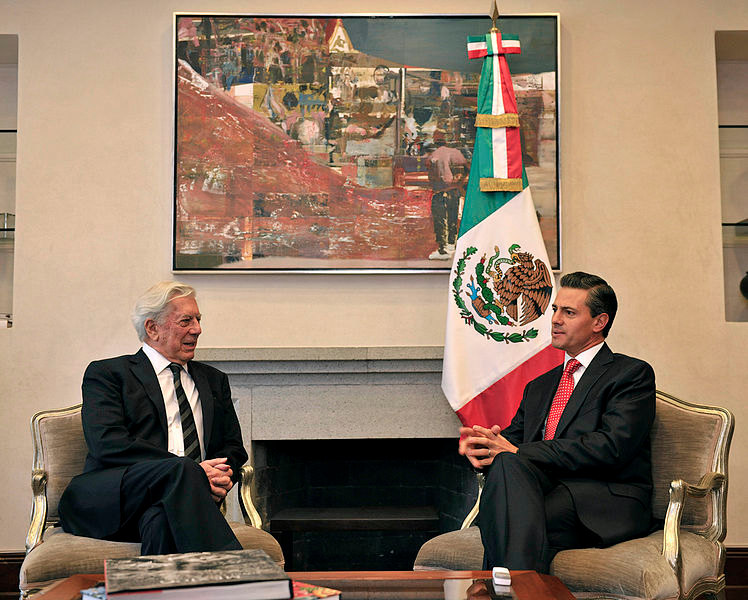
Enrique Peña Nieto. Photo Courtesy of Wikimedia Commons
March 31, 2026
Enrique Peña Nieto was elected president of Mexico for a six year term in the 2012 election. He represents the Institutional Revolutionary Party (PRI), which ruled the country for most of the 20th century with a soft authoritarian model. After the year 2000, the PRI lost the presidency for two consecutive six year terms. This end to its dominance led many to herald new maturity in Mexican democracy; the PRI’s subsequent return to the presidency with Peña Nieto’s 2012 election dismayed some who thought it could abort the country’s newfound political competition. There were some allegations of fraud in the election, but the results were upheld by the Federal Electoral Tribunal. Street protests after the election focused on this alleged fraud and perceived media bias. Peña Nieto was known as the Televisa Candidate for the media’s warm depiction of him during the campaign. Peña Nieto campaigned on raising annual GDP growth to 4% and reducing violence from the drug war. Although he hasn’t accomplished either goal so far, the scale of what he has done has astounded both domestic and international observers.
The year 2013 was a period of momentous reform for Mexico. Thanks to the Pact for Mexico, an explicit agreement between parties, Peña Nieto passed numerous reforms that noone would have thought possible a year earlier. If the reforms bear fruit, Mexican telecoms, energy, education, political, education, and other sectors would be radically changed. The passage of 2013’s reforms does not, however, mean that these reforms will be successful. Each reform rests on the passage of secondary laws and regulations to enforce or ensure the implementation of the reforms. The Pact for Mexico broke up at the end of 2013 during the passage of energy reform, one of the most contentious of the debated reforms. Peña Nieto, whose domestic popularity has fallen significantly, now faces an uphill battle to make good on his reforms and kickstart Mexico’s economy, which grew at just above 1% last year, far below Peña Nieto’s promised 4%. Skeptics abound. Meanwhile, Peña Nieto is popular abroad and praised for his level headed reforms. The confidence spurred by his agenda has led to dramatic increases in foreign investment in the country.
When Peña Nieto ran for office he also promised a drastic change to Mexico’s drug policy. His predecessor, Felipe Calderon, modeled his approach after anti-insurgency tactics used by Americans in Iraq and focused on a list of the 37 most-wanted cartel operatives. Although this strategy was popular at first, it quickly became unfavorable due to an escalation in violence. Further, it did not target the social conditions that allowed the cartels to flourish in the first place.
Peña Nieto promised to create peace agreements with the cartels that would allow them to operate without fear of persecution in exchange for an end to the violence. But, two years into his presidency drug lord Joaquin "Shorty" Guzman and Miguel Angel Treviño Morales, the leader of the Zetas have been apprehended and there is little change to the rates of murder, extortion and kidnapping. Some critics blame the federal government for lacking a unified strategy against organized crime, while others believe pressure from the United States to capture high profile criminals may have influenced strategy.
Though Peña Nieto has so far failed to make good on his promises to improve the economy and end the drug war, he has been successful in other areas. In December 2013, Mexico’s Congress approved a piece of legislation that ended Pemex’s seventy-five year monopoly on crude oil production. Although the legal fine print will not be finalized until mid-March, the reforms are a radical step towards liberalizing hydrocarbons in Mexico. Under the new regulations, foreign firms will be free to invest in and exploit Mexico’s oil resources. As legal stipulations released to the public in mid-February reveal, Pemex will not even be required to hold a minority share in any future oil exploitation or production contracts. Further details, due in mid-March, will spell out national content requirements, or how many Mexican energy or service firms must be engaged in the project, for oil exploitation and production contracts. In the case of deepwater offshore fields, national content requirements may be zero. To hardline supporters of the status quo ante, a zero national content requirement smacks of foreign “theft” of Mexico’s natural resources. To President Peña Nieto’s supporters, these reforms open Mexico’s deepwater oil resources to firms armed with the technology, capital, and expertise that Pemex lacks.
Dismantling Pemex’s monopoly required a constitutional amendment and damaged the President’s cross-party alliance, the Pact for Mexico; the left-leaning Party of the Democratic Revolution emerged from the wreckage of Peña Nieto’s pact as a committed opponent of energy reform. Nonetheless, the energy reforms passed the Senate, House of Representatives, and cleared the State Assemblies. Peña Nieto waged a successful fight for energy reform, but it cost him politically.
On the telecommunications front, President Peña Nieto faces much more powerful, well-connected, and organized opposition. His telecommunications reform bill required a constitutional amendment just like the energy reform bill, but passed the Senate, House of Representatives, and State Assemblies in 2013. The bill created the Federal Telecommunications Institute (ITF), a regulatory body meant to break down Mexico’s powerful telecommunications giants and level the playing fields. Mexican broadband service is both scarce and expensive, resulting in a lucrative, highly profitable industry (Carlos Slim, of América Móvil, is one of the wealthiest men in the world).The ITF recently announced that it had determined which telecommunications firms are “dominant.” Although the agency did not name the firms, it is understood that one of them must be Slim’s América Móvil, which controls roughly eighty percent of Mexico’s fixed line telephone service and seventy percent of its mobile service. Televisa, which controls more than sixty percent of the television market, is also a likely ITF target.
The problem, however, is that the ITF has no clear direction from here. Although the agency has identified the “dominant” players in the market, it must wait until the secondary laws of the telecommunications reform bill are worked out. The secondary laws are, however, already two months overdue. Political and corporate pressure makes telecommunications reform less likely to proceed over the next few months. The ITF may be left with little more than a “dominant” ruling.
President Peña Nieto’s next steps are anything but certain. Fights for energy and telecommunications reforms have cost him dearly, and his transparency and electoral reforms, which also require constitutional amendments, have yet to pass the State Assemblies. President Peña Nieto must strike a careful balance between expediency and caution, lest he waste or destroy the political goodwill he still has.
Further Reading:
Peña Nieto in 2014
Overview of Reforms
The Drug Trade
Oil Reform
Contributions by Sam Houskeeper, Valerie Zuckerman, and Alexi Stocker