


Fracking: Economic Boom or Environmental Danger?
Politics & Policy takes a look at the practice of "fracking," what it is and what its implications are.
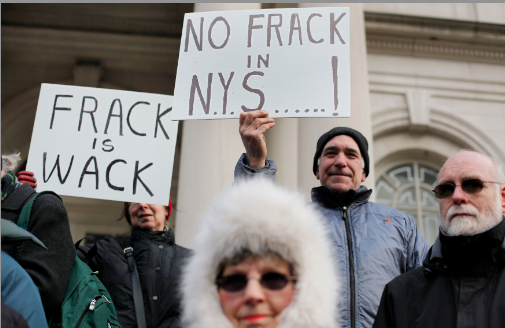
Earthquakes are a rarity in Youngstown, Ohio but the holidays saw just such excitement as residents experienced two earthquakes, which registered 2.7 and 4.0 on the Richter scale. The earthquakes resulted in no casualties and relatively minor damage, but the historical paucity of earthquakes in the region has led officials to question nearby fracking operations. Hydraulic fracturing, fracking, is a process of drilling for natural gas which has stirred up controversy between environmental and scientific groups—which question its safety—and pro-business groups—which support the economic benefits of recovering potentially massive quantities of natural gas. This week, Politics & Policy will attempt to sort through the controversy, explain exactly what fracking is and whether it is truly as dangerous as some critics have suggested.
The process of fracking involves drilling into the ground and detonating small explosives in order to open shale rocks with natural gas and oil packed near the bottom of the well. Water, sand, and chemicals are then injected at high pressures to allow gas and oil to flow more easily to the surface. When the final stage is complete, fracturing plugs are removed and the well is tested for results. Thereafter the liquid pressure is reduced, and the waste water and fluids are removed for disposal or re-use. The drilling can occur vertically, but more often paths are carved horizontally to the rock layer. The process is useful not only for creating new paths to release gas, but also for extending existing ones.
Today, fracking operations are ongoing across the world, in countries like Canada, New Zealand, and the United Kingdom to name a few. In the US, fracking has its roots in the 1860s, when nitroglycerin was used to open up shallow, hard rock wells in Pennsylvania, Kentucky, New York, and West Virginia. In the 20th century, nonexplosive fluids like acid were proposed to stimulate oil wells, and by 1949 Stanolind Oil had not only perfected the process of hydraulic fracturing, but had also created a formula for the fluids necessary for the practice. The rising cost of oil—as well as the increasing scarcity of natural gas—have improved the value of shale gas in recent years, leading to large increase in fracking operations in the United States.
As the use of fracking has increased, so have environmentalist concerns over dangers of pollution and groundwater contamination. Since 2005, the EPA has had no authority to prosecute the possible pollution of hydraulic fracturing operations under the Safe Drinking Water Act; these companies currently enjoy the Haiburton Loophole—named after the first company licensed to practice fracking—which frees the practice from regulation. Hydraulic fracturing received an all-clear from the EPA in a 2004 study which denied any connection between drinking water contamination and fracking. Yet other, non-EPA funded studies, have found that fracking increases levels of methane, radioactivity and toxic fracturing fluids in the groundwater near well sites which can lead to, among other things, flammable tap water. It was not until 2010 that the EPA reopened an investigation into cases of contaminated groundwater and wells around areas where hydraulic fracturing occurs. Fracking is known to release a group of chemicals called BTEX, which have harmful effects on the nervous system and have been shown to cause birth defects and cancer.
There has been a slow push by the federal government to enact some environmental regulation in order to keep up with the eagerness of the industry to expand the practice. As natural gas prices have risen and its use as an alternative to oil has spread, natural gas has become a large export of the United States. North Dakota and other western states are experiencing huge economic booms from usage of hydraulic fracturing. Consequently, energy companies have gone on the offensive to shore up the public image of fracking. In November of last year CNBC quoted an unnamed CEO’s whose company maintains fracking operations in Pennsylvania as saying that his company must use “psychological warfare” to battle the angry attacks faced in packed town hall meetings near well sites.
Separate from concerns over contaminated groundwater are the geologic effects of fracking. The British government recently shut down a fracturing operation in the north of England after company officials admitted the practice had caused, “a number of minor seismic events,” while the U.S. Geological Survey has pointed to additional occurrences in the U.S, Canada and Japan as evidence that there is a link between fracking and earthquakes.
The process of hydraulic fracturing engenders a cost-benefit analysis between the potentially massive economic benefit and the equally sizable environmental and health problems. The practice has increased rapidly, and it seems that serious research into its side effects are only now beginning to catch up. It is important that the process be carefully examined by the U.S. government and others to determine its true cost and create a basis for regulation. Only then will the apprehensive residents of Youngstown, Ohio and other fracking hubs be able to sleep peacefully.
Further Reading
Health Concerns
Science of Fracking
Sierra Club Stance
Senate Hearings on fracking