


Hong Kong Moves to Remove Symbols of British Colonialism
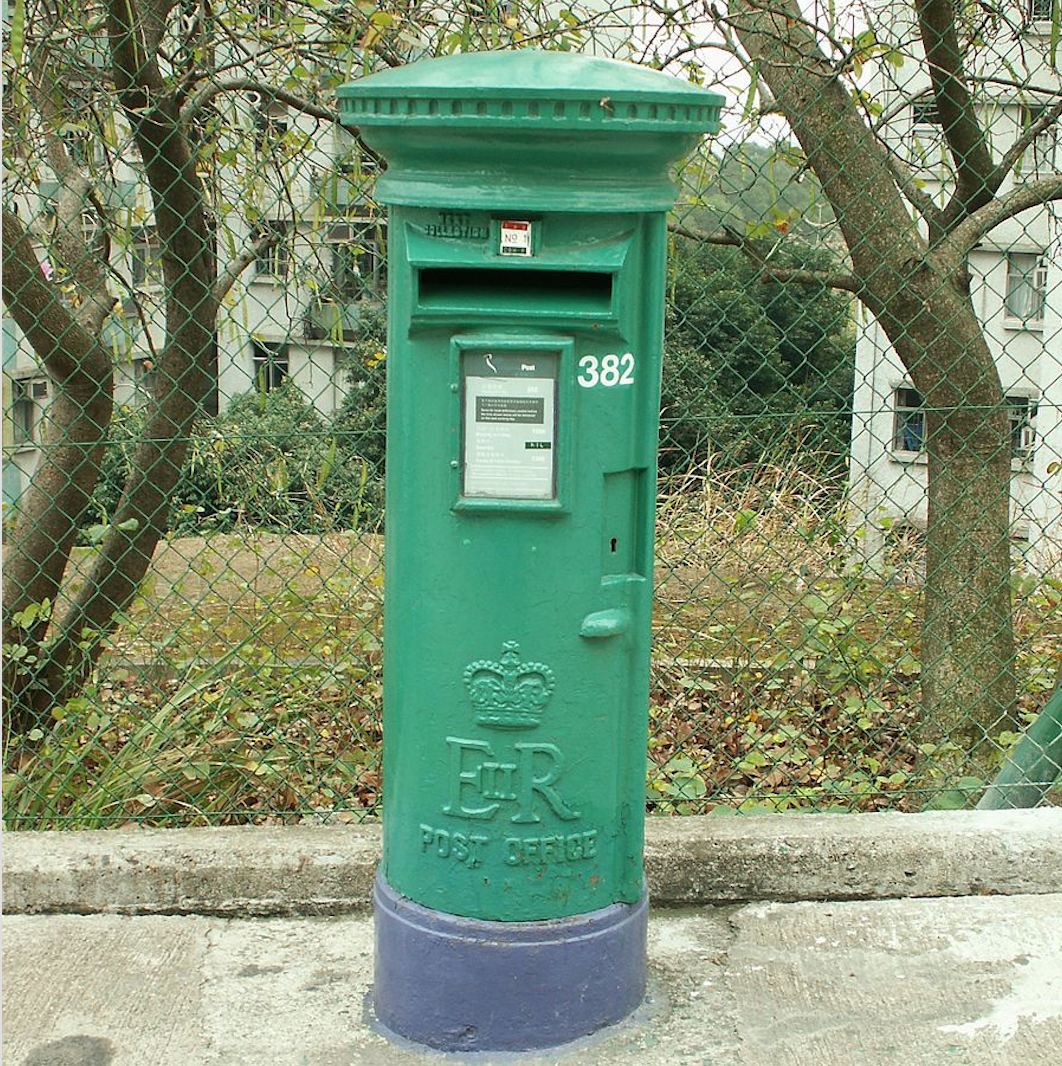
From Wikimedia Commons, accessed November 4, 2015.
By Maxime Usdin
November 4, 2026
HONG KONG -- The granting of independence to Hong Kong after more than 150 years of British rule is one of the most peaceful and significant territorial handovers of modern history. The October 9 decision by the Hong Kong government to remove the British royal cypher from its post boxes signifies a desire to leave its colonial past behind.
The treaty of Nanking set the terms for the 1997 handover, however at many times during the 20th century its completion was uncertain. Suspicions that China would reclaim Hong Kong prior to the agreed-upon date and Britain's attempted negotiations to hold onto the Colony are examples of the tumultuous recent history of Hong Kong. During its colonial era, Hong Kong underwent rapid expansion, modernization, and rapprochement to the Western world. Now, almost 20 years after the return of Hong Kong to China under the “one country, two systems” policy, Hong Kong has an identity of its own. Sometimes described as a hybrid culture, the Hong Kong identity is unique and one that would not exist without its historical roots. It is also ever-changing; after nearly a generation since 1997, for many the colonial past is distant and its relics are a painful reminder of a previous system. This month's decision by the Hong Kong postal service to mask or remove the cypher is a reflection of a progressive attitude- a desire to shed ties to the past and an overall gauge of the current social and political atmosphere.
In addition to the removal of the British insignia on post boxes, the Hong Kong government is considering removing the tram from its streets. The push to a modernized and efficient future has been present in Hong Kong's development and could not be better exemplified than through these decisions. While the postal service no longer shares authority with the Crown, the removal of the royal cypher can be seen as a stamping out of history. The decision factors well into Hong Kong's trajectory into post-colonialism. The use of the words “update” and “conserve” in regard to the post boxes in the government's press release shows the struggle between moving forward and recalling the past. The government's labeling of the cypher as “inappropriate” shows how Hong Kong is trying to sever ties to its colonial past.
New constructions have replaced the obsolete in Hong Kong for many decades. A good example is the conversion of the Kowloon Walled City to a park in 1996; similar to the post boxes, the park is an example of replacing the past with a idealized relic, on display for tourists' pleasure. Hong Kong may also be trying to romanticize its colonial past by changing most of its imperial post boxes and leaving a few on display as historical artifacts. This act may be in response to protests by conservationists hoping to preserve the post boxes. As Hong Kong struggles for autonomy from China, the last thing it wants is a persistent reminder of colonial rule. Hong Kong experienced an executive transformation a generation ago and a major change is quite possible in another one. Treating the past as history is important to facilitate change and foster forward-looking growth, coming from and for the improvement of Hong Kong.