


Icelandic Geography: One of the Three Top Hazards Facing the UK
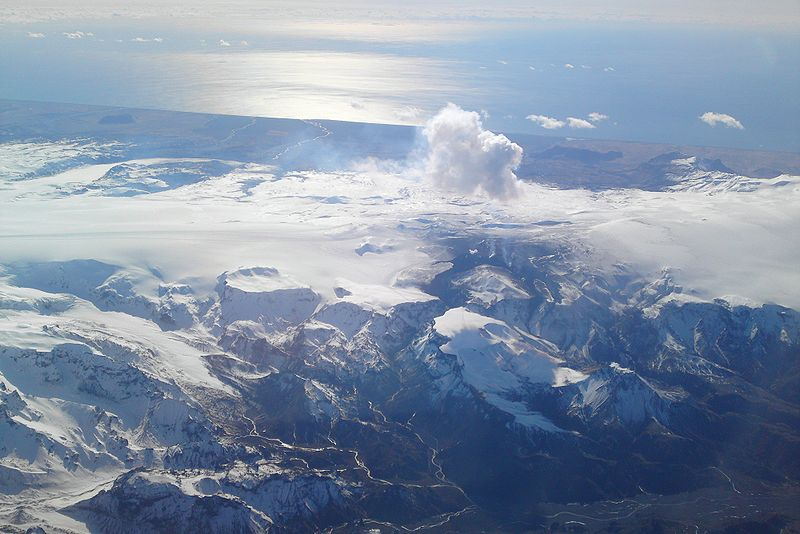
April 4, 2026 Max Haase, Eyjafjallajökull as seen from the north by plane.
By Karina Kedo
May 8, 2026
As a country that is home to only 320,000 people, Iceland has often been considered forgettable, irrelevant, and borderline inhabitable. Situated 846 miles from the United Kingdom, Europe’s northwestern-most country seems to be an island unto itself. But the April 2010 eruption of Eyjafjallajökull (Icelandic for “island mountain glacier”), an active volcano situated along the southern edge of the country suggests otherwise. The eruption of the ice capped volcano led to a smattering of volcanic ash being tossed into the air, and as a result air traffic across much of Northern and Western Europe was severely interrupted. Smoke and ash from volcanic eruptions such as this pose many serious dangers to air traffic, including reduced visibility and melting ash in turbine engines, which can damage enough to shut down midair. Approximately twenty European countries sealed their airspace, leaving more than 100,000 commercial jet travelers stranded for six days.
Although cautionary practices prevented significant injuries, the incident harmed the economic climate of parts of Europe and the release of sulfur dioxide into the air posed a health risk for some. A second eruption in 2011, this time from Grímsvötn, Iceland’s most active volcano continued the thread of complications in the United Kingdom resulting from the eruptions.
As a result of these concerns, it is hardly a surprise that the nearby United Kingdom fears the eruption of a so-called “supervolcano” in Iceland, considered to be “one of the three highest priority national hazards” facing the United Kingdom. The damage resulting from such an occurrence could include extreme temperatures, crop failure, and large amounts of sulfur dioxide entering the airspace.
A report from the United Kingdom’s Cabinet Office cited “visible pollution across the United Kingdom and northern Europe, which is thought to have resulted in mass crop failure and thousands of excess deaths” as a result of previous volcanic eruptions from Iceland. The report, published in the 2013 edition of the Cabinet Office’s National Risk Register of Civil Emergencies, also discussed the correlation between volcanic eruptions in Iceland and rates of famine, disease, and death.
Sue Loughlin, the volcanology head at the British Geological Survey and a member of the United Kingdom’s Scientific Advisory Group in Emergencies, has stated, “there are a range of volcanoes across Europe…whose eruption could have significant consequences in the United Kingdom. But volcanoes in Iceland are of most concern because of the active volcanic nature of this and the…meteorology.” Clearly, Iceland stands to hold a much more significant role in the overall economic health of the United Kingdom than might be assumed.