


Of Propaganda and Masquerades: Elections in the World’s Largest Democracy
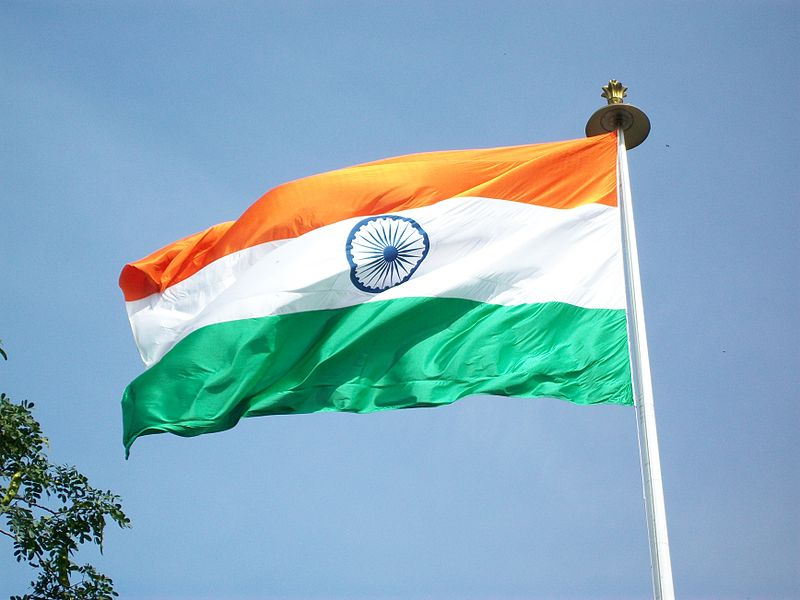
January 1 2008, Pogaface, an Indian flag.
By Caron Tauro
May 1, 2026
A political tide is sweeping across India, a nation of 1.2 billion individuals. A wave of political consciousness and the need for change has begun to ride upon the sentiments of disgruntled youth in India. Never before has any general election incited such fervour and division in the country. In a country that is already split by a pronounced socio-economic divide, the use of propaganda machinery has brought new challenges to the institution of democracy.
India is a parliamentary democracy with a multi-party system. The founding fathers of Indian democracy foresaw that the heterogeneous nature of Indian society may become a hindrance to the unity of the country. However, a unique amalgamation of policies that catered to the needs of all sections of the population was envisaged to maintain the delicate balance of unity in diversity. Over the years, the Indian political system has witnessed intense polarisation in the name of caste, religion, and other socio-economic factors. This general election brings such polarisation to the fore.
The media is sometimes considered the Fourth Estate, and has been touted by eminent scholars as the primary agent for ‘manufacturing consent’. India’s two major national political parties have risen to the top with their media and PR strategies. Openly available estimates suggest that the amount spent for media strategy and publicity of the Bharatiya Janata Party (BJP) is roughly around 50 billion Indian rupees ($827 million). The use of social media, public debates, and other media forums in this general election is reminiscent of the kinds of election campaigns conducted in the U.S.
The popularity of the ‘Gujarat Model’ is the basis of the election campaign of the BJP’s Prime Ministerial candidate, Narendra Modi. Publicists have left no stone unturned in making the Gujarat model of development seem like the miracle of the twenty first century India, often equating it with the Green city projects of China and Europe. The personality of Narendra Modi has become a cult among youth enraged by the current state of affairs. To many political analysts, this wave of personality cult and the slogans, “Ab Ki Baar Modi Sarkar” (This time we will bring the Modi Government) and “Janata Maaf Nahi Karegi” (The People will not forgive – directed at the UPA), can be marginally compared to the personality cult of Mao Zedong in China during the 1970’s.
The BJP leaders in different parts of the country are riding on the popularity of Narendra Modi. More often than not, inappropriate and inciting statements are made by veteran politicians that raise several questions. For example, many leaders have incited public rage by stating that those who do not support Modi should go live in Pakistan. Although these are merely statements, such level of intolerance is a new phenomenon in the environment of Indian elections.
The rival political party, the Indian National Congress (INC) has been riding upon the popular sentiments against communalism and pro-secularism citing the 2002 Gujarat communal riots that took place when Modi was the Chief Minister of the State. Several debates on popular news networks have raised questions over the number of financial scams that were unearthed during the reign of the INC-led coalition government, the United Progressive Alliance. A letter circulated by the Principal of a popular college in Mumbai urging the students to vote wisely sparked a nationwide debate on the legitimacy of such an actions. The letter sought to break down the popular myths of the Gujarat model and provide a comprehensive analysis of the current state of affairs to encourage the students, many of whom are first time voters, to make an informed decision. This issue was raised by BJP workers who filed a complaint against the Principal to the Election commission, stating that this act was a violation of the code of conduct.
Does this election phase signal a change in the behavioural pattern of the largest democracy in the World? India has been touted as being a non-violent country that follows the principles of Gandhi. Intolerance of the other, personal attacks for political gains, polarising the society on the basis of religion and caste and political affiliation, do these always accompany the Freedom of Speech? Are these traits of a 67 years old democracy?