


Same-Sex Marriage Erupts on the Political Scene
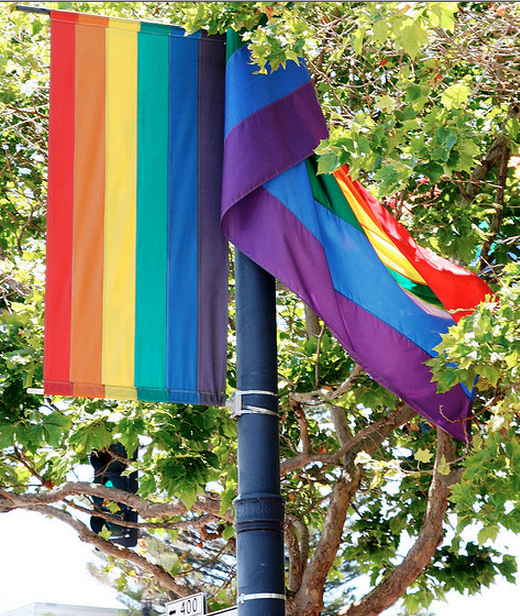
Rainbow flags flying in San Francisco in 2007. Courtesy of flickr.com/sarahinvegas.
The events of the past two weeks generated a lot of news regarding LGBT issues in the United States. Last Wednesday, President Obama announced that he supported same-sex marriage, while the day before, North Carolina voters accepted a constitutional amendment limiting the rights of gays and lesbians in the state. This Weekly Focus examines the different types of legal unions that exist in the United States, the status of same-sex unions in the states, and the impact this issue could have on the presidential election.
Because of the ongoing debate regarding the possible status of same-sex couples, three versions of an official same-sex relationship have been defined. Same-sex marriage itself is legal in six states and the District of Columbia; in these states married same-sex couples have the exact same rights as those in opposite-sex marriages. Another option for same-sex couples is a civil union. Five states offer civil unions to same-sex couples. These arrangements are legally almost identical to marriages but different in name, although many same-sex couples or advocates criticize this withholding of the title of marriage as a serious form of discrimination. The third option is a domestic partnership, which can be officially arranged and recognized at the state, county, or even employer level. These agreements vary widely in terms. Some are similar to a marriage or civil union while others offer much fewer legal benefits.
Each of these three options, however, is affected by the Defense of Marriage Act (DOMA), passed in 1996, which mandates that these marriages are not recognized federally and no state other than that in which the couple was married must recognize the union. Although many states do recognize some form of official same-sex partnership, no state except Iowa recognizes common-law same-sex marriages, putting even greater pressure on same-sex couples.
In overarching terms, America's position on same-sex marriage and civil unions has changed dramatically in the last fifteen years. At the time of the Defense of Marriage Act's inception in 1996, public support for same-sex marriages was less than 25%. Last year, a nationwide survey revealed that for the first time on record, support for gay marriage acquired a slight majority over those who opposed its legality.
Although spilt on the national level, views on gay marriage vary widely by state. While six states now issue marriages licenses to same-sex couples (most recently Washington and Maryland), other states only recognize civil unions. A majority of states have banned same-sex marriage in their constitution, and many have also banned civil unions as well. The recent amendment to North Carolina's constitution highlights the importance of the difference between the two: while same-sex marriage was already illegal under NC law, Amendment One effectively bars civil unions from receiving any kind of legal standing. North Carolina is the 30th state to adopt a ban on same-sex marriage, and one of 19 states, which rejects the legal validity of civil unions, even unions which were acquired out of state. The fact that the amendment was passed in North Carolina with such a strong majority clearly demonstrates that, while split fairly evenly at the national level, the debate on gay marriage's legality remain almost entirely regionalized .
The issue is made even more complicated in states where same-sex marriages or civil unions previously had some legal standing, but are no longer recognized. Such is the case in California, where marriage licenses were issued between June and November of 2008 before the ratification of Proposition 8. Following the passage of Prop 8, the state ceased to legally recognize same-sex marriages unless those marriages had happened during the six months of legality. The state continues to recognize civil unions and marriages sanctioned by other jurisdictions, and grants these union limited rights and legal standing.
Going forward, many believe that acceptance of same-sex marriage is inevitable. There tends to be a generational gap concerning support of these unions; the younger a person is, the more likely that person is to support same-sex marriage. Yet the country remains closely divided on this issue. Last week, President Obama announced his personal support for same-sex marriage, pulling yet another social issue to the forefront of the presidential campaign. His announcement prompted an outpouring of support from LGBT and liberal activists, but condemnation from a number of religious and social conservatives. In an election cycle all but guaranteed to be dominated by economic issues, same-sex marriage could make an impact at the margins, but not likely beyond that.
Further Reading:
Gallup Poll
North Carolina Amendment One