


The Week of November 3rd, 2014
Care
1. Tensions in Jerusalem
Tensions in Jerusalem continue to rise following two separate incidents of vehicle crashes on November 5. In one of the episodes, labeled by the Israeli police as a terrorist attack, a Palestinian man affiliated with Hamas crashed a van, killing one police officer and injuring at least a dozen other people. The other crash resulted in three injured soldiers. A similar crash occurred two weeks prior, where a young Palestinian man crashed a car, killing one infant and injuring eight people.
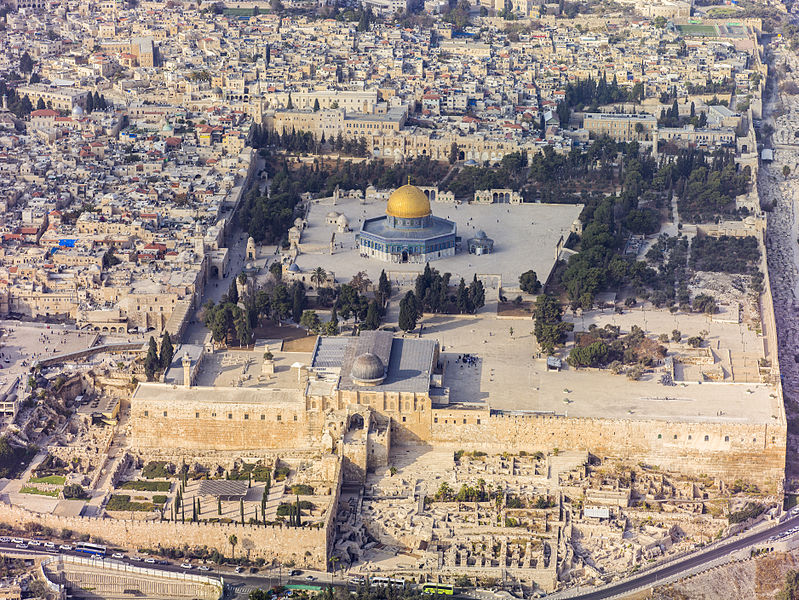
These crashes are part of rising tensions that center around a debate over access to the holy site known to Jews as the Temple Mount and to Muslims as the Noble Sanctuary. The precarious status quo allows Muslims to worship at the compound, and Jews to visit but not pray at the site. Recently, some nationalist Israelis have pushed for Jews to be allowed to pray there. A prominent campaigner for these rights, Rabbi Glick, was shot and seriously wounded on October 29 by a Palestinian suspect named Moataz Hejazi, who was subsequently killed by Israeli police.
Jordan has recalled its ambassador to Israel to protest "violations" of the holy site that have occurred amidst fears of clashes. Israeli security forces have been accused of damaging mosque doors and entering the site with their boots on. Despite Prime Minister Netanyahu's reassurance to the Jordanian King about efforts to "restore calm, quiet and security", some of these efforts, such as the temporary closing of the site and an age restriction banning Muslims over 50 from worshiping have been seen as infringements on religious practices. Adding to the concerns are lawmakers from Netanyahu's Likud Party pushing for a change in status quo, despite Netanyahu's statement that such views are personal and "not the policy of the government".
2. Assisted Suicide Grabs Headlines
On November 1st, 29 year-old Brittany Maynard ended her life through physician-assisted suicide. The legal definition of this term is when a patient with a terminal illness opts to end his or her life and self-administer a lethal drug provided by the doctor, thereby differentiating the practice from euthanasia, where the doctor administers the drug. In the United States, assisted suicide is only legal in Vermont, Montana, New Mexico, Washington, and Oregon, where Maynard took her life. Maynard was significantly younger than the average assisted suicide case and involved herself aggressively in a media campaign around her situation. The campaign, run by an organization called Compassion & Choices, pushes for the legalization of what they call “death with dignity.” These factors have brought the Maynard case to national headlines in what is seen by some as a game changing moment in their fight for legalization.
Gallup polls find Americans largely in favor of some sort of right to die, but support varies widely on the wording; respondents shy away from the word “suicide.” Unsurprisingly, the issue brings many passionate opponents, including religious groups and others concerned with the ethics of the issue. Some believe legalization could lead to a slippery slope, bringing assisted suicide for psychological diseases, euthanasia, death panels, or a more flippant societal view of suicide and the value of life.
3. Crisis in Burkina Faso
Burkina Faso was thrown into turmoil last Friday, Oct. 31st, with the ousting of President Blaise Compaore amid violent mass protests. This ends the 27-year rule of Mr Compaore, who seized power in a coup in 1987 and won four contested elections. Compaore fled to the neighboring Ivory Coast, where he is staying in the capital, Yamoussoukro. Burkina Faso's army took over control of the country after the resignation of Compaore.
African leaders and the African Union criticized the move as unconstitutional. The Union is pressuring the military for the reinstatement of civilian rule, and threatened to impose sanctions if the military did not comply, leading interim leader Lt. Col. Isaac Zida to promise compliance. If sanctions are imposed, they could include expulsion of African Union membership for Burkina Faso as well as a travel ban for its military officials. After a series of meetings, mediated by several African leaders (including President Goodluck Jonathan of Nigeria, Senegalese President Macky Sall, and Ghana's President John Mahama), Burkina Faso's army, politicians, and civil society leaders agreed to a one-year political transition culminating in November 2015 elections. The meeting was also attended by religious and tribal leaders, and all parties agreed that a "civilian personality" should be president. The country now has a year to determine who that person will be.
4. Boko Haram
Just weeks after the Nigerian government announced a ceasefire deal with Boko Haram, the terrorist group’s leader released a video denying any such agreement was released. Hassan Tukur, principal secretary to Nigerian president Goodluck Jonathan, announced mid-October that not only would there be continued peace talks with Boko Haram, but that the organization would begin to release the 200 plus schoolgirls kidnapped from their boarding school in Chibok. However, the leader of Boko Haram, Abubakar Shekau, released a video telling a different story. Shekau stated that all of the girls have been converted to Islam, married off, and are now residing in their marital homes. Not only did he deny the ceasefire and the return of the girls, but he also claimed that the man negotiating with the Nigerian government had no legitimate ties to Boko Haram and would be swiftly killed if found.
The original false announcement now seems somewhat disingenuous, especially considering its timing, coinciding with Nigerian presidential elections. After Tukur’s initial statement, there was little talk about the ceasefire, let alone if and when the girls were coming back. Meanwhile Boko Haram continued their attacks, solidifying their hold in the town of Mubi. It is becoming increasingly doubtful that these girls will be saved, even with a military intervention. And, as Boko Haram advances, the weakness of the Nigerian military continues to be exposed. Though it was nice to consider the possibility of a ceasefire, it is now clear that Boko Haram has no plans to end their attack, and that the Nigerian military is ill suited to defend against it.
5. Terrorism Trial in US Courts
This week marked the first time that a military detainee from Afghanistan appeared in court in the United States to stand trial. Irek Hamidullan, a former Russian soldier who joined the Mujahadeen during the Soviet invasion of Afghanistan in the 1980s, has been a US captive since 2009. Though he is not a high-profile target, deciding how to deal with him became a pressing issue as the war in Afghanistan began to draw down, seeing as the US military would not be able to leave him in an Afghani prison after the withdrawal.
Trying suspects of terrorism in US courts has long been debated. Proponents champion the right to due process and the transparency of US courts, while opponents fear the potential safety risk of bringing a terrorist to the US as well as the stricter protections granted to defendants by the US constitution. Mr. Hamidullan’s transfer to the US and his subsequent trial represents a shift in strategy by the Obama administration and the Justice Department. While they have been criticized in the past for seemingly extreme judicial overreach, the Obama administration now seems committed to proving that it can use the criminal court system to try terror suspects. As the war in Afghanistan ends, many want the more nebulous War on Terror to end as well. Trying terror suspects as criminals rather than enemy combatants is one way to begin this process.
Don’t Care
0. A New Report on Climate Change
The Intergovernmental Panel on Climate Change (IPCC), a United Nations body first established in 1988, has released yet another report on climate change. The IPCC doesn’t do original research, but compiles and analyzes the findings of the global scientific community. Its reports on climate change are always worrisome, and all sound remarkably similar. They sound so similar, in fact, that it is sometimes hard to tell apart conclusions from their reports in the 90s and those in the current day. The scientific community has known to a near certainty for many years that man-made climate change is a serious problem for the world and, hence, for humanity. Each new report has little to say.
It also seems that IPCC reports do not do anything to further convince the world of the serious nature of the problem. While liberal sources like the Huffington Post and Mother Jones deliver ominous headlines, their readers already buy the issue of environmental degradation. Conservative sources accessed by climate deniers rarely cover the IPCC’s frequent reports very seriously, or even honestly. Even on the left, it seems that these scientific reports do little to radically alter actual behavior, but result in a moment of guilt and outrage that quickly subside without any move for real action.
Young Sun Park, Julia Cohen, Wooyoung Lee, Monika Hur, Ben Mandel, and Sam Houskeeper contributed