


The Week of October 12th, 2015
Care
1. Kurdling the Turkey...
Attacks in Turkey
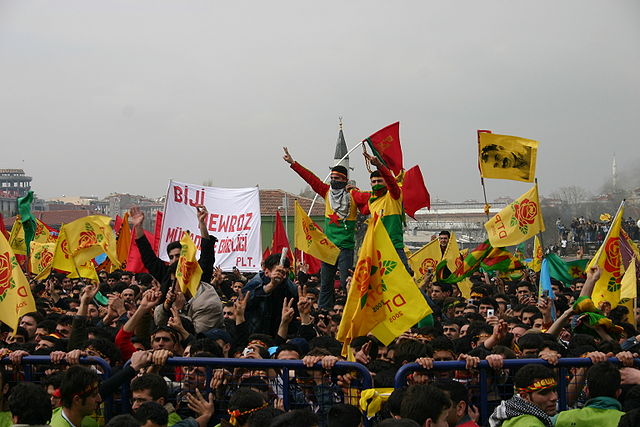
On October 10th, tragedy struck the Turkish capital Ankara. Two explosions rocked a peaceful pro-Kurdish protest, killing 95 civilians and injuring many hundreds more. The bombing was the worst terrorist attack in Turkey’s history, and Turkish Prime Minister Ahmet Davutoğlu declared three days of national mourning. Turkish police identified brothers Yunus Emre Alagoz and Omer Deniz Dundar as the culprits of the bombing as well as an earlier attack in July. The Turkish government took several steps immediately following the bombing, including firing security officials whom they accuse of failing to prevent the attack. The Turkish government believes that both ISIS and the Kurdistan Workers’ Party (PKK) were behind the attacks.
Many pro-PKK Turks believe the Turkish government itself was responsible, and there are fears of escalation in the conflict between the Turkish military and Kurdish separatists. Although the Turkish government aims to project an image of control, it is evident that there are many factions that are not satisfied with the status quo. For a while, it appeared that Turkey was allowing ISIS passage from Iraq to Syria, which would dramatically affect NATO’s relation with fellow member Turkey. Unrest in the region will lead to forced migration into Turkey, which could further destabilize the country and its relations with its allies.
2. ...and curdling the Land of Milk and Honey
Violence in Jerusalem
Amidst a recent wave of violence centered in Jerusalem, fears of a third Palestinian intifada have begun to fester. In mid-September during the Jewish high holidays, clashes broke out over Jerusalem’s most contentious religious site, the Temple Mount. The conflict began when a group of young Jewish radicals tried to alter the Status Quo, a centuries-old political agreement designed to keep the peace, that restricts prayer on the Mount itself to Muslims. Palestinians clashed with Israeli police who came up the hill, and tensions grew when the Israeli police stormed the al-Aqsa mosque, the center of Palestinian prayer on the Mount.
As part of the recent wave of violence, so far seven Israelis and thirty Palestinians have been killed, with more wounded, since mid-September, mostly in unrelated, uncoordinated incidents. This marks a significant difference between this wave of violence and the first two intifadas, which were coordinated by political factions. Israeli Prime Minister Benjamin Netanyahu has called them “lone wolf” attacks. The attacks, which mostly consist of Palestinians stabbing Israelis in Jerusalem and Israeli police firing on Palestinians during demonstrations and violent clashes, are dangerous because of their persistent nature. This is a low simmer in a very dangerous kettle pot of an area. No one can be sure if the next attack might incite something much worse. None of this bodes well for the peace process, an already tense situation which shows no signs of progress. Recent statements from Mahmoud Abbas, the head of the Palestinian Authority, and recent photos surfacing of Jerusalem’s mayor allegedly carrying an assault rifle on his person have contributed to tensions at the political level. Both sides will have to come together to skim some peace off of this land of milk and honey.
3. Hot potato
The next Speaker of the House
Speaker John Boehner’s upcoming departure leaves a void in the House of Representatives, one that would normally be filled quite quickly. Yet for the Republican majority in the House, this is a difficult and comically depressing task. The GOP has become even more divided and polarized in recent years. A large portion of the party dislikes establishment politics, preferring ideological grandstanding over compromise and efficient governance. As a result, Mr. Boehner’s tenure was one of the least productive in history, and included the lengthy 2013 government shutdown, the longest in nearly two decades.
The Speaker of the House is a powerful position, which makes it surprising that no one in the Republican Party seems to want the job. When asked if he was interested, Trey Gowdy, a prominent Republican congressman, reflexively said no. Paul Ryan, a former vice presidential candidate, and a budget-slashing conservative darling, has also been reported to not be interested (although he may be reconsidering). Mr. McCarthy, the current House Majority Leader, was the presumptive candidate, but has withdrawn for a number of personal and professional reasons.
The speakership is now viewed as a dead-end, no-win job, thanks to ideological polarization. Mr. Boehner, by most measures, was extremely conservative, yet his willingness to compromise as a means of keeping the government open alienated Tea Party members. When some Republicans heard of his resignation, they stood up and cheered. No rational politician would want to confront gridlock of this magnitude and risk his or her own career.
This is a tragicomedy: a dysfunctional Republican-controlled House without a leader who can unite them. Whoever ends up as the new speaker will have a near-impossible task: convincing ideologues that compromise is necessary.
4. The smoking gun
Lawsuit against gun store
Gun control has been a hotly debated topic in US politics for decades. As the pace of mass shootings seems to be increasing, gun control has become an ubiquitous part of political discourse, most recently finding its way onto the stage of the first Democratic debate this past Tuesday. That same day a Wisconsin jury found a gun store liable for an illegal sale of a handgun used in the shooting of two police officers in 2009 to the tune of nearly $6 million. The jurors landmark decision flies in the face of the 2005 Protection of Lawful Commerce in Arms Act, a law endorsed by the NRA and designed to protect firearm purveyors from lawsuits when a weapon they sold is used in a crime. However, the legal exception, and the crux of the case, is that this law does not extend to cases where the sale was illegal. Julius Burton, the gunman who received 80 years in prison for his actions, was seen on camera paying an older man $40 to buy the gun for him. His accomplice has also received a prison sentence.
While this case is not yet settled – the defense has announced plans to appeal – it represents a significant step towards a change in the way those who sell guns used to commit crimes are held accountable. Legal scholars believe that this decision may open up a deluge of similar cases as victims of gun violence believe that some measure of justice may be achieved. In a political climate where national gun control seems like a far-off goal, a civil recourse may represent a different way to hold gun store owners to some professional standards.
5. Port-o-lections
Portuguese elections
Away from the frenzy of Syrians and Syriza on Europe’s eastern side, one of Europe’s westernmost countries held an election that will spell confusion. Portugal’s ruling center-right Portugal Ahead (PàF) alliance, despite imposing unpopular austerity measures, won a plurality but saw a fall in their overall share of seats. Incumbent Prime Minister Pedro Passos Coelho will probably retain his office, although the PàF’s failure to retain its majority means they are likely to form a coalition with the second-place Socialist Party (PS). Further complicating matters is that the further-left Left Bloc (BE) achieved an historic best and more than doubled its share of seats to 19. The elections signal a leftward swing, which, might put pressure on the PS to make big demands of the PàF.
Unlike in Greece, where voters remain stridently anti-austerity, the Portuguese are cautiously accepting of austerity. Although the Portuguese electorate undoubtedly feels the pain of austerity, it appears to recognize signs of life in the country’s economy. The election results give mixed signals to the rest of Europe. Mr. Passos Coelho is the first eurozone leader to win reelection following a program of austerity-for-bailout, as the Republic of Ireland and Spain anxiously await their turns. Spanish Prime Minister Mariano Rajoy will likely notice the strong performance of the antiestablishment BE, which probably played a major part in preventing PS from gaining a plurality. Mr. Rajoy faces similar challenges from populist parties. As for Portugal itself, the leftist sentiments of this election and the PS’s gain in bargaining power suggest that austerity measures are likely to be eased. But the poor track record of Portuguese coalition governments suggests that the Portuguese may be back at the polls sooner rather than later.
Don’t Care
0. Biden his time for nothing
Media speculation over Joe Biden
As former Secretary of State Hillary Clinton and Senator Bernie Sanders geared up for the first Democratic presidential primary debate this past Wednesday, news channels and political websites went wild with speculation as to whether or not Vice President Joe Biden would enter the race. CNN even left Wednesday’s debate open to Mr. Biden until the day of; he needed only to file paperwork with the Federal Election Commission to appear on stage with Ms. Clinton, Mr. Sanders, and their three lower-polling opponents. A super PAC called “Draft Biden” has put out a 90-second ad calling on Mr. Biden to run for President. The ad concludes with a black screen, the words “Run, Joe,” in white. According to a recent Reuters/Ipsos poll, roughly half of Democrats want Mr. Biden to run for president. As the early primaries approach, Mr. Biden’s window for entry is narrowing.
Ultimately, Mr. Biden’s decision to enter the Democratic primary will matter little. The vice president’s two past failed presidential bids, in 1988 and 2008, were a mess of gaffes and embarrassing scandals. In the 1988 Democratic primary, Mr. Biden dropped out after allegations of plagiarism, both on the campaign trail and during his time in law school, surfaced. In 2008, he left the race after finishing fifth in the Iowa caucuses, capturing less than 1% of the vote.
Focusing on Mr. Biden’s recent popularity ignores the harsh reality of his political shortcomings. As a potential candidate, Mr. Biden is a beloved Vice President, a goofy uncle figure who forced President Obama’s hand on marriage equality. Should he announce his candidacy, memories will inevitably resurface regarding plagiarism allegations, his failure in 2008, and how he rubbed Secretary of Defense Ashton Carter’s wife’s shoulders during the secretary’s swearing-in ceremony, among other embarrassing slip-ups.
Kevin Corkran, David Gernon, Ryan McGinnis, Liam Conway-Pearson, Wooyoung Lee, and Alexi Stocker contributed