


The Week of October 14th, 2013
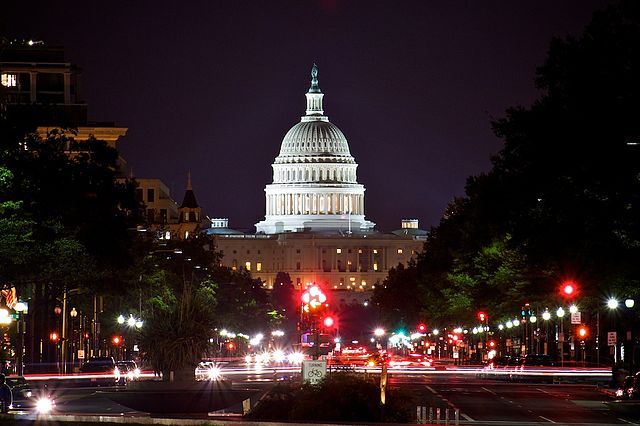
Washington, DC on August 17, 2011. Creative Commons photo by Zach Rudisin.
Care
5. Krokodil Discovered in Chicago Suburbs
This past week multiple cases of the drug krokodil were reported in the Chicagoland area. Five cases were reported in the Southwest suburb of Joliet, and another possible case occurred in the more distant McHenry county. Krokodil, a home-cooked form of the painkiller desomorphine, has similar effects to heroin and is somewhat cheaper to produce. The drug, originating in Russia and the Ukraine, derives its name from the green, scaly skin that commonly occurs in drug users around the area of injection. On occasion, though, it can infect larger areas of skin, slowly rotting it from the inside. While there has been some doubt over the veracity of these cases, they nonetheless have created strong concern among drug prevention centers and federal drug agencies in the Chicagoland area.
Beyond the shock factor associated with the effects of krokodil, these recent cases are indicative of the larger drug problem in the Chicagoland area. A 2010 Department of Justice National Drug Intelligence Center report noted Chicago as one of the top destination and origin points for illegal drugs in the U.S. and a center of drug culture. Therefore, it is important to note that it is not a coincidence that some of krokodil’s first cases would emerge in the suburbs of Chicago. In recent years, multinational gangs have slowly moved drug activity to suburbs that are ill equipped to deal with sophisticated drug distribution networks. Krokodil is homemade rather than imported, and it’s place in Chicago represents the city’s perennial drug problem. Thus, while the devastating physical effects of krokodil might be grabbing headlines, it is important to keep in mind the bigger drug problem in Chicagoland that krokodil has inserted itself into. In troubled parts of the city and suburbs, all too many heroin deaths go totally unnoticed by the public at large. The krokodil outbreak is shockingly gruesome, but also sadly typical.
4. Anonymous Intervenes in Rape Case
In many ways, the Maryville, MO rape case is similar to the January 2013 rape in Steubenville, OH. The similarities include perpetrators that are well respected high school football players, an intense victim shaming campaign in the small towns, and accusations of a cover-up. Their largest commonality may be that social media had a critical role in bringing both these controversies to national attention.
Fourteen-year-old Daisy Coleman of Maryville, MO was videotaped being raped multiple times by a local football player and was then left unconscious for three hours in below freezing temperature on her front lawn. The local police executed search warrants and interviews with surprising speed, seemingly collecting enough evidence for the case to be prosecuted quickly. Matthew Barnett, a high school football player, was charged with sexual assault and endangering the welfare of a child. However, because of his grandfather’s political career as a state representative, favors were called in and charges were soon dropped.
Anonymous, the anarchic hacker group, was informed of the cover-up through a tweet to their twitter account. In their response Anonymous refers to their intervention to the Steubenville case. The victim in the Steubenville rape was informed of her rape after videos and pictures circulated around her high school. Anonymous leaked documents suggesting a cover up by the local prosecutor. Eventually the case went to trial and guilty verdicts were issued for two of the charged. While the Maryville case is still playing out, it appears to be another example of the web allowing outside groups to put pressure on local institutions that may cover-up sexual violence. Anonymous may resemble a mob calling for justice, but in cases like Maryville and Steubenville it appears to provide a leveling effect in support of overwhelmed victims.
3. US-Iranian Talks See Progress
Talks between the US and Iran over the latter's nuclear program concluded their first round this week, and Obama administration officials have been proclaiming how “serious” and “productive” they have been. Since the 1979 Revolution, relations between the two countries have been tense and suspicious, often for good reason. Recently, however, in the midst of the current nuclear crisis the two countries have made small steps to reestablish bilateral relations, which seems to have paid off in the current talks. While nothing concrete has yet emerged, the parties involved seem hopeful that some sort of compromise may be reached.
Other countries involved in the region have been less optimistic. One of Russia's deputy foreign ministers criticized the talks over lack of cooperation. Prime Minister Benjamin Netanyahu of Israel meanwhile, has still been warning of the dangers of a nuclear Iran. Ironically, the recent government shutdown in the US may have helped create an atmosphere for productive talks. While most in Congress probably turn a blind eye to Russian criticism, Congress in general holds Israeli foreign policy in high-esteem. At the very least, disgruntled Republicans would use it as a way to attack Obama’s actions. However, the shutdown and debt ceiling debate monopolized media and Congressional attention in recent weeks, allowing these talks to occur mostly under the radar. Netanyahu even met with Obama in the beginning of October to warn him about Iran, which would have likely been larger news if the US government was functional. It seems like this misstep for the US may have yielded at least one foreign policy benefit.
2. Humanitarian Situation Worsens in Syria
The humanitarian crisis in Syria has been underscored by a recent fatwa, or Islamic clerical opinion, announced by a group of Damascene clerics to allow the citizens of besieged Damascus suburbs to eat the meat of cats, dogs, and donkeys to avoid hunger, all of which are animals that Islam traditionally views as unfit for consumption. The opinion was announced via video during the Islamic holiday Eid al-Adha after reports of starvation in the Damascus suburb of Muadhamiya. The clerics have described their opinion as “a cry for help to the whole world.” This isn’t the first time a fatwa was issued on food consumption, with precedents in Homs and Aleppo
The effects of the Syrian conflict have not been limited to the thousands who have died, but also include displacement and the absence of the rule of law. While attention has shifted to Bashar al-Assad’s chemical weapons and inspectors have been allowed in the country, humanitarian aid groups continue to struggle and aid shipments are being restricted. Residents and international relief forces alike are significantly more restricted than weapons inspectors by the danger of the war. Even in some of the suburbs of the capital food and medicine often can’t reach certain areas even when inspectors can. The only thing that could ease this humanitarian disaster seems to be an organized and sophisticated response that may never come.
1. US Government Shutdown Ends
After 16 days, the US government shutdown ended Wednesday night as the Senate and House came to a deal. The agreement extended government funding until January 15th (also the same day the second round of sequester cuts kick in) and delays the debt ceiling until February 7th. Meanwhile, another bipartisan budget commission has been drawn up to plan for future debt reduction, and it must report by December 13th. A few more minor measures were included, including a stiffer requirement of proof of need for Obamacare subsidies. All in all, most onlookers say neither party gained any major policy concessions, although the Democrats were rewarded in the public eye for holding firm.
Analysts argue that Democrats played perfectly according to basic game theory and that Republicans did the opposite. In fact, Republican support has plummeted compared to Democrats in the polls. This could yield a change of control in the House next fall, although it is too early to determine any concrete advantage. It does seem clear, however, that the American public has begun to associate the constant shutdown shenanigans with an intransigent Republican party. Perhaps this is fortunate if only for the sake of American democracy; a precedent of legislative success through extortion rather than standard democratic norms could be dangerous for the republic. However, with no rules changes in either chamber, no policy changes with regards to debt ceiling ceiling approval, and no change in membership, it is very possible that Congress will fall into this paralyzing debate again.
At a press conference after the resolution of the shutdown, Obama was leaving the podium as a reporter asked him if it would all happen again in a few months. The president turned and gave a curt, “No.” Despite his confidence, many don’t see any other prospect.
Don’t Care
0. Cory Booker Wins New Jersey Senate Race, to Nobody’s Surprise
Around 9:30 PM EST the Associated Press called the New Jersey special senate election for Cory Booker, the Democratic Mayor of Newark. Despite the media’s attempt to turn Booker’s contest against Steve Lonegan into a horse race, there was little chance that Booker could have lost to the small-town Tea Party Republican. New Jersey has not elected a Republican to the Senate in over forty years, and Lonegan’s admiration for far right Republicans like Texas Senator Ted Cruz and Kentucky Senator Rand Paul did little to win him votes from a general electorate that supports same-sex marriage, abortion rights, and the Affordable Care Act. Despite Lonegan’s efforts to brand Booker as a flashy media maven more concerned with Tweeting than governing, Booker’s national reputation and online platforms almost guaranteed him a victory based on name recognition alone.
Throughout his campaign, now Senator-elect Booker loudly criticized Congress for incompetence and lack of direction; when asked to give Congress a letter grade, Booker handed the 112th U.S. Congress an F. Despite the reprimands, Booker’s entrance into the Senate means almost nothing. Booker is replacing fellow Democrat Senator Frank Lautenberg, who died in June at the age of 89. The partisan balance is unaltered by Booker’s entrance, and his freshman status gives him close to no influence. Past Senate freshmen, like Barack Obama and Hillary Clinton, discovered early on that influence in the Senate takes years to accrue; although like President Obama, Senator Booker may not be content to build seniority and could try for higher office sooner rather than later.