


The Week of October 26th, 2015
Care
1. To rEVEL in or revile Englishness
UK passes EVEL
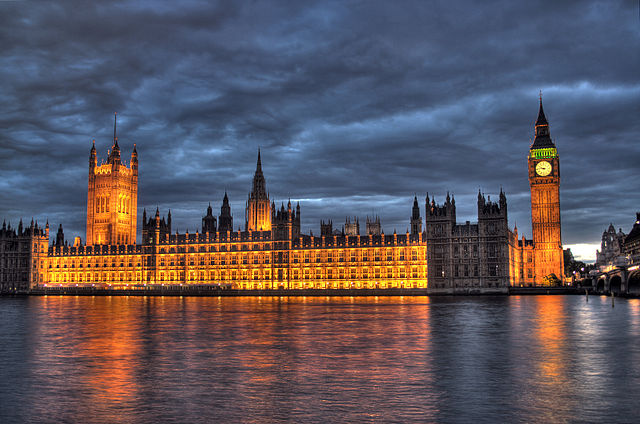
With the House of Commons’ passage of English votes for English laws (EVEL), the government of the United Kingdom hopes to settle one of many questions on English identity. At issue is the so-called West Lothian question: should non-English MPs be allowed to vote on policies only concerning England? The UK parliament cannot vote on certain matters of Scottish, Welsh, or Northern Irish policy. These constituent countries have had varying levels of power devolved to them, on which only the respective country’s regional assembly can vote. But because England does not have a regional legislature, English matters have been voted on in the House of Commons by MPs from Scotland, Wales, and Northern Ireland, in addition to England.
With EVEL, the Speaker of the House of Commons will decide which bills (or parts of bills) affect only England, and English MPs in the House of Commons will then get a veto on English-only bills. If it survives, the bill will go to the whole House of Commons for another vote. Supporters posit that it is unfair for MPs from the other three countries to vote on issues that do not affect them when the reverse is not true. Opponents retort that since England dominates the UK politically, economically, and demographically, the unequal distribution of powers was a fair tradeoff. Labour and Scottish National Party MPs argued that EVEL would elevate English MPs over others and create two tiers of MPs in a chamber where all are theoretically equal. Labour wanted to give English MPs the right to debate and revise English-only legislation but not a full veto.
In the short term, the measure will simply give English politicians a greater say on English matters, with the prospect of much feuding over which bills count as English-only. Further down the road, a devolved English parliament may be set up, turning the UK into a truly federal state. EVEL may also be part of a trend toward English nationalism: for centuries British and English identities have been seen as more or less the same thing. But with Englishness starting to distinguish itself from Britishness, EVEL may be another step on the road to the breakup of the UK.
2. Ivorians, Argentines, Poles, and Polls
International election roundup
This past Sunday marked a number of important elections around the world, both legislative and presidential. Argentines went to the polls to elect a new president after 12 years of rule by the Kirchners: first, the late Néstor, followed by his wife Cristina. The Kirchners governed on a return to Peronism – named after former President Juan Domingo Péron – which advocated three pillars of governance: social justice, economic independence, and political sovereignty. Ms. Kirchner’s hand-picked successor, Daniel Scioli, the governor of the Buenos Aires province, was well-assumed to be the frontrunner. The results were, as a result, shocking; less than 3% separated Mr. Scioli from the second-place finisher, the non-Peronist Mauricio Macri, mayor of Buenos Aires. A run-off is scheduled for late November.
Across the Atlantic, a much more decisive election took place in Côte d’Ivoire, where incumbent President Alassane Ouattara won a second term with nearly 84% of the vote. Ex-Prime Minister Pascal Affi N’Guessan came in second place with less than 10% of the vote. Several candidates withdrew from the election in the build-up, making allegations that the election was neither free nor fair, and urging voters to boycott the polls. Although the roughly 55% voter turnout was much less than the 80% of the country’s last election (in 2010), US election observers said the election was credible. This year’s election was also free of violence, as opposed to five years ago, when the defeated Laurent Gbagbo refused to step down and over 3,000 were killed in the ensuing civil war. Mr. Ouattara ran on his economic track record, taking credit for restoring the country’s status as a beacon of progress and prosperity in the region, and ensuring annual growth averaging around 9%. While opponents accuse him of “creeping authoritarianism,” his record of restoring the country’s economic growth and this violence-free election is hard to dispute.
In Europe, Poles took a hard step to the right by electing a majority conservative Law and Justice party (PiS) to parliament. It is the first time in post-Communist Poland a party will be able to govern without a coalition, allowing the right-wing party to reshape the nation according to its vision. This is an important election; with a GDP of $750 billion, Poland has the largest economy of the ex-communist countries in the European Union and is America’s most important NATO ally among Eastern European states. PiS will not have to make concessions to a coalition party, thus enabling it to stick to campaign commitments to Catholic conservative moral policies as well as increasing state intervention in the economy to help families and the poor. PiS is also anti-migrant, criticizing the outgoing ruling center-right party, Civic Platform, for accepting some 7,000 refugees as part of the European Union’s resettlement plan. Poland has benefitted greatly from joining the EU, but PiS is slightly eurosceptic; time will tell if they choose to bite the hand that feeds them.
US ship sails around Chinese islands
The United States recently sent the USS Lassen, a naval destroyer, close to China’s artificial islands in the South China Sea. While China considers the US warship’s passage a provocation and immediately summoned the US ambassador, the Chinese demonstrated no overt hostility. Maritime law allows international waters to be used by any nation. At the same time, countries can claim 12 miles nearest to their shores as sovereign waters, under the United Nations Convention on the Law of the Seas (which, ironically, the US still has not ratified). Most international legal analysts contend that China’s islands do not qualify because they are man-made, and the original land was of “low tide elevation” (and therefore are not considered territory with a shoreline). With the world’s largest navy, the US has considerable interest and ability to police the freedom of international waters. According to some experts, the Navy has been conducting “freedom of navigation operations” (FONOPs) for several decades. This is merely the most recent incident.
Importantly, China did not risk military confrontation over the islands, and neither did the US. The FONOP was planned several weeks in advance, and Secretary of State John Kerry wanted to postpone it until after the climate change talks ended in December. After meeting with Xi Jinping last month, President Barack Obama evidently believed that now is the best time to demonstrate the United States’ commitment to freedom of the seas. One of the problems with this display, some argue, is that one FONOP is simply not enough. Repeated demonstrations are riskier but would perhaps send a stronger message, rather than tepidly assert American convictions. American policymakers would like other countries in Southeast Asia to join the US in defying Chinese declarations, but that seems unlikely. If China is to be deterred, the US may have to take responsibility for doing so.
A half dozen nations or so claim islands in the area and the US has taken no formal stance on those disputes. What is so important about these artificial islands? A huge amount of global trade flows through the South China Sea, – about one-third of the total by some estimates. The waters also contain large quantities of natural gas and fish. Such resources and the strategic trade location are significant enough to warrant China’s economic interest. China is also motivated by the desire to impose military dominance in the region as a means of bolstering national pride and prestige. One observer has noted that the South China Sea was where most European imperialists arrived when they dominated China during its “century of humiliation.” China ultimately wants Chinese ships policing the South China Sea, and it is difficult to see how one US naval destroyer’s quiet and technically legal passage by the islands will be enough to change their minds.
4. Fed fetters finance
Fed keeps interest rates low
After the US Federal Reserve Board of Governors met earlier this week, it announced that interest rates would remain at previous lows. Since the Fed took moves to aid the economic recovery following the Great Recession of 2008, interest rates have hovered between 0% and 0.25%. For several months, the Fed has hinted at an impending interest rate hike but has held off due to economic conditions. While increased interest rates would lead to an increase in investment, regulators worry that higher interest rates would harm borrowers.
The state of the US and global economy in the coming months will dictate whether a December or January interest rate increase is on the cards. Despite overall growth in US GDP this past quarter, lulls in the labor market have raised serious concerns for the Board of Governors. The group voted nine (including Chairwoman Janet Yellen) to one for this measure – indicative of the strong agreement among regulators on this course of action. The only affirmative vote came from Richmond’s Federal Reserve Governor, Jeffrey Lacker. Effects of the 2008–2009 economic downturn, the largest since the Great Depression, have lingered for over seven years now. It remains to be seen if and when the Fed will be able to lay off their intervention in financial markets.
5. A new sheriff in town
Paul Ryan elected Speaker
Paul Ryan, a Republican congressman from Wisconsin, was elected Speaker of the House on Thursday. In his bid for the Speakership, he overcame initial obstruction from the Freedom Caucus, the bloc of Republican congressional representatives who pushed previous Speaker John Boehner to an early retirement and derailed Kevin McCarthy’s bid for the position. Mr. Ryan was elected Speaker with a strong majority of the Freedom Caucus in support.
After Mr. McCarthy announced he would no longer be seeking the Speakership, Mr. Ryan was the next logical candidate. However, the 2012 Republican vice presidential candidate was initially seen as reluctant to run. Mr. Ryan is a policy wonk who was thought to be more interested in smithing tax reform proposals than the schmoozing and maintaining of relationships that the Speakership requires. Moreover, he is a father with three young children at home, and was reluctant to take on the responsibility of constant fundraising that comes with the job of Speaker. In the end, Mr. Ryan was able to negotiate the terms of his role as Speaker, holding fast on his desire to spend weekends at home with his family and winning promises of assistance from other Republican leaders in fundraising.
Mr. Ryan sees his election as Speaker as the beginning of a new phase in the Republican-controlled House. “This begins a new day in the House of Representatives,” Mr. Ryan told reporters on Wednesday after the vote. “We are not going to have a House that looked like it did the last few years. We are going to unify.” With the current atmosphere of adoration of Mr. Ryan in Washington, he just may be able to pull it off.
Don’t Care
0. Et tu, Bacon? Concerns over carcinogens
Red meat and cancer
Scientists at the World Health Organization (WHO) recently completed a review of the evidence linking processed meats – such as bacon, sausage, and salami – to colorectal (colon) cancer. The WHO’s International Agency for Cancer Research (IACR) deemed the evidence sufficient to classify processed meats as group 1 carcinogens, the same cancer risk rating as asbestos and smoking tobacco products. The scientists’ conclusion linked each two-ounce serving of processed meat consumed per day to an 18% increased risk of developing colon cancer.
The announcement spurred a furious backlash, as meat producers around the world, from China to the European Union to the United States, slung accusations of “subjectivity” and dishonesty at the WHO. Although the WHO’s Monday announcement allegedly hurt processed meat sales around the world, bacon producers and bacon lovers alike have little reason to worry. First, processed meat’s group 1 carcinogen ranking does not make processed meats as dangerous to human health as smoking cigarettes or asbestos. Rather, the IACR’s conclusion signifies that the evidence supporting a causal link between processed meat consumption and cancer is as good as the evidence connecting smoking with lung cancer. Moreover, colon cancer is highly preventable with regular colonoscopies starting at age 50, and, if caught in early stages, has a survival rate of nearly 95%.
The processed meat industry, likewise, has little to fear from the WHO’s announcement. Numerous studies have connected sugar consumption and obesity, yet America and other nations’ intake of sugary food and drink continues to climb. It seems highly unlikely that a link between colon cancer and processed meats will discourage bacon lovers from chowing down, especially considering bacon’s diehard fan base despite a long-established litany of harmful health effects. Besides, just about everything causes cancer these days, from smoking, to bacon, to even aloe vera, along with over 100 more items on a conclusive list from The Guardian.
Wooyoung Lee, David Gernon, Ryan McGinnis, Liam Conway-Pearson, Max Rowe, and Alexi Stocker contributed