


The Week of October 7th, 2013
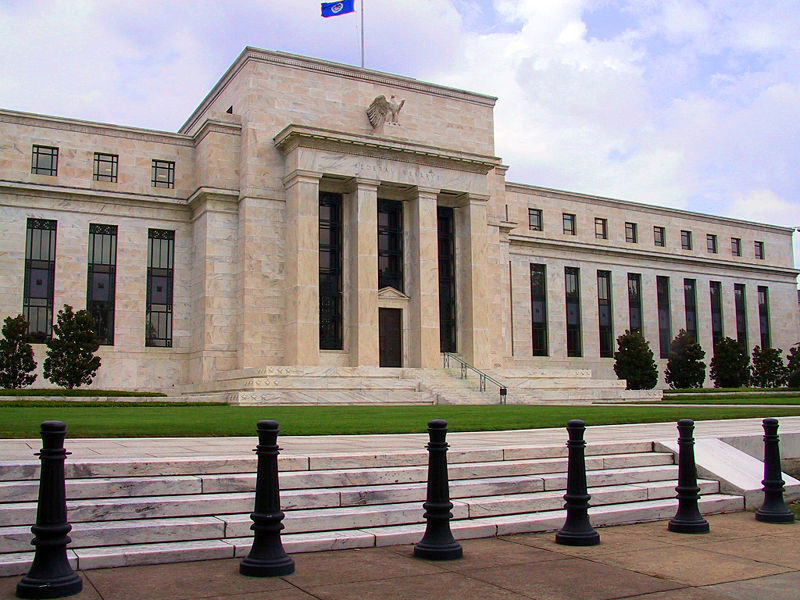
The US Federal Reserve, Feburary 15, 2005. Creative Commons photo by Dan Smith.
Care
5. Suits Against UN Over Cholera in Haiti
On Wednesday morning, human rights activists filed a lawsuit in New York against the United Nations, demanding compensation for the victims of the worst cholera outbreak in recent history. The epidemic, which began in Haiti in October 2010 and has resulted in over 8,300 deaths, was identified as originating from a UN peacekeepers’ encampment in the center of the country. According to the US Centers for Disease Control and Prevention, poor sanitation conditions at the camp and lax medical examinations of workers allowed fecal contamination carrying Asian type Vibrio cholerae bacteria to contaminate a nearby river and infect local villagers. The UN peacekeepers were in Haiti following the catastrophic 2008 earthquake. They came from Nepal, where cholera is endemic and a surge in infections had recently been reported. In 2011, a UN panel reported that they could not determine conclusively how the cholera outbreak started in Haiti, however in December 2012 UN Secretary General Ban Ki-moon launched a $2.2 billion campaign to eradicate cholera in Haiti.
The lawsuit is the strongest action that activists have taken to compel the UN to publically acknowledge its culpability in the outbreak of the epidemic. The lawyers representing the cholera victims are demanding $2.2 billion for the Haitian government, as well as unspecified compensation for over 679,000 victims, to be determined in court. Earlier this year, the spokesman for Ban Ki-moon told activists that the UN would not make any compensations, due to its diplomatic immunity under the 1946 Convention on the Privileges and Immunities of the United Nations. Despite calls from even UN human rights officials that the victims are entitled to some compensation, the majority view among international lawyers is that the UN is immune from domestic lawsuits. While the courts struggle over defining the limits of the UN diplomatic immunity and decide whether to take up the case, it is estimated that 1,000 Haitians continue to die each year from cholera.
4. US Cuts Aid to Rwanda over Child Soldiers
Last Thursday, the US government announced an end to both economic and military aid to Rwanda. This decision was made in light of the UN’s denunciation of alleged Rwandan assistance to M23, a rebel group in the Democratic Republic of the Congo that includes child soldiers. The US justified its sanction with the UN denunciation along with its own 2008 Child Soldiers Prevention Act. Rwanda’s president Paul Kagame responded angrily, denying that M23 was supplied by his government while also arguing that Rwanda’s interference in the destabilized Congo was critical to balancing dangerous forces. Furthermore, Rwandan leadership is likely put off that other US allies like South Sudan and Yemen reportedly received waivers from punishment under the act on national security grounds, despite employing child soldiers themselves.
Rwanda has been active in the DRC during the First and Second Congo Wars (1996-2003) and the ongoing violence in its Eastern regions. Rwanda has invaded the country twice during this time in order to stop Hutu rebel groups from using it as a springboard for an invasion of Rwanda. Of course, the Rwandan genocide of the early 1990s still casts a long shadow over the country’s security priorities. On the other hand, outsiders may worry that the Tutsis in power could go after Hutus out of revenge and continue the spiral of ethnic violence in the region.
3. Republicans Shift Focus from the Affordable Care Act
In a Wall Street Journal op-ed, Congressman and 2012 Vice-Presidential candidate Paul Ryan (R-Wisconsin) , laid out his plans for ending the federal government shutdown. To the surprise of many, Ryan did not once mention the Affordable Care Act (Obamacare), instead focusing on other possible negotiation points. Ryan argued that what the country needs right now are “reforms to entitlement programs and the tax code”, not “sudden, arbitrary cuts”; this is a far cry from Tea Party Republicans’ demands. The omission of the Affordable Care Act may signal a significant shift in the current political stalemate.
House Majority Leader Eric Cantor echoed Ryan’s sentiments in his own Washington Post op-ed. Cantor only once mentioned, in passing, the Affordable Care Act, citing President Obama’s delayed implementation of corporate health care mandates as exemplary bipartisan negotiation. Like Ryan, Cantor’s focus was on fiscal issues, namely deficit reduction.
Some members of the Republican Party remain focused on repealing the Affordable Care Act. Wednesday morning, shortly after Ryan and Cantor’s pieces were published, Speaker John Boehner made it clear that the Affordable Care Act was still the center of the government shutdown debate. Tea Party leaders, including Senator Ted Cruz and Jenny Beth Martin, National Coordinator for Tea Party Patriots, voiced their disapproval of Cantor and Ryan’s comments. However, even some Tea Party Republicans accept that the Affordable Care Act cannot remain the focus of the shutdown debate, especially as the debt ceiling deadline approaches.
2. Political and Diplomatic Turmoil Continues for Egypt
Egypt’s first freely elected president, Mohammed Morsi, is set to be tried on November 4, 2026 for the deaths of anti-government protesters during his presidency. Morsi, a member of the Muslim Brotherhood, was elected after the ousting of Hosni Mubarak by the military in 2011. Morsi himself was later the victim of a military coup sparked by massive protests against the legitimacy of his election and general public discontent. The Muslim Brotherhood, as quickly as it rose to power, is now losing that power as 14 other high-profile members of the party stand accused alongside Mr. Morsi. These developments have occurred as street battles and demonstrators supporting the ousted president continue in major cities.
At the same time, the United States has cut off a portion of its foreign aid to Egypt, expressing its unhappiness with the power that the military now holds, following the removal of the democratically elected president. This withholding is part of the $1.3 billion that the US promises to supply. Additionally, weapons and military equipment are being withheld. Whether this will have any effect on the trial of Mr. Morsi or the furthering of the cause of democracy in Egypt remains to be seen.
1. Janet Yellen Nominated for Fed Chair
President Obama made history on October 8 when he announced the nomination of Janet Yellen to be the first female Chairwoman of the Federal Reserve. Yellen, 67, is expected to be confirmed without much debate, in contrast to the other individual on Obama’s short list, Lawrence H. Summers. Critiques from Senate Republicans, like Bob Corker of Tennessee, that Yellen is too dovish, are repeats of the same criticisms from her vice presidential confirmation to the Federal Reserve.
President Obama hailed Yellen in 2008 for sounding the alarm over the housing bubble. Additionally, she is the most qualified Federal Reserve Chairperson in recent years. Yellen spent three years as vice president of the Fed, six years as president of the San Francisco division, two years as head of the Council of Economic Advisers (CEA), and three years on the Fed Board of Governors. Compared to the current Chairman, Ben Bernake, who’s previous experience consisted three years on the Fed board and six months as chair of the CEA, Yellen is well seasoned.
Yellen is expected to, at least temporarily; continue the Federal Reserve’s policy of low interest rates. The job-creation half of the Fed’s dual mandate (the other being control of inflation) will most likely receive more attention under Yellen’s direction. Analysts also predict that she will regulate big banks more. One can expect any speeches or comments to be thoroughly combed through by Wall Street in an effort to extrapolate her planned policy. Lucky for them, she is known to be a clear and concise speaker, unlike Bernake.
Don’t Care
0. Representatives Arrested on Purpose
This week, Representative Jan Schakowsky (D-Illinois) was arrested, along with a handful of her colleagues, while protesting in favor of immigration reform. The rally, which had thousands of supporters, including Latino, immigration, and labor activists, took place on the Mall in front of the Capitol in DC. While the Senate passed an immigration bill this past summer, momentum has stalled in the House of Representatives. The current fights over government funding and the debt ceiling seem to have only further diminished the chances of reform being passed this year.
Regardless of the merits of immigration reform, the arrests seem more like a stunt than a true strategy to move the legislation forward. Perhaps the media attention garnered by the arrests will have some effect, but that is quite unlikely, especially with the government shutdown dominating the news. Furthermore, the increasing use of this tactic, especially by elected officials, has served to trivialize its historical importance and lessen the possibility that it could work in the future. Just a few months ago, Bill de Blasio, Democratic candidate for the mayor of New York City, was arrested protesting the closing of a hospital - an act that was designed more to garner attention for the candidate than for the cause. Civil disobedience and arrests were crucial to the success of, in particular, the Civil Rights Movement, but in DC these types of actions have become a scripted and almost meaningless ritual.