


The Week of October 28th, 2013
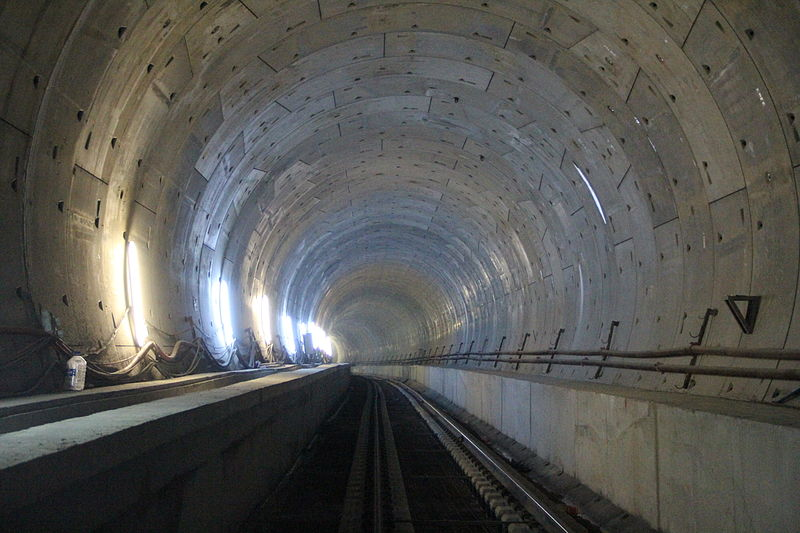
Inside the Marmaray tunnel, May 3, 2012, Wikimedia Commons Photo by Muhammed Enes Okullu
Care
5. Old Tensions Reignite in Mozambique
RENAMO, or the Mozambican National Resistance, is an anti-communist political group that formerly fought in the Mozambican Civil War from 1977 to 1992. A concrete peace accord from 1992 led to disarmament and peaceful political activities. Within the past month however, following a few isolated spats of violence several months ago, fighting seems to have broken out again and RENAMO declared the treaty void this Monday the 28th. It is not totally clear how the recent conflict restarted, but government forces claim to have been ambushed by a RENAMO group, leaving several soldiers dead. The resultant government assault on a major RENAMO base led the group to annul the peace agreement.
The governing party of Mozambique is FRELIMO, a formerly Marxist group. RENAMO was formed by the white government of Rhodesia and also supported by Apartheid South Africa. Since the end of the Cold War, FRELIMO has thoroughly abandoned socialism. The US has condemned the violence and called for discussion, perhaps fearing the conflict could spread on an already volatile continent. Mozambique has a rapidly growing economy, although that prosperity could soon end in the chaos of renewed conflict.
4. Wine Production Shifts Worldwide
The world very well may experience a shortage of wine in the coming years. According to a study performed by Morgan Stanley, demand for wine in 2012 exceeded supply by 300 million cases. This is troubling news as demand for wine in the world has increased over the past several years. A large portion of this demand is in countries that do not supply the majority of the world’s wine; places like the United States and China, where there have been recent surges in the popularity of the beverage.
Europe alone is responsible for around 60 percent of global wine production, as well as a good portion of its consumption. Herein lies the issue; wine production in Europe has been on the decline for the past decade or so. While production in other parts of the world, like Australia and South America, has been increasing, they are not increasing at nearly a fast enough rate to counteract the impending shortage.
There are many circumstances that have led to this dilemma, but the most pressing of which is the poor climate in Europe over the past ten years that has resulted in a series of poor harvests, while at the same time, the climate in other parts of the world has adjusted to allow for far better production. Climates previously unsuited to high quality wine production are now booming in production. Whether or not this is a direct representation of man-made climate change is up for debate, but it is still worth considering.
3. Roma Controversies Embroil Europe
In two European countries, incidents involving Roma families have drawn international headlines. In France, a controversy broke out when a Roma girl was taken off a school bus by police to be deported with the rest of her family to Kosovo. President Francois Hollande's leftist supporters took to the streets to protest the deportation or a girl who lived in France for most her life, while the right wing opposition and his own right flank, including his Interior Minister Manuel Valls, refused to accept the return of the family. Hollande delivered a speech saying the girl could return without her family; this seems like a meek move meant to appease both sides.
Meanwhile, in Greece a legal dispute broke out when police seized a blonde girl from a Roma camp, claiming she was either kidnapped or trafficked. Eventually, DNA testing confirmed the Roma family's story that the girl had been given away by her Bulgarian Roma parents to the Greek family. Her Bulgarian parents are currently seeking the return of the girl, while the Greek family she was with remains in detention.
These events highlight the situation of the Roma, commonly and perhaps pejoratively referred to as gypsies. Many are poor and live in legally precarious circumstances. They are often uneducated and viewed with suspicion by the state and even other immigrants. While Europe stagnates economically the Roma are a scapegoat for citizens and populist politicians. The rise of right wing xenophobic parties, such as the Front National in France and the now illegal neo-Nazi Golden Dawn in Greece, has exacerbated this situation as the political system shifts to accommodate their views. These two instances may turn out alright for the Roma involved, but long term prospects for the group look grim in Europe.
2. Attack in Tiananmen Square
Even before the famed student protests that took place there in 1989, Tiananmen Square has always held a place of significance for the Chinese people and Communist Party. When an SUV careened into a crowd of civilians outside the monument, killing five people (including the three in the car) and injuring dozens other, there were suspicions that it was an intentional attack. This has since been the judgment of the Chinese government, who have arrested five suspects last Wednesday connected to the attack. According to police statements, the perpetrators filled the tank with gas, along with knives, steel sticks, and “a flag with extremist religious content.” This evidence, along with the suspects all coming from the western province of Xinjiang, is sending the undisguised signals that the main suspects for this attack are Muslim extremists from this area.
Known as the Uighurs, there are over 10 million Chinese Muslims in the southwest of China, a minority in the largely Han nation. There has been increasing unrest between this population and the Chinese government, which has been accused of providing incentives for Han Chinese to flood the region pushing out the Uighurs. Since 9/11, the government has also portrayed the Muslims as affiliates of Al-Qaeda, a portrayal supported by the 22 detainees in Guantanamo Bay who are Uighurs. Many in the Xinjiang region believe that this recent attack is being unfairly blamed on them before all of the details are out. The Chinese are being guarded with their facts, and have censored all mention of the attack on social media sites. The government will be officiating the aftermath of this event, and they see no need for outside commentary.
1. Turkey Opens Tunnel under the Bosphorus
In Turkey, October 29th marked the opening of the Marmaray railway tunnel under the Bosphorus Channel. The tunnel is something of an engineering marvel, linking the continents of Europe and Asia and is the deepest of its kind in the world. The 8.5 mile long tunnel allows trains to make a four minute trip under the channel and is the first of several projects around Istanbul the Turkish government has set into motion. There are some concerns about the tunnel as it was built in an area that is at risk for earthquakes. Equally troubling are media reports that say that construction was rushed, although completion was already delayed five years. The other projects proposed by the Turkish government include another tunnel for cars under the channel, a canal running parallel to it to accommodate shipping traffic, and a large mosque.
While these projects seem to be impressive feats of engineering, in Turkey they are increasingly divisive. The large projects are a cornerstone of Prime Minister Tayyip Erdogan's policy goals, and have helped fuel the growth of the Turkish economy over the past decade. However, the way the developments have been pushed forward have alienated some segments of the Turkish population. The lack of input of from local residents has drawn criticism and even sparked protests this summer over a scheduled park redevelopment in Istanbul. Furthermore, the way the developments have been presented as fulfilling Ottoman era dreams has irritated more secular parts of the population, as it is a manifestation of the Erdogan's government embrace of Islamic identity to an extent previously unseen in stable Turkish governments.
Don’t Care
0. Federal Reserve Stays the Course
On Wednesday the 30th, the US Federal Reserve announced that it will continue its stimulus program to buy $85 billion of bonds every month. While the cessation of stimulus would undoubtedly have major effects on investors, the announcement of a continuation of the status quo is not a major issue for the US economy. While this decision is major, the lack of change in economic conditions or Fed governance indicated that no change in policy would occur. Furthermore, although the Fed indicated in previous months that they may scale back their stimulus, a frightful stock market seems to have scared them off that path. Until there is more confidence in the market, it seems unlikely that the Fed will change paths. Even after their announcement, the stock market dipped, possibly because of fears that the Fed will scale down stimulus in January.
As the Fed hinted in their report, it is the other parts of the government that are causing major issues for the economy. The government shutdown and political deadlock over budgets and borrowing causes greater negative effects than anything the Fed does. In the context of a dysfunctional elected government, the normal functioning of the Fed does not seem that newsworthy, even though their decisions are still important.