


The Divided States of America: Northern Colorado's Bid for Statehood
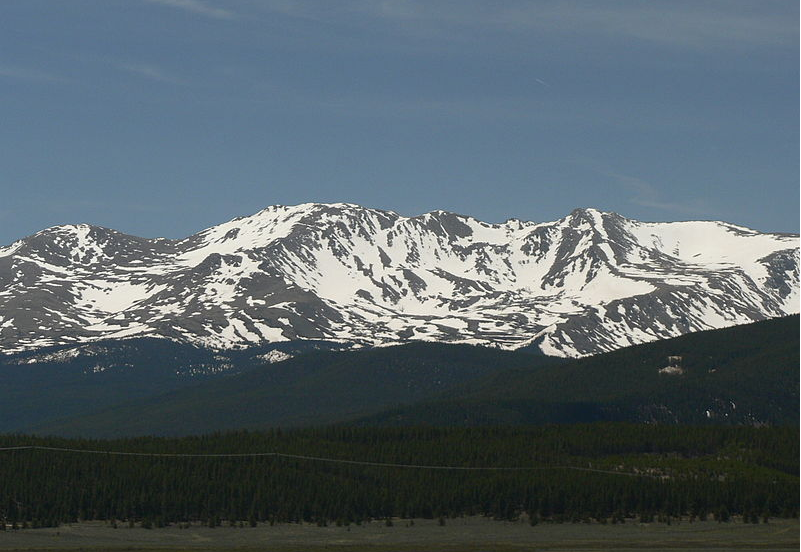
Mount Massive, the second highest peak in the Colorado Rocky Mountains. Courtesy of WikimediaCommons.org
The United States has a long and varied history of secessionist movements. In recent years, a number of such movements have emerged with little apparent success. The Weekly Focus looks at the ongoing secession effort in Colorado.
While the most notable secessionist movement in America failed after the South surrendered at Appomattox in April 1865, this has not stopped others from acting upon similar aspirations. In fact, one poll found support for peaceful breakaway movements is currently at 22 percent, the highest it has ever been since the Civil War. Whether it is due to conflicting interest between counties, divided populations within states, or simply a community ashamed of their nation, the desire by some to break away has rarely been more profound.
One of the most famous examples of an organized interest to separate in the past half century can be found in the Pacific Northwest. With attitudes divergent from their respective nations, activists from the states of Oregon and Washington and from the province of British Columbia in Canada have sought to create their own nation of Cascadia. With a focus on environmentalism and civil liberties, the hopeful new nation has some level of public support in the region, with around 36 percent of citizens of British Columbia in favor. While media outlets believe that Cascadia “has little chance of ever becoming a reality,” this has not stopped campaigners from organizing online and building up support for this potential new nation in North America
In recent American history, secession movements have mainly taken the shape of counties wishing to join adjacent states or breaking off entirely, believing their interests are not being represented by the state at large. One of the most organized efforts has been by liberal politicians and activists from Tucson, Arizona. Upset by the state’s conservative policies and supported by a precedent of the 1854 Gadsen Purchase, this hopeful splinter group wants to create a new state comprised of the lower counties. While the potential state had the attractive name of “Baja Arizona” and the support of some influential state politicians, it ended up failing to reach the ballot in 2012, halting the movement for the foreseeable future.
The so-called 51st State Initiative is a group of counties in northern Colorado, all conservative-leaning, seeking to remove themselves from the rest of Colorado and form a new state tentatively called North or New Colorado. The question of secession is set to be on the ballot of several of these counties on November 5th. The issue is largely centered on the dichotomy between liberal, densely populated, and quickly growing areas like Denver and Boulder and the conservative, rural areas of the state. Recent progressive initiatives like a same-sex union recognition law, gun control measures, and the famous legalization of marijuana at the state level have caused much consternation in counties where these are not the prevailing views.
Many of these rural areas support limited gun control, anti-abortion legislation, maintaining traditional marriage laws, and do not support the legalization of marijuana. Polarizing opinions are causing increased tension between different areas of the state.
Complaints have been raised that the viewpoints of those not in the urban areas of the state are not being considered or acted upon. The perennial argument of proportional representation is tyranny of the majority, experienced to a painful degree by these Colorado counties. To redress this, they wish to form a new state where they can voice their opinions more powerfully and to a greater effect. Although it may seem to be another example of increased polarization between Republicans and Democrats, the movement is adamant that their desire for secession stems from the difference between rural and urban politics. While many are doubtful that secession will come to fruition, they do hold hope that it will motivate a discussion.
A positive outcome at the vote on November 5th moves the proposal to the Colorado State legislature for a vote. Conditional on the state’s approval, the proposal would then move to Congress. According to Article IV, Section 3 of the Constitution the proposal to secede cannot be legal “without the consent of the legislatures of the states concerned, as well as of the Congress.” With the multitude of hurdles facing a secession proposal, it is not surprising that the last state to secede was West Virginia in 1863, and even then the state was carved off a rebellious Virginia.
Eugene Kontorovich, a law professor at Northwestern University, believes that it would be in the counties’ best interest to join another state rather than create a new one. This can occur through a local referendum or Convention without requiring the approval of Congress. Furthermore, there is no Constitutional requirement that states must be contiguous. In theory, the 11 Colorado counties could secede to any state across the country that aligned with their views, despite its location.
While these efforts seem futile at the moment, they show how political geography affects populations, and how those populations react. While maps of the United States are unlikely to be redrawn anytime soon, not everyone is happy and many attempt change.
Further Reading:
Polling on Secession
Matt Baron, Liam Conway-Pearson, and Valerie Zuckerman contributed