


Piracy Uncovered: An Inside Look at Piracy in Somalia
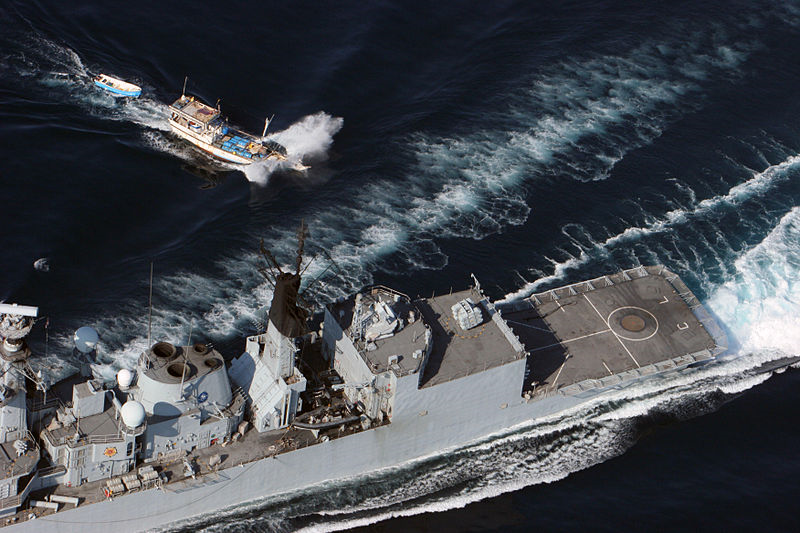
November 11, 2025 MoD, The HMS Cumberland Intercepting a Somali Pirate Ship.
By Patrick Schmidt
November 20, 2025
When most people think of pirates, they reflect on images of the traditional Caribbean pirate on a large sailing ship flying the Jolly Rodger. Today, piracy is a global problem with many regional hotspots. One of the most active parts of the world for pirate activity is the coast of Somalia. A report released this month by Interpol and the Stolen Asset Recovery Initiative sheds new light on the operation of pirates in Somalia and the complex processes that occur before, during, and after an operation.
It is estimated that 339 to 413 million dollars were paid to pirate operations for ransom between 2005 and 2012. These figures indicate that for each successful hijacking Somali pirates earned approximately $2.7 million in ransom money. This money is usually split amongst the hijacking crew with each individual leaving with anywhere between $35,000 to $70,000. Bonuses are then distributed to individuals who helped with the operation, such as those who provided a boat or weapons to the pirate gang. Although just from looking at the monetary benefit piracy seems like easy money, there are hidden fees and costs involved in the operation.
Before pay is distributed to the members of the gang, all costs associated with the operation are deducted. Some pirates suffer deductions to pay drug dealers of the local narcotic, qat, which provides them with a high while waiting aboard a hijacked ship for the desired ransom money. Money is also withheld if a pirate fails to treat hostages correctly or does not follow established rules by the group. Ransom money is then used to pay off any remaining costs including communications or bribes to local officials.
Currently, financing pirate operations in Somalia is quite a simple task. On a ship-by-ship basis, a few hundred dollars is all that is required to carry out an attack. However, more complex or extensive operations require greater financing and can amount to tens of thousands of dollars. These operations also require a greater number of investors, who include former security officials, drug dealers, civil servants, and other individuals hoping to make quick money.
The biggest concern for regional governments and the international community is the flow of the ransom money around the world. With poor border security, technology, and shady, wealthy investors, the Somali pirates have a wide range of options when trying to “launder” their money. Recently, it has been determined that usually returns from piracy are used to achieve political means; however, there also seems to be a growing connection to the drug trade, especially qat, in Africa. Piracy continues to be one of the world’s major security threats to both pleasure and commercial vessels. Until there is increased international cooperation or a successful anti-piracy strategy is developed, the Somali pirates will continue to profit and fund dubious regional political entities.