


The Week of January 6th, 2014
Care
5. African Ivory Destroyed
On Monday, January 6, in a symbolic gesture to demonstrate its commitment towards fighting the illegal ivory trade, China destroyed 6.15 tons of confiscated ivory. This is the first time that China, which makes up 70% of the ivory market, has destroyed its stockpile. Demand and prices for ivory in China are growing alongside the booming middle class. Ivory is considered “white gold” because it can fetch as much as $1,000 per pound.
The majority of ivory can be traced back to Central Africa; more specifically, to areas where Chinese corporations have begun development projects. Chinese work camps serve as underground carving and smuggling depots. Chinese nationals ask local villagers for ivory, encouraging the locals to become poachers and even supplying them with ammunition.
However, the Republic of Congo is not letting its elephants die without a fight. The government uses former poachers to track and find current ones. Poachers are given amnesty in exchange for handing over their weapons and committing to fight against other poachers. Most often, these poachers are their neighbors, friends, and family members whose only livelihood is poaching. Despite these improvements, without stronger efforts on the demand and supply side to combat the illegal trade of ivory, a fifth of Africa’s elephants could be wiped out within the next decade.
4. ISS Life Extended
On Wednesday, January 8th, the White House announced approval for continuing the life of the International Space Station until at least 2024. The station is thought to be viable until at least 2028, but current agreements are only set until 2020. This marks a somewhat dramatic change of course for the so-far NASA unfriendly Obama administration, which even recently proposed $200 million dollar budget cuts for 2014. This new announcement may perhaps be a sign of a renewed emphasis on manned space exploration for the United States.
As of now, the only means of human transportation to and from the space station is the Russian space program’s Soyuz capsule. This dependence stems from the decommissioning of many US space shuttles and programs and the lack of funding from all of the other countries involved. The proposed method of dealing with this issue is the development of private space exploration and transportation companies such as SpaceX. The existence of such companies is a radical new shift in the primarily nationalized space industry. With Chinese taikonauts aiming for the moon, the US is putting its hopes in private industry to keep up.
3. South Sudan Suffers Instability
President Salva Kiir first sparked the current South Sudanese conflict when he began exhibiting antagonism toward an ambitious Riek Machar, the vice president. After rumors of a possible coup, Kiir moved to consolidate his power. In the largest shakeup since the nation’s founding in 2011, Kiir dismissed swathes of military and political leaders, including leaders of the police, Army Deputy Chiefs of Staff, military generals, members of the Cabinet, and Machar himself. The fighting broke out later in the year, as members of the presidential guard clashed violently with opposing forces in the capital, Juba. This violence fell mostly along ethnic lines: Kiir’s Dinkas fighting Machar’s minority Nuers. Although Kiir claims this initial conflict was an attempted coup, many doubt the veracity of this claim. Nonetheless, ethnic violence has been present ever since the country’s founding, and this conflict is likely an extension of this combined with internal conflicts in the Sudan People’s Liberation Movement (the ruling party, of which Kiir and Machar are both members) as well as the Sudan People’s Liberation Army.
Regardless of how it started, the fighting has now engulfed the country, with Machar now openly attempting to grab power. As people continue to be killed or displaced from their homes, there appears to be no end in sight. The conflict threatens the stability of this new country and could have implications in the surrounding region, with neighboring African countries worried that fighting could spill over borders. Fellow African leaders have threatened to intervene militarily and have tried to pressure both sides into a ceasefire, but continuing violence indicates that neither side is ready to halt the fighting. The conflict looks likely to get worse before it gets better.
2. Christie’s Bridge Scandal
Subpoenaed documents show that top aides to New Jersey Governor Chris Christie used traffic lane closures to retaliate against Fort Lee Mayor Mark Sokolich, a Democrat, in what constitutes a growing scandal for a rising star in the Republican Party. Christie’s deputy chief of staff, Bridget Anne Kelly, sent an email to David Wildstein, a close friend of Christie’s since high school and an employee of the Port Authority that stated, “Time for some traffic problems in Fort Lee."
The retaliation was for Sokolich’s failure to endorse Christie for reelection. Although Christie won the election by a wide margin, he was seeking to bolster his bipartisan image. Text messages showed the glee Christie officials apparently felt from the disruption the lane closures caused, which included not only traffic jams but also increased emergency response times.
Kelly was fired shortly after the emails were made public for what Christie described as “deceitful” and “stupid” behavior. Wildstein has since resigned. Bill Baroni, Christie’s top appointed staff member at the Port Authority, also resigned in December after testimony by Port Authority officials stating that he attempted to cover up the incident.
While the documents do not indicate Christie was involved in the lane closures, they do contradict Christie’s assertions that none of his staff were involved in the closings. Christie, at a press conference, stated he was “embarrassed and humiliated” by the news. He promised to travel to Fort Lee to give Mr. Sokolich and Fort Lee residents a personal apology.
Yet both Republicans and Democrats have previously termed Christie a bully who uses fear and favor to get his way. Democrats repeated such claims and promised to subpoena anyone involved. The evidence may lead to a major legal investigation, and with the 2016 presidential campaign rapidly approaching, this scandal may haunt Christie for years if he decides to run.
1. ISIL Occupies Fallujah
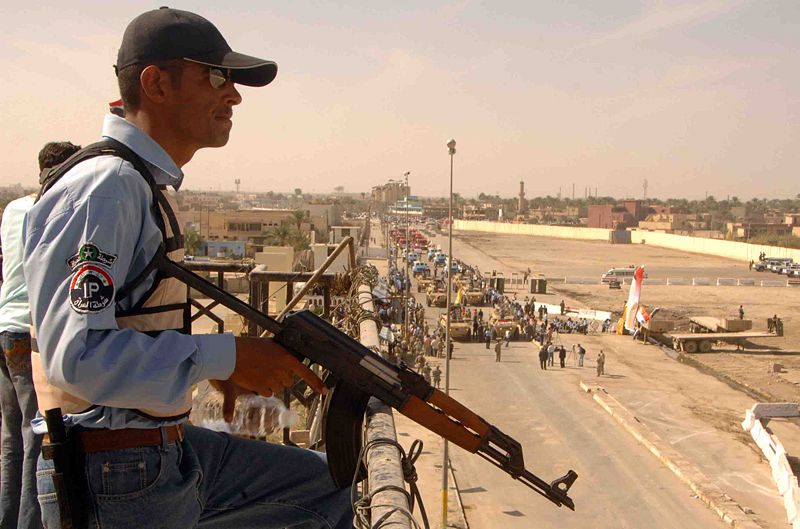
Ten years after the US invasion of Iraq and two years after its withdrawal, it seems that Al-Qaeda affiliated groups are once again acting with force in Iraq. Last week, the Al-Qaeda affiliated Islamic State of Iraq and the Levant (ISIL) took control of Fallujah and Ramadi. They were able to do so because of discontent with Iraqi President Maliki's policies. Protest camps started around a year ago in Sunni areas concerned with the treatment of government detainees. These protests turned into a wider anti-government movement that the Shia Maliki was unable to compromise with since his Parliament could not agree to any deal. At the same time, ISIL ramped up its terror campaign with bombings across Iraq. In December, Maliki tried to use force to end the protests and broke up camps in Fallujah and Ramadi. Iraqi government forces then withdrew in order to prevent the situation from escalating, allowing ISIL to take power in the vacuum.
While a disturbing development, ISIL's position in the region is tenuous. Although an Iraqi based group, ISIL operates concurrently in Syria. The brutality of some of their actions has triggered an offensive against them by other Syrian rebel groups. Even al-Nusra, another al-Qaeda affiliate, has joined in the coalition against ISIL. ISIL is already driven from many of its strongholds across Syria, and its future in the country seems to be limited.
Meanwhile, the Iraqi government’s response to ISIL is cautious at the moment. Undoubtedly under the advice of its unique allies the US and Iran, Iraqi forces have surrounded the town and avoided direct conflict. It seems like the Iraqi government is attempting to stop this from becoming a naked sectarian conflict and are looking to isolate the ISIL extremists. Relations with Sunni tribesman are being reestablished and offers of amnesty are being floated by Baghdad. Hopefully this appeal of reconciliation and national unity is not too late to avoid more bloodshed.
0. Dennis Rodman’s Bromance With Kim
Dennis Rodman, a former NBA star, has provided Americans with much entertainment in his strange friendship with Kim Jong-Un, the youthful new dictator of North Korea. Kim is a major fan of basketball, and Rodman's latest visit brought numerous other basketball players to play a game for Kim's birthday. Rodman refers to the erratic dictator as a good friend, sang him happy birthday, and has most recently caused a scandal by stating that Kenneth Bae, an American missionary imprisoned in North Korea, may be in jail by his own fault. Rodman then apologized to Bae's family.
Rodman's adventures in the rogue state are not significant for the state's economic or political circumstances but could alleviate the social and cultural pressure on the regime. Rodman should take care to not support totalitarianism through his penchant for being outrageous.