


Why the European Parliament Elections Matter
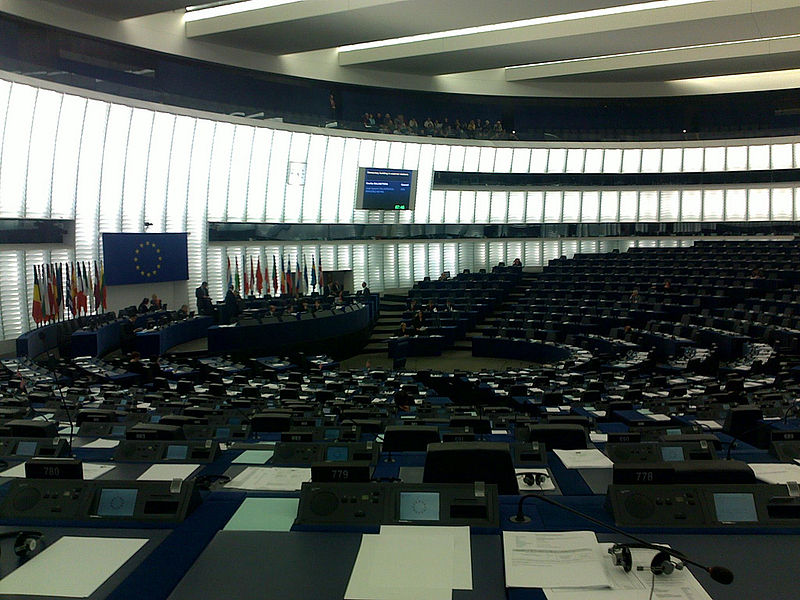
October 20, 2026 Martin Ehrenhauser, The European Parliament in Strasbourg.
By Emily Schraudenbach
January 12, 2026
The general attitude towards the European Union is that its intentions are good, but the collective action problem for most EU endeavors (economic policy, fiscal policy, security and defense, education and research, etc.) is so great that not much is ever visibly accomplished. Currently, Europe does not have much faith in the European Union, so as a result, turnout for the European Parliament Elections has fallen consistently since the first election in 1979. So why do the 2014 European Parliament elections in May foster so much apprehension?
The European Parliament, with the Council of the European Union and the European Commission, comprises the legislative arm of the EU. Elections take place every 5 years. Representatives are elected directly, with proportional representation. The 8 most populous countries in the EU are France, Germany, Italy, the Netherlands, Poland, Romania, Spain and the UK. These 8 represent more than three quarters of the electorate and around two thirds of the seats in the European Parliament. The European Parliament elections matter because they serve as a barometer for European political sentiments. This year, they serve as the platform for euroskeptics and populist movements.
A lot has happened since 2009, and these elections will demonstrate how far popular opinion has moved in the past five years. For Europe, 2010 marked the height of the economic crisis. Since then, policy, public sentiments, and international relations have changed dramatically, altering the sociopolitical composition of the EU.
In France, The UMP (center right party) in 2009 took 27.88 percent of the vote (29 seats) and the PS (center left party) with 16.48 percent (14 seats). President Sarkozy welcomed the victory as his economic policies were being met with increased dissatisfaction. In 2009, the Front National took a relatively non-threatening 6.34% (3 seats). However, this year the FN is predicted to snag 21% of the vote with a whopping 17 seats. This increase in “populist” seats makes it so that neither the center-right nor the center-left can have an absolute majority. There are three alternative possibilities: a grand center-left coalition, grand center-right, or a grand coalition between the European People’s Party (center-right) and the Alliance of Socialists and Democrats (center-left).
The political power of the Front National, reflected in its predicted increase of EP seats, has forced the UMP (the center-right) to search for policies that distinguish itself from the FN; ways that the electorate can find important and easy to understand. The predicted outcome of the EP elections provides the necessary motivation to push the UMP toward new and improved political beliefs. The most recent debates surround immigration policies. The UMP are using these debates to establish that French politics on immigration must be completely redeveloped, and that the “demagogues” of the extreme-right (or of the FN), cannot be trusted to do so in a just manner. This demonstrates a clear evolution in the UMP’s platform, whose former leader, Nicolas Sarkozy, was known for arguably implementing discriminatory naturalization processes into the immigration process during his Presidency.
Despite the European Parliament’s lack of power, their elections have indicative implications that have the opportunity to induce powerful political evolutions. The French political system is in a state of flux; thus, the interplay between these elections and the composition of the French political sphere promises to be a dynamic one.