


The Week of January 13th, 2014
5. Contaminated Water in West Virginia
Americans going abroad are often warned to drink only bottled water, lest they get sick. Over 300,000 citizens of West Virginia have also been given the same caution last week when a spill contaminated the Elk River with 7,500 gallons of 4-methylcyclohexanemethanol (MCHM). The company behind this, Freedom Industries, placed large tanks of the coal-cleaning chemical upstream of the “largest drinking water intake in the state” according to the West Virginia Rivers Coalition. After the chemical began spilling into the river, the people in the surrounding area were warned that tap water should not be used for consumption, cleaning, or cooking, and was generally unsafe, even when boiled. Although some have called for greater regulation in response to this accident, a document released last weekend showed that authorities were aware that the chemicals were being stored at the site. Part of the problem can certainly be attributed to the poor communication between government officials and the water treatment plant where the chemicals began seeping in. The fact that MCHM was also not considered a “hazardous material” meant that Freedom Industries did not have to create a plan for what would happen in the case of contamination. Furthermore, the fact that Freedom Industries was only two weeks old when the accident occurred could have led to reduced governmental oversight over the company.
Clean water is beginning to be restored to the affected areas, but the all clear from the governor has yet to be granted. West Virginia will return to normalcy, and it is still uncertain how much lasting change will come from the accident. While the scale of the accident is significant, it could be quickly forgotten.
4. The DEA’s Deal with the Sinaloa Cartel
El Universal, a large Mexican newspaper, recently published a report claiming that the United States Drug Enforcement Administration (DEA) cut a deal with the Mexican Sinaloa Drug Cartel. The DEA reportedly met over 50 times with the cartel, one of the most powerful in the interminable Mexican drug war. The deal supposedly gave partial immunity to the Sinaloa Cartel in exchange for extensive information on their competitors: other drug traffickers and criminal organizations. The agreement was apparently without the knowledge or consent of the Mexican government, which remains embattled in the face of powerful cartels, crime syndicates, and vigilante groups. Over recent years the Sinaloa cartel has also cemented control over drug distribution in Chicago and throughout the Midwest. These revelations make the relationship potentially deeply embarrassing for both countries.
“El Chapo” Guzman, the internationally notorious leader of Sinaloa, was long rumored to have secret dealings with US law enforcement agencies, but it appears that evidence is only now coming to light. There are further allegations surfacing that the notoriously botched US operation “Fast and Furious”, which supplied tracked arms to Mexican crime organizations, was actually a purposeful attempt to supply the Sinaloa Cartel. It remains to be seen whether this new charge will hold water and how the DEA will react to El Universal’s revelations. On Thursday, the Treasury Department declared that it “continues targeting Sinaloa Cartel leadership” and they announced new sanctions against one important member of the cartel. The deal with Sinaloa ostensibly ended in 2012, and the US government may be scrambling to recover its position with its southern neighbor if these allegations gain wider traction.
3. Court Ruling Threatens Net Neutrality
Last Tuesday, January 7, a judge from the US Court of Appeals for the District of Columbia struck down part of the FCC's net neutrality regulations for broadband. Some media outlets say this spells the end of an open internet. Net neutrality is a concept that supports all data on the internet to be treated equally by internet service providers (ISP). Under it, a user of an ISP would be able to experience the same quality of service whether accessing popular or obscure websites. Net neutrality activists fear that without enforcement the internet would devolve into a cable television style system of packages that offer access to a limited selection of internet services. Other fears are that ISPs may block access to competitors' sites, especially since ISPs tend be part of larger corporations; Comcast owner NBC may block access to Disney sites for example.
However, the dark future described above is unlikely to unfold anytime soon. While the court struck down the FCC's current regulations, it reaffirmed several parts of the agencies interpretation and left plenty of room for appeal. The FCC could try to reclassify broadband as a common carrier, which would place it under the same set of regulations that govern telephone networks, and allow the net neutrality rules to stand. FCC Chairman Tom Wheeler does not seem particularly upset about the ruling, saying that FCC will continue on with a common law approach to enforcement. Net neutrality certainly received a setback this week, but the fight will continue.
2. Scandals in the U.S. Nuclear Force
On January 15, the United States Air Force announced the suspension of thirty-four officers in the nuclear missile wing and a revocation of their security clearances, for involvement in a cheating scandal. The cheating incident occurred last year at Malmstrom Air Force Base, when the involved officers shared answers, via text-messages, to questions on a monthly proficiency exam. In addition, the Air Force is currently investigating eleven officers, including two of the suspended Malmstrom officers, for alleged illegal drug use and possession. These recent scandals are only the latest revelations in an ongoing series of alarming news from the U.S. Air Force; in May 2013, seventeen officers responsible for nuclear-armed Minutemen missiles were suspended on account of safety violations and “attitude problems,” and in November, members of the press reported that nuclear missile officers were caught napping, twice, with the blast doors open. The most high profile case of misbehavior in the nuclear missile wing occurred last summer, when Major General Michael J. Carey was removed as an ICBM commander after allegedly drinking heavily and consorting with unfamiliar women on a trip to Moscow.
Critics across the country, and around the world, declared the scandals evidence of a lack of security for the U.S.’s nuclear arsenal. Vocal concern over the force’s morale and discipline in the post-Cold War era continues to mount. Despite the myriad of frightening revelations from the U.S. Air Force, leading figures in the Pentagon claim continued confidence in the security of the nation’s nuclear arsenal, claiming that the incidents were “not about the compromise of nuclear weapons. It’s about the compromise of the integrity of some of our airmen.” Regardless, these scandals continue to raise questions about the security of some of the world’s most dangerous weapons.
1. An Egyptian Referendum
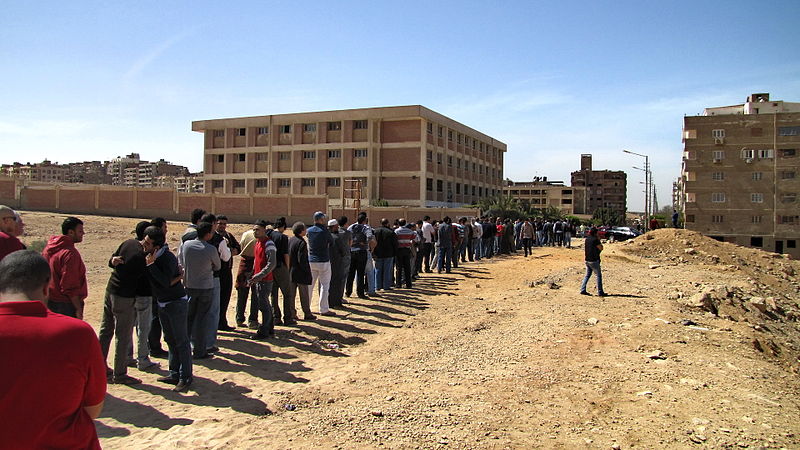
Over two days—the 14th and 15th of January—Egyptians voted in favor of the country's new constitution, a little over a year after the last vote on the topic in December 2012. The process, ordered by the generals who overthrew Islamist Mohamed Morsi last summer, produced a broad rebuke of Morsi's former agenda. The new constitution, written by the military, defines where Islam meets the state: Sharia law is relevant only when interpreted by the supreme court; freedom of religion is guaranteed; the state has a duty to prevent discrimination against women; and parliament gains the power of impeachment against the President. However, the military holds the power to try civilians in military courts and continues its control of the Interior Ministry for eight years. As a result, the document is a compromise between army generals, urban revolutionaries, and Salafists. With these three groups in support of the referendum, unofficial results show broad approval.
The existence of a third constitutional referendum in three years demonstrates the dynamic nature between the banned Muslim Brotherhood and the supporters of the military. Abdel Fattah el-Sisi, head of the army and current de facto head of Egypt, is a frontrunner for the Presidency despite targeted and brutal crackdowns of Islamist groups which has resulted in numerous deaths and injuries. Additionally, the Egyptian military executed its second coup of the government with a new strategy, effectively quarantining the Brotherhood. Whether this will lead to a more secular, democratic, and US-friendly Egypt is an open question.
Don’t Care
0. Obama Gives Speech on NSA Reform
This Friday on January 17th, President Barack Obama delivered a speech addressing changes to the National Security Agency’s (NSA) controversial surveillance programs. The speech took place at the Department of Justice, where the President announced policy changes he hopes will reassure an American public that has been shaken by almost a year of revelations over controversial data gathering programs. The address comes nearly a month after a presidential review group issued a report outlining policy change recommendations.
While the issue of government data gathering is certainly important, the president’s actual speech seems minor. Obama has proposed significant changes to the program despite his past defense of the NSA, but many advocates and libertarians have declared that the concessions are not nearly large enough. At the same time, many details of his proposals are unclear and may need Congressional cooperation. The speech will most likely change little of the current situation.
Sam Houskeeper, Tianfang Tom Cui, Matt Baron, Sam Ide, Don Gross, and Alexi Stocker contributed