


The Future of NATO: The Glue of Western Military Cooperation
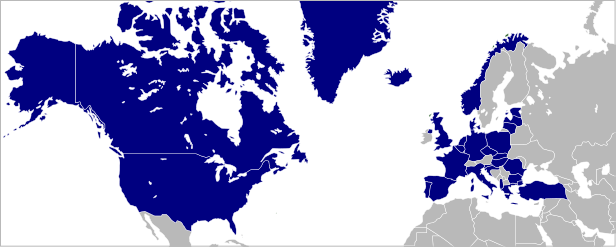 May 31, 2026 Ssolbergj, Map of NATO nations for 2009.

By Patrick Schmidt
January 26, 2026
The North Atlantic Treaty Organization concluded its biggest military exercise since 2006 in early November. The simulation, which was code-named Steadfast Jazz, brought over 6,000 military personnel together from a number of NATO member countries. The war games focused mostly on command and control of air, land, and maritime military forces.
Over the past five years, the importance of NATO has increased greatly. Following a Russian military exercise, European members of the organization have renewed their interest in joint military exercises. The Russian mock-operation involved a display of Russian military forces, including simulated bombing runs over some Baltic states. Russia’s increased military activity has accompanied a 26 percent increase in their military spending. Russia’s aggressive stance towards military construction projects within Europe, including NATO missile defense systems, has also prompted a discussion within NATO.
As military operations begin to conclude in Afghanistan, the number of NATO troops on the ground will decrease drastically. Currently there are roughly 100,000 NATO troops operating in Afghanistan, but it is expected by the end of 2014 that number will be reduced to around 12,000 troops. Those remaining troops will remain in country to advise and train Afghan security forces. Over the past twelve years, the War in Afghanistan has brought cooperation among NATO member nations to a new level. This cooperation has ranged from joint pre-deployment training for NATO troops before their departure to the establishment of the NATO Response Force. The founding of this joint special command allows NATO to dispatch 13,000 rapid response troops to any hotspot around the world.
The future of NATO will require developments on multiple fronts of the organization. Primarily, the past 12 years have been focused on counterterrorism and counterinsurgency operations. This focus has left NATO capabilities and training somewhat unbalanced. In addition, some European NATO members require extensive upgrades to their arsenals. These problems were revealed during pre-deployment preparation for the War in Afghanistan. Greater cooperation and consensus amongst NATO members will also need to be forged. NATO operations in Libya quickly revealed that not all member nations were willing to commit to certain types of operations. Finally, NATO must expand the influence of their power. Expanded operations in the Middle East and Africa will help maintain stability in the region. Furthermore, a NATO presence in Asia would provide reinforcement to Western allies in the region at a turbulent time for military and political relations with the West. Therefore, the future of NATO is dependent on its evolution as an organization to meet the security needs of member nations, and protect member nations’ interests well into the future.