


China's Aging Demographics
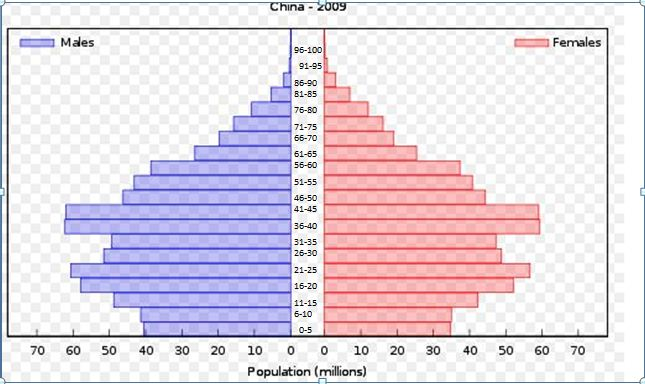
Population Graph courtesy of Karrasan
February 3, 2026
It is no news that China faces a problem of demography. But China’s aging demographics will put pressure on its already decelerating economic growth for years to come. An aging demographic can create new problems while exacerbating already existing issues. Simply, as people age, they pull out of the labor force. This decreases the supply of labor, and puts upward pressure on wages. And an upward trend in wages will put put strain on an already struggling manufacturing sector.
Moreover, as people exit the workforce, they cease to contribute to an economy’s productivity, yet often require increasing social assistance. Apart from some basic social security, studies show the elderly are by far the most expensive demographic in terms of health care. For example, research shows that although the US elderly make up only 13% of the population, they account for 36% of all healthcare expenditures. The elderly also tend to save less. With little to no income, a retired person generally draws upon their savings to maintain their lifestyle. The reduced savings not only lowers the prices of financial investments (less money in the stock market means lower stock prices) but also lowers the amount of investment in an economy, resulting in less capital goods for an economy. Finally, scholarly work has pointed to the increased difficulties of becoming “old” before becoming “rich.”
A Forbes article puts China’s Total Fertility Rate at 1.6 on the high side, clearly below the replacement rate of 2.1. A Total Fertility Rate of under the replacement level inevitably leads to a decline in the population, and experts expect a population decline to hit China as early as 2020. Furthermore, China’s demographic problem is compounded by its gender gap. With the ability to have only one child, having a son is highly preferential. Some reasons sons are preferred include ensuring the family name survives and the fact that females tend to move in with their husbands family after marriage, limiting their ability to take care of their parents. In any case, China’s male to female ratio is currently estimated at about 118:100, far above the 107:100 typically considered by experts the high end for average countries. This constitutes an excess of 56 million males. This skewed gender ratio naturally puts further downward pressure on China’s fertility rate and adds to China’s demographic problem.
China recently announced its intention to let couples have more than one child if either spouse was an only child (previously both spouses had to have been an only child). The effect of China’s continued easing of the one-child policy should help ease China’s demographic problem, yet it’s effect will likely be lessened by several factors. Many people ignore the one-child policy already, and simply choose to pay a fine for breaking the policy. Moreover, some people might not choose to have more children, regardless of any easement in policy. Finally, although China recently announced its intention to ease its one-child policy, the actual changes will not take place immediately, and even then it will be slowly phased in. To many analysts, these new changes, while certainly a step in the right direction, come too late to make any real changes to China’s growing demographic problem.
For part one of our weekly series click here.