


Independence for Scotland?
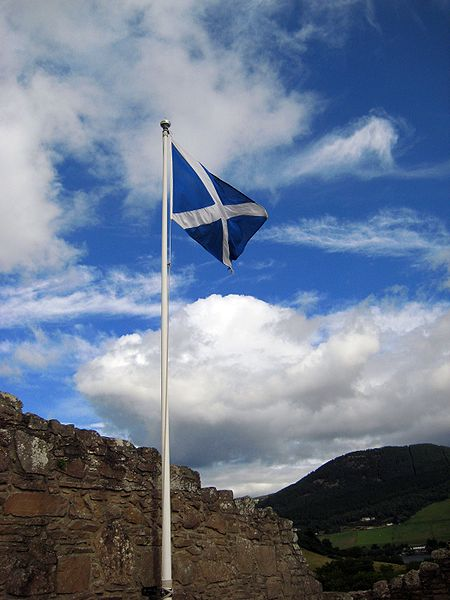
August 3, 2008, Smooth_O The Scottish Flag.
By Karina Kedo
February 4, 2026
January 25th, 2014. What would normally be just another Saturday night in the midst of Edinburgh’s lively pub culture was interrupted this past weekend with the annual celebrations and revelry of Burns Night. Commemorating the life and work of Scotland’s most revered poet, Robert Burns (1759-1796), the evening is dedicated to all things classically Scottish. The night includes the dancing of a céilidh, gratuitous indulgence in beer and whisky, recitation of Burns’ poems, and preparation of the national meal of Scotland: haggis with neeps (turnips) and tatties (potatoes). Perhaps the most noteworthy aspect of the event, however, is the pronounced sense of Scottish nationalism that fills the pubs in Edinburgh, the nation’s capital. Although the country is included in the United Kingdom (along with England, Northern Ireland, and Wales), a controversial bid for national independence is finding its way to the forefront of the minds of Scots. Walking around the city’s Old Town district on Burns Night, one is sure to encounter a few impassioned anti-English sentiments.
Scotland has been included in the United Kingdom as its northernmost territory since 1707, when two “Acts of Union” were simultaneously passed by the parliaments of England and Scotland. It is worth noting, however, that this development ended a period of nearly eight hundred years of Scottish autonomy. The date of the referendum on the “Scottish question” has been set for September 18, 2014. However, this issue is by no means a new development in Scotland. In a personal letter to his acquaintance Frances Anna Dunlop on April 10, 1970, Burns himself stated:
"Alas, I have often said to myself what are the boasted advantages which my country reaps from a certain Union that counterbalance the annihilation of her Independence, and even her name!"
Contrary to what the most vocal, anti-English Scottish nationalists may imply, support for the independence cause is not as strong as one might expect. Polls conducted by the Economic and Social Research Council and the University of Edinburgh found support for independence to be about 15 percentage points lower than responses indicating support for inclusion in the UK. This difference was even more pronounced among young people aged 14 to 17, with 60.3% of respondents saying “no” to independence and only 20.9% responding “yes”. Indeed, in breaking away from Burns’ sentiments, a contemporary lens suggests that the advantages of the international union are essential to Scotland’s livelihood. Perhaps the biggest question is that of the state of the Scottish economy after independence is granted. An unfavorable division of assets, debts and liabilities between England and Scotland could leave Scotland on poor economic footing, and the common use of the British pound sterling as currency stands to complicate the fiscal impact of such a separation on a newly autonomous state.
Aside from the significant financial impact of independence in Scotland, other political issues will affect the September 18th referendum. Pro-independence political parties in Scotland (such as the Scottish National Party, Scottish Green Party and the Scottish Socialist Party) are split on the issue of NATO membership, and the United Kingdom’s Trident nuclear missile system faces a challenge in determining what to do in the case of Scottish independence—given that their central storage and loading base facility is located in southern Scotland.
Specific issues aside, the next eight months will certainly hold the attention of those Scots who most strongly identify with Burns’ nationalistic sentiments toward their beloved “Scotland the Brave.”