


Crisis in Yemen
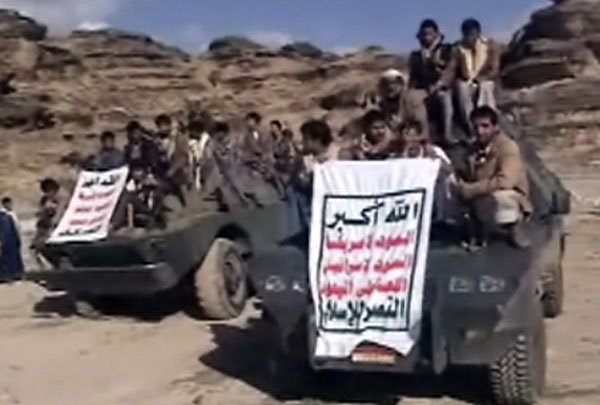
March 24, 2026 StanTheMan87, Ansar Allah fighters in Yemen, 2009
The buildup to the current conflict in Yemen spans several decades. President Ali Abdullah Saleh, the nation’s despotic ruler, was in power for over 33 years. Throughout his rule, Saleh faced opposition to his totalitarian approach to governance. In the 1990s, a religious group, the Shia Zaydis, rose to challenge President Saleh, who is a Sunni. The Zaydis prefaced the organization now known as the Houthis, or Ansar Allah. The Houthi movement formed in 2004, at which time a war broke out in the province of Saada. Six wars occurred between 2004 and 2010, and immediately thereafter, the Arab Spring began. The 2011 uprisings reignited the Houthis, who, riding on the coattails of the youth revolution taking place across the Arab world, successfully ousted Saleh. His replacement, however, was none other than Abdrahbu Mansour Hadi, former President Saleh’s deputy. The Zaydis were ruthlessly repressed by the regime, causing a massive backlash. The Houthis then began to build strength, and as of April 8, they have taken complete control of Yemen’s capital, Sana’a.
On April 14th the UN Security Council passed an arms embargo against the Houthis. Meanwhile, the conflict in Yemen has rapidly become a proxy war between the region's two largest powers, Saudi Arabia and Iran. The Saudi government, claiming concern about the spread of terrorism in the region, has refused to recognize the new government of Yemen, cutting of essential fuel subsidies to the oil fields of West Yemen. Saudi Arabia is three weeks into its campaign of bombing positions held by the Iranian-backed Houthis. The Saudis are also funding the Islah, a militia with strong tribal ties recently overrun by the Houthis. Saudi Arabia is possibly coordinating a more serious intervention - even a ground operation - in partnership with Egypt. Many other Arab states, from Morocco to the members of the Gulf Cooperation Council, have directly supported Saudi Arabia's efforts, forming what looks like an anti-Iranian bloc. This has caused a rift in the US-led coalition against IS; Iraq's government, which is allied with Iran, has ridiculed the Saudis’ war in Yemen. The number of casualties and refugees from Yemen continues to climb.
Iran's foreign minister, Javad Zarif, has denied any attempt to gain influence through the conflict and called for an immediate ceasefire. He also declared that all foreign intervention in Yemen should cease so that domestic players can resolve the conflict. Mr. Zarif is likely arguing for an immediate ceasefire because the Iranian-backed Houthis have temporarily gained power. The Saudis and their allies, on the other hand, are opposed to the ceasefire because of their long-term advantages; they are geographically closer to the conflict. Some fear the fighting in Yemen could snowball into a wider regional war. Foreign Policy called the deadly March 20 suicide bombings of two mosques important to the Houthis, the spark that lit the latest Houthi offensives, as potentially "the Middle East's Franz Ferdinand Moment."
Further Reading:
Egypt-Saudi Partnership
Contributions by Samuel Houskeeper and Kevin Corkran