


The Drawbacks and Advantages of Brexit
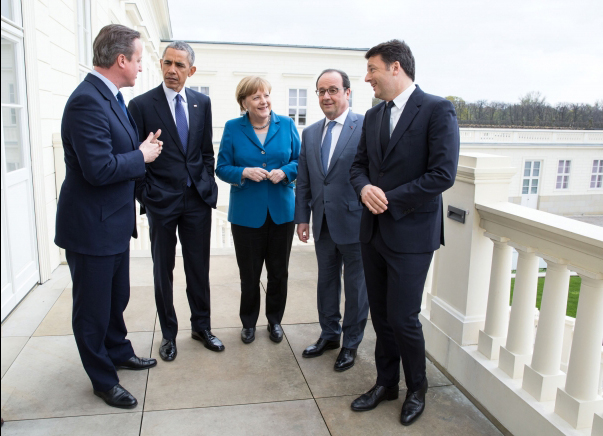
In February, British Prime Minister David Cameron announced that Britain would decide on the continuation of their membership within the EU. This has led to ministers quickly splitting into factions either in support or opposition to British exit from the EU, now often referred to as “Brexit”. Positions have been established swiftly and deeply. A prominent member of the Conservative Party, Iain Duncan Smith, resigned over a proposal for welfare cuts to disabled people. Mr. Smith was a strong proponent of Brexit. and his resignation signals a bigger issue – internal party tensions over clashing opinions. David Cameron now faces fears that the issue of Britain leaving the EU may be enough to tear his party apart.
Britain’s membership in the EU has always been tenuous. In its earliest form, the EU was the Steel and Coal Community (1951). Seen as a measure mainly for placating Franco-German tensions after World War II, Britain opted out of the coalition. In 1957, Britain once again declined invitations to European peacekeeping institutions by refusing to join six other nations in the formation of the European Economic Community (EEC). In 1975, when Britain did finally join the EEC, the country saw no improvements in their financial prospects and continued to be mired in double-digit rates of inflation. Things only worsened for Britain’s financial role in the EU, resulting in the complete withdrawal of the pound after “Black Wednesday,” during which Britain could not keep the pound’s value above the required standards for participation.
However, the pro-Brexit argument of today is grounded in rationale which runs counter to the country’s early experiences in the EU. Most proponents of British secession argue that the EU is now piggybacking off the success of Britain’s economy. The country has the second biggest economy in the EU (after Germany) and in 2014, it contributed €14.1 billion to the European economy while receiving only €7.1 billion in regional subsidies.
While those advocating Brexit are largely motivated by political and social reasons, leaving the EU is expected to have massive impacts on Britain diplomatically and economically. As a result, it has naturally become a source of international contention; United States President Barack Obama recently gave a controversial speech strongly opposing Brexit, and The Economist believes staying in the EU is crucial to the country’s economic future.
Economically, there is some debate as to the complete impact of a hypothetical Brexit on the European Union. The most important concern revolves around Britain’s access to the world’s markets. Britain exports 44% of its goods to the European Union, and the much-larger EU exports only 7% of theirs to Britain. This means that Britain will face very strong pressure to negotiate some trade deal with the EU immediately after a potential Brexit. Opponents of Brexit argue that the EU will be in a position of strength and, given that the EU will fear future departures by other countries given its current economic and migratory struggles, will have little incentive to be lenient with Britain. Britain would also find itself excluded from the EU’s trade agreements with the rest of the world and find it very difficult to negotiate their own; during Mr. Obama’s speech against Brexit, he professed a lack of interest in a US-UK agreement, and access to markets such as the Chinese is notoriously hard-bought by smaller countries. The pro-Brexit, or Leave, camp are not protectionists; if anything, they are frustrated by Britain being bound to the more protectionist policies of more left-wing European countries. Whether or not the European Union offers the UK more trade opportunities than it costs, then, is the main point of contention.
The impact on UK businesses is another major disagreement between the two camps. As a member of the EU, Britain is forced to comply with a slew of regulations. These regulations often seem stifling to a country more right-leaning than the mainstream of the EU, and in some cases, seem to not pertain to Britain’s economy at all. Brexit offers British businesses the valuable chance to try and free its economy from these constraints. The Stay campaign argues, with some merit, that Britain’s regulations would probably not be much reduced from the EU levels, especially since many of them would be required to trade with the EU (assuming Britain obtains a favorable trade agreement, which is itself dubious). Recent polling suggests that around 70% of British businesses would prefer to stay in the EU.
An obvious disagreement revolves around immigration into and from the EU. The EU’s laws allow people from other EU countries to migrate into Britain and work there, and Britain’s relative prosperity compared to other EU countries had led the number of immigrants to increase sevenfold over the past decades. Mr. Cameron, a conservative who opposes Brexit, recently negotiated some concessions from the EU regarding immigration. This allows Britain to withhold several entitlements from migrants until four years after they enter the UK and places some caps on remittances from the UK. While these policy changes will be significant for the UK, they fall short of the longer-lasting and more strict policies Cameron had sought to deliver. The pro-Brexit campaign argues that such reforms will only be possible if Britain leaves the EU. The Stay campaign counters that the economic costs associated with leaving the EU would far outweigh savings on benefits, and that the country needs immigration to run its economy regardless.
A final key disagreement between the opposing sides regards the potential role the UK can play in the world. Those in favor of leaving the EU find themselves frustrated with the left-wing EU politics that the UK is forced to follow. On its own, they argue, Britain could advocate British values of democracy and free-market capitalism without needing the approval of countries like Greece. The Stay campaign has a simple argument: the UK on its own is not a world power, whereas the EU has strong global influence, so even though it is not free to push the exact policies it would prefer, it can do the most for those ideals by fighting within the EU system. This argument is bolstered by the assertion of many optimists, most notably Mr. Obama, that Britain could potentially take a much more influential role in the EU than it does now.
Ultimately, the intellectual disagreements about the EU come down to the simple question of whether the UK is better off manipulating a system that often opposes its interests or pursuing such interests on its own. There is not very much disagreement on whether more trade agreements, deregulation, ending payments to immigrants, or strong positions on international issues could benefit Britain; both sides largely agree that they would. But the Stay campaign believes that Britain is only one country with little influence on a global scale and can only hope to act on those ideas alongside other nations. The Leave campaign believes that Britain can achieve much more than some might say is realistically possible and has no need of foreign assistance. How well voters view Britain, and how badly they view their EU compatriots, is a simple question that may determine the outcome of the June referendum.
Sophie Chen and Jose Trejos contributed