


Czech public opinion divided over Russia after involvement in Crimea and Ukraine
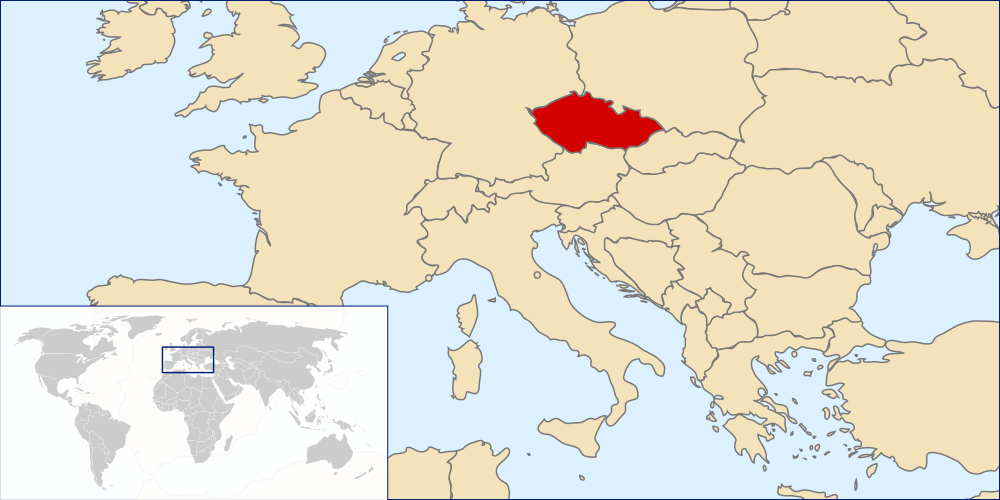
December 2, 2025 Mapclean, A map showing the Czech Republic in Europe.

By Roberto Drilea
April 17, 2026
PRAGUE – After decades of resentment toward Russia following the 1968 invasion and its extended influence over then-Czechoslovakia, the Czech public opinion has appeared to warm up toward the Kremlin in recent years, with statements from high-ranking politicians signaling a shift in attitudes. Recent polls and an international petition to NATO started in the Czech Republic paint a different picture, suggesting distinctly polarized public opinion.
According to a recent poll released by CVVM – the Public Opinion Research Center in the Czech Republic – 50 percent of Czech people believe the relations with Russia have worsened. The growing numbers are in tune with the suspicious views of Russia’s intentions in the area – as reflected by a Median agency poll released last year, according to which 40% of Czechs perceive Russia as a threat to the region. Moreover, a petition to NATO started in the Czech Republic last month has gathered thousands of international supporters calling on heads of state for a reaction to the aggressive policies of Russia.
“Czech public attitudes toward Russia can be seen as strongly polarized, creating two camps, pro-Russian and anti-Russian,“ comments Juraj Smatana, a Czech political activist. He finds that Czechs tend to be more skeptical and criticizing of Russia than Slovakians.
A pro-Russian attitude has been particularly supported by the controversial opinions of president Milos Zeman. In opposition to the country’s official foreign policy, Mr. Zeman has repeatedly criticized the European Union sanctions imposed on Russia.
Pro-Russian sentiments have been expressed by other high-ranked Czech politicians, such as Miroslav Ransdorf, member of the European Parliament, who defended Russia’s annexation of Crimea as strategically necessary for Russia to avoid establishment of NATO bases there.
In addition to his position on the European sanctions on Russia, Milos Zeman has also been under scrutiny for claiming that the Ukraine situation is a civil war rather than an invasion. "If you mean a civil war in Ukraine, it is first of all necessary to call it with its proper name and say honestly that it is really a civil war,“ Zeman told Frekvence 1, a Czech radio station, back in September. He continued, “Naturally, it can develop into a Russian invasion, but in this stage, it is a civil war between two groups of Ukrainian inhabitants."
On the other hand, Czech former Foreign Minister Karel Schwarzenberg, who ran against Zeman but lost presidency, has repeatedly condemned Russia’s actions in Ukraine. In an interview with the Czech Television last year, Schwarzenberg unequivocally declared “Occupation of the territory of a different country is a clear violation of all treaties that should be punished immediately by the strictest measures in order to stop the aggression.“ He is also known for calling for stricter sanctions on Russia.
“After the Russian annexation of the Crimea and the initiation of a hybrid war against Ukraine, the polarization has worsened,“ says Juraj Smatana.
Concerning his stance on the issue, Smatana declares: “Putin's current efforts to redraw the spheres of influence in Europe to the state in which they were in times of the USSR, I consider the most serious foreign policy and security issue that the Czech Republic has."