


The Week of February 22nd, 2016
Care
1. Water woes
Water shortage in India
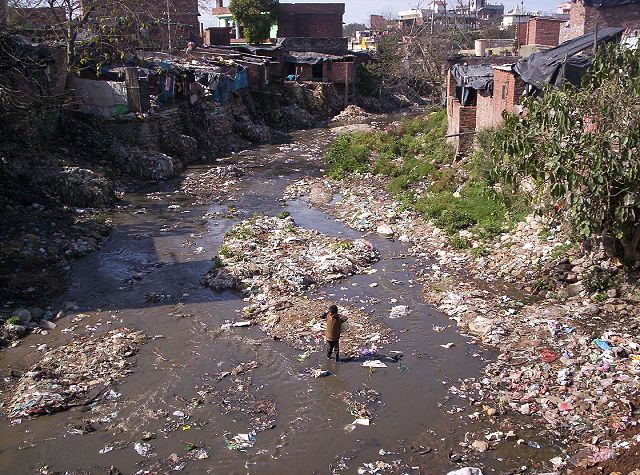
New Delhi, capital of India and one of the world’s most populous cities, faced a severe water shortage crisis earlier this week. Nearly 10 million of the city’s more than 16 million residents were completely without access to running water for up to two days. Many citizens resorted to stealing from their neighbor’s water tanks, as many stores ran out of bottled water and the lines for the government’s portable water tankers grew interminable.
The problem began when angry members of the Jat caste in the neighboring province of Haryana seized and sabotaged the Munak canal, which supplies up to 60% of New Delhi’s water. The Jat community, historically a wealthy landowning caste, has been agitating for recognition as a so-called “Other Backward Caste,” which would guarantee the group government jobs via the Indian government’s affirmative action protocol. While the national legislature agreed to this reclassification in March 2014, the Supreme Court overturned the decision in 2015. The Jat community, which constitutes 27% of votes in the province of Haryana, has been protesting since the decision. The most recent clash with the government resulted in 12 dead. The conflict has been waning, however, as the government has begun to accept the Jats’ demands.
While water service has been returned to pre-crisis levels, many underlying issues with Delhi’s water system have been brought to light. Even in the best of times, 70% of Delhi’s residents can consistently rely on running water for only three hours each day. The bureaucracy tasked with maintaining the city’s water supply only receives enough revenue to cover 60% of its budget, and the consequences are clear. The pipes that carry the water into houses are leaky and falling apart. The water is typically unclean and most people who can afford it tend to prefer bottled water. The city’s leadership clearly has much to do to prevent a similar crisis in the future and supply its citizens with the amenities they should reasonably expect from their government.
2. Battle over Brexit
Britain and the EU
Only days after Prime Minister David Cameron finished renegotiating Britain’s membership in the European Union, several high-ranking members of the Conservative Party have called for Brexit, an exit by Britain from the EU, claiming that Mr. Cameron failed to achieve any meaningful compromise with the EU. Mr. Cameron approached Brussels with a plan to curb welfare benefits for migrants in the UK and was able to reach agreement on some of his points. This, however, was not enough to convince political heavyweights such as Boris Johnson, the mayor of London, and Michael Gove, the current justice secretary.
With members of his own party throwing their support behind anti-EU organizations such as Vote Leave, Mr. Cameron will have to rally together what is left of the pro-EU flank and make a compelling case for staying in the Union. The UK is slated to have a referendum on EU membership on June 23rd. Although polls predict that the British people will vote to stay in the EU, the referendum is expected to be close.
Cameron claims that membership in the EU is needed to maintain Britain’s standing in the world, promote economic growth, and keep Europe safe. British businesses in particular have been vocal in their support of the European Union. Opponents of the EU argue that the organization is fundamentally undemocratic, undermines self-governance, and puts British workers at a disadvantage. The referendum has made for strange political bedfellows, as 38% of Labour Party voters also support a Brexit. Deep divisions in both of Britain’s main political parties make Britain’s future in the EU uncertain to say the least.
3. Trump trumps Ted
Republican nomination contests
The past week brought significant victories to Republican front-runner Donald Trump in the South Carolina and Nevada contests that now threaten to settle the Republican race. Mr. Trump won South Carolina by 10 points, a state that has successfully predicted every Republican nominee since 1980 except for Mitt Romney in 2012 (Newt Gingrich won that year). Jeb Bush dedicated enormous resources to South Carolina, spending more than the other candidates combined and resorting to campaigning with his brother, former president George Bush. After investing so heavily and coming in fourth, the former front-runner finally suspended his campaign. Senator Marco Rubio is most likely to benefit from Mr. Bush’s departure and is trying to coalesce the establishment support around his campaign, as has been his strategy for weeks. However, Mr. Trump’s large victory in a state that was once considered natural ground for Senator Ted Cruz shows his growing strength. In part, his victory can be explained by significant support for his ban on Muslim immigration, as well as support from voters without a college education.
Even more alarming to Mr. Trump’s critics was his 22-point landslide victory in Nevada. Mr. Trump won in almost every demographic: women, men, uneducated voters, college graduates, the Hispanics, the old, and the young. In his victory speech, he spoke frankly about his supporters: “I love the uneducated.” More than other primaries, this massive and shockingly diverse victory has raised fears that Mr. Trump may now be unstoppable, especially because Mr. Rubio was initially expected to win Nevada. Mr. Trump soon received his first two endorsements from sitting Republican congressmen soon after his victory, perhaps as they surrendered to an increasingly inevitable reality.
4. Frustration with free trade
Free trade in Africa
Earlier this week at a conference in the Egyptian resort town of Sharm el-Sheikh, several African leaders called for a united African market. This comes on the heels of last year’s agreement on the Tripartite Free Trade Area (TFTA), which covers 26 African countries and will create the largest free-trade area on the continent, representing 58% of the continent’s GDP. Once the agreement is signed, the 600 million residents of the territory it covers would outnumber those living within NAFTA or the unified European market. The aim of the agreement is to promote development through increased economic integration of Northern, Eastern, and Southern Africa. Currently, Africa is the least economically integrated region in the world, as measured by intra-regional trade flows. Supporters of the agreement hope the deal can help overcome long-standing hurdles to investment in this fast-growing region of the world by linking three of the 17 trade blocs on the continent: the East African community, created in 2000, the Southern African Development Community, signed into agreement in 1980, and an overlapping Common Market for Eastern and Southern Africa that took shape in the 1980s.
Unfortunately, most are pessimistic about the chances of the deal seriously improving economic development in the region. Any long-term solutions will need to address the region’s poor transportation infrastructure; average transportation costs in Africa are twice the world average and are believed to harm trade on the continent even more than tariffs and other barriers. Moreover, African firms selling goods on the continent still face an average protection rate of 8.7%, compared with 2.5% overseas. Nearly all African countries are part of more than one trade agreement; the overlaps can lead to more harm than good. The TFTA is meant to iron out these differences, but details remain to be decided.
5. Rape and the recording industry
Kesha’s sexual assault case
As diversity and racial equality issues continue to plague the movie industry, a new legal case has brought issues of sexism and sexual assault in the music industry to the fore. The case involves American pop singer Kesha, who sued to be released from a recording contract with her producer, Lukasz Gottwald (who is also known by his stage name, Dr. Luke). Among other allegations, the singer claims that Mr. Gottwald raped her, and has sought legal protection from a contract that requires her to continue making music with the producer. Kesha first filed suit against Mr. Gottwald in October 2014. In the allegations, she accused him of raping her after forcing her to take gamma-hydroxybutyrate, known colloquially as the date rape drug. In addition to sexual abuse, Kesha claims that Mr. Gottwald coerced her to drop out of high school and sign exploitative, one-sided contracts that deny her meaningful profit or artistic freedom. Mr. Gottwald denied all these allegations and filed a defamation countersuit.
The case resurfaced recently when the New York Supreme Court denied Kesha a preliminary injunction against Mr. Gottwald that would allow her to create and release music independent of him. Justice Shirley Kornreich said that the existing contract between Kesha and Mr. Gottwald did not stipulate that he had to be Kesha’s producer and that she was free to work with another producer in the company. However, Kesha’s lawyers argued that since he was the president of the company, he could still intervene in any of her affairs if he so wished.
Kesha has received a great deal of support from social media outlets and celebrities. Several singers and actors defended her, while fellow singer Taylor Swift donated $250,000 toward Kesha’s legal fees. But this support does not remove the deeper sexism in the music industry. Some have noted that male singers involved in incidences of sexual assault have remained in the industry’s good graces, while this case has stalled Kesha’s otherwise successful recording career. The case has brought the issue to national attention, but many say that sexual discrimination has long been and continues to be rampant in the industry and nationwide.
Don’t Care
0. Papal-presidential politics
The Pope and the Donald
Pope Francis made a rare political comment last week, suggesting that Republican presidential candidate Donald Trump “is not Christian” because of his plans to build a wall on the Mexican border and to deport illegal immigrants. The pope made his comments during a return flight to Rome following his six-day visit to Mexico, a visit that included a tour of the border with the United States. Mr. Trump initially responded by saying it is “disgraceful” for a religious leader to question a person’s faith, while also pointing out that the Vatican is surrounded by a wall.
With the pope’s comments coming immediately before the South Carolina primary, Mr. Trump used the spat as an opportunity to bolster support among the many evangelical voters in the state. “If and when the Vatican is attacked, the pope would only wish and have prayed that Donald Trump would have been elected president,” Mr. Trump said at a rally. The GOP frontrunner revealed he initially felt the pope’s comments were a disaster, but the spat ultimately seems to have done him little harm, as he went on to win all of South Carolina’s delegates in a dominant victory and continues to enjoy support among religious voters.
Mr. Trump’s comments about the pope came off as somewhat hypocritical when considering that he has questioned the faith of his rivals, including Ted Cruz, on numerous occasions. Nonetheless, he has made great strides in courting the evangelical Christian vote, successfully fighting off his Republican rivals who have tried to argue his religiosity is not sincere. Mr. Trump held a 19% lead over Cruz among South Carolinian evangelicals, a group that makes up two thirds of the primary’s electorate. This result shocked some analysts given Mr. Trump’s comments on the record in the 1990s supporting abortion, his use of profane language during speeches and his incorrect reference to a book in the Bible as “Two Corinthians.” In perhaps the most high profile attack on Mr. Trump’s character yet, his braggadocio once more has proved a potent shield. At this point, the attention that these events place on Mr. Trump inevitably bolsters, rather than damages, his momentum, instead of placing focus on his actual shortcomings.
Liam Conway-Pearson, Avi Dravid, Jose Trejos, David Gernon, Sophie Chen, and Philip Straus contributed