


The Fight for Fifteen
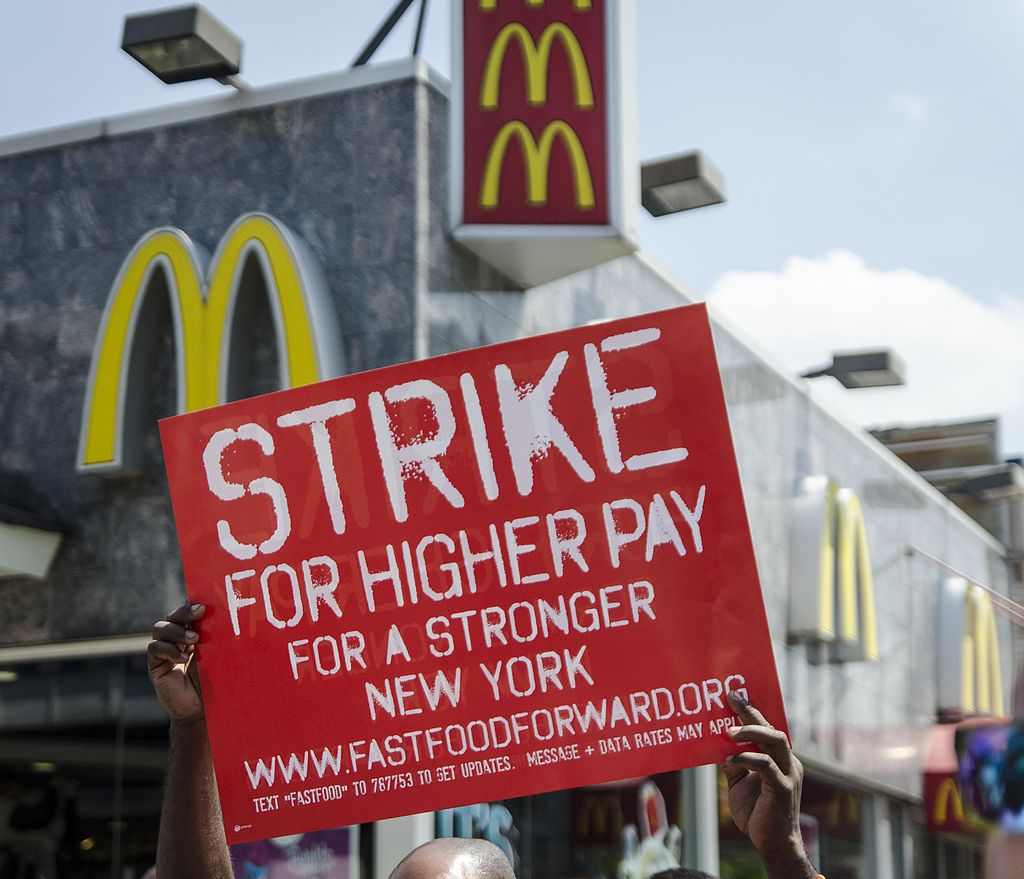
July 29, 2026 Wwiikkeeppeeddiaa, Demonstrations for a higher minimum wage in NYC.

By Wooyoung Lee
May 10, 2026
On Tax Day, protesters on the west and south sides of Chicago walked out on their jobs and marched on fast-food restaurants as part of the Fight for 15 movement. This initiative aims to raise the national minimum wage to $15. The protests were staged at fast food restaurants because of the industry’s association with minimum-wage workers, but the movement has drawn broad support beyond industry workers, from students to adjunct professors unexpectedly living on welfare to recent Chicago mayoral candidate Jesús “Chuy” García. Other prominent supporters of an increase in minimum wage (although not up to $15) include Barack Obama and Chicago Mayor Rahm Emanuel. Last year, the city of Seattle passed a plan that would eventually raise the city’s minimum wage to $15, the highest in the country. Other solutions have included indexing the minimum wage to inflation, a practice adopted by several states, while the United Kingdom annually adjusts its minimum wage on the advice of economists and other technocrats.
The economic effects continue to be disputed. A Congressional Budget Office report acknowledged that raising the minimum wage could bring some workers out of poverty, but warned that a rise in the minimum wage to $9.00 or $10.10 could also result in the loss of jobs, especially for the least-skilled (and thus least-paid), and a rise in consumer prices (to cover the increased cost of labor). The effect on jobs has been disputed by some, and The Economist argues that the US minimum wage is currently so low that raising it would not have a significant adverse effect on jobs. Others claim that a rise in the minimum wage leads to more loyalty and productivity within in the company and greater economic stimulus (as workers have more money to spend).
Political prospects are divided. Among the American populace, there is (and has been) broad support for an increase in minimum wage, and the strong Republican performance in the 2014 elections still saw voters choose minimum wage increases in four Republican states. But while most see minimum wage increase as something worth backing, there exists a partisan divide on how to do so; almost half of Republicans think the government has little or no role to play in this, compared to 90% of Democrats thinking exactly the opposite. Campaigns for minimum wage increases have been most successful in smaller elections featuring more homogenous electorates and ideologically similar candidates (like mayoral elections). On the national stage, there has been little progress for the cause, and the lack thus far of any serious contender for the Democratic nomination means that frontrunner Hillary Clinton is not under pressure to endorse the idea. Whether the Fight for 15’s broad appeal can overcome partisan divides remains to be seen.
Further Reading:
More on adjunct professors here
The story in Seattle
The Congressional Budget Office report
The Economist's Take
Pew Report on Minimum Wage Increases
More on support for the movement
The situation in the four Republican states mentioned
Successes in Smaller elections