


The Week of January 4th, 2016
Care
1. Executive decisions
Executive actions on gun control
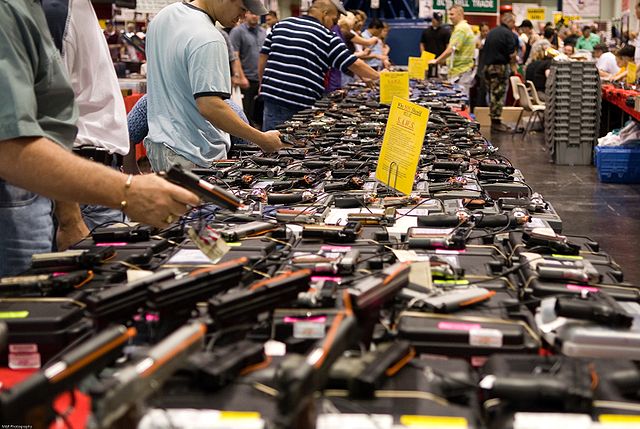
Following decades of debate on the merits of gun control and unabated congressional deadlock on the issue, President Barack Obama announced several executive actions this past Tuesday dealing directly with gun control. The key provisions of these actions include closing the infamous gun show loophole that enabled private gun sellers to peddle their wares without extensive background checks as long as the business is conducted during gun shows. Additionally, increased emphasis is placed on making background checks easier to run, as background checks are now mandated. States must accelerate the process by maintaining lists of residents who should not possess firearms due to mental illness or criminal history. In addition, the Obama administration is seeking congressional support to expand both the FBI background check workforce and initiatives to support mental health. When the president made this announcement, he broke his characteristic stoic composure and delivered an emotional appeal to the American people urging further efforts to mitigate gun violence.
The response to the presidential edicts has been as expected, with support from gun control activists and condemnation from pro-gun groups like the NRA. The latter even neglected to attend a CNN-hosted town hall discussion of the president’s reforms. Speaker of the House Paul Ryan (R-WI) has lambasted the executive actions for allegedly impinging civil liberties, while Republican frontrunner Donald Trump has already made promises to repeal them if his White House bid is successful. On the other side, there is some concern that these actions do not go far enough. The executive actions do nothing to address the permitted magazine size of people’s firearms or the availability of assault rifles like the AR-15 used in the massacre at Sandy Hook in December 2012. Additionally, these are executive actions, not executive orders, and as such not legally binding; rather, they present new guidelines to government agencies like the FBI or the Bureau of Alcohol, Tobacco, Firearms and Explosives. With challenges to the president’s initiatives already mounting, it remains to be seen whether this will stem the tide of mass killings by firearms in the United States.
2. Going uphill
Fed raises interest rates
This December, the Federal Reserve Bank rose interest rates by a quarter of a point. The action ends a seven-year period of rates at nearly zero following the 2008 recession, and was the first hike in 9 years. No members of the Federal Open Market Committee disagreed with the historic move. The Fed’s decision comes amid a precarious outlook on markets both domestically and abroad.
By raising the interest rate and indicating future hikes to come, the Fed has taken strong moves to show its confidence in the United States’ economic recovery. The move will help to secure the Bank’s dual mandate of maintaining “maximum employment” and “stable prices”. While the near zero interest rate of the past 7 years has encouraged economic growth, prolonging the low rate would eventually encourage inflation. Raising the rate shows that the Fed feels that economic activity will remain strong, allowing for them to ensure stable prices by combating inflation. Looking forward, the world’s most stable marketplace will likely remain the United States, amid crisis in Europe, instability in the Middle East, and the slowing growth of the world’s emerging economies.
3. Saying goodbye
Deportation of Central American migrants
With immigration becoming one of the most contentious issues in America and around the world, court-ordered deportations of undocumented immigrants, predominantly Central American, began last weekend. 121 people, a majority of them young mothers and children fleeing vicious gangs, poverty, and corruption, were taken into custody. According to Immigration and Customs Enforcement (ICE) officials, these immigrants had exhausted all legal avenues to remain here and were being sent back as per their final orders of removal. Immigration lawyers challenged that idea and responded that the deportations are rushed and proceeding without proper confirmation that the immigrants had exhausted their due process rights. Josh Earnest, White House press secretary, said, “This is consistent with the kinds of priorities that the president himself has talked about, that our enforcement efforts need to be focused on...individuals who have only recently crossed the border.”
Guatemala, El Salvador, and Honduras, collectively known as the Northern Triangle, all have high murder rates, with El Salvador’s rate the highest in the world. Collectively, these three countries receive around $17 billion annually in remittances, and worry about both the safety of their nationals if they return and the stability of a major part of their GDP. El Salvador’s government provided tips to those in the United States, advising them to not open the door and to request to contact an attorney or the nearest Salvadoran consulate.
Those detained by the ICE are being held in immigrant family detention centers, facilities under much criticism for their prison-like atmosphere and inadequate medical and legal services. Meanwhile, many criticise the Obama administration’s pledge to accept 10,000 Syrian refugees while deporting those fleeing violence much closer to home.
4. Cold comfort
Comfort women agreement
Japan and South Korea have finally reached a deal to settle disputes over the “comfort women” of World War II. During the war, Japan forced women from occupied countries, including Korea, China, and the Philippines, to serve as sex slaves for its soldiers. Although the official line of the Japanese government recognizes responsibility for the actions, Japan’s nationalist right wing – including Shinzo Abe, the prime minister – has suggested that the women were volunteers. Such voices have claimed that the issue is designed to besmirch the glory of Imperial Japan. This is despite widespread international agreement on the nature of Japan’s wartime actions. For Mr. Abe, who has had other issues with World War II history, the agreement is a significant concession and more remorseful than any previous one by Japan.
According to the agreement, Japan will set up an $8.3 million fund to take care of surviving Korean comfort women. In return, South Korea agreed to not bring up the issue again or ask for another apology. The deal may have arisen due to economic concerns; business between the two countries has fallen in recent months. Additionally, the United States has long pushed for closer relations between the two countries to act as a counterweight to China. Previously, Park Geun-hye, the South Korean president, had been pivoting towards China, much to American concern. The agreement may herald greater economic and military cooperation in the future.
While the agreement was met with approval by the international community and many Japanese, it faces fierce backlash in South Korea, where a slight majority of the population and most of the surviving comfort women disapprove of the deal. The biggest criticism is the language of the deal, wherein the Japanese government declines to recognize the trafficking of comfort women as coercion or the fund as legal reparations; instead, it presents the money as a donation. The vast majority of South Koreans believe that the apology was insincere. For Ms. Park, fallout from the agreement would compound a troubled few months for the president.
5. Sticking to their guns
Federal refuge standoff
On Saturday night, a group of armed men “protesting” (in their words) the tyranny of the federal government seized the headquarters of a federal wildlife refuge in Oregon. One of the men, Ammon Bundy, is the son of Cliven Bundy, who gained notoriety in 2014 after an armed standoff with federal agents over grazing rights. Ostensibly, the group is protesting on behalf of an Oregonian father and son, Dwight and Steven Hammond. The Hammonds were ordered by a federal court to serve additional jail time after ruling they had been illegally sentenced originally for setting fire to public land adjacent to their ranch land The father and son have rejected the offer of help from the group, turning themselves in on Monday evening and telling the media that the armed group does not speak for the Hammond family.
However, there is a deeper issue at play, one long simmering in the American West: opposition to federal land use. The American government owns huge swaths of land in the West – over 50% in the 11 westernmost continental states, compared to 4% in the rest of the country. Private ranchers and miners are able to use the land at a 93% discount from the private market but have long claimed the intrusive federal government prevents them from using the land properly, especially as the government gives increasing weight to environmental and other interests. In America, much has been made over what to call these men. Many newspapers refer to the group as a ‘militia.’ Others, rightly, call them terrorists and wonder how the media would react were this armed group Muslim or black. But one hopes for a more peaceful resolution to this conflict than many of the recent ones involving Muslims and black protestors.
Don’t Care
0. Not what it seems
North Korea’s ‘hydrogen bomb’
On Wednesday North Korea claimed to have tested a hydrogen bomb, which would be a first for the reclusive totalitarian state. The US Geological Survey detected a 5.1 magnitude tremor about 30 miles from Kilju County, near one of North Korea’s nuclear sites. The same site was used to test three previous North Korean nuclear weapons, in 2006, 2009, and 2013, and US monitors confirmed that the tremor was not natural.
Hydrogen bombs, or thermonuclear weapons, combine small atoms through fusion to generate massive amounts of energy, hundreds of times more than that generated by standard nuclear weapons, which split larger atoms through fission. Despite North Korea’s claim to have tested a hydrogen bomb, initial data seems to discredit official state announcements. The 5.1 magnitude tremor produced by the test was identical in size to a previous fission bomb test in 2013, and early data suggests a yield of only six kilotons, far short of the 15,000-kiloton yield produced by the United States’ first hydrogen bomb test in 1954.
It is highly unlikely that the North Korea’s successfully tested a hydrogen bomb on Wednesday. Even if Kim Jong-un does possess fusion technology, it is unlikely that it will benefit the regime. This most recent nuclear weapons test has only bolstered the United States’ alliance with South Korea and Japan and has even received condemnation from North Korea’s historic backer, China. Furthermore, North Korea currently lacks the technology to miniaturize nuclear weapons, which would allow them to be placed on missiles capable of reaching the United States. As of now, it is unlikely that a hydrogen bomb test occurred, and that North Korea’s most recent stunt will only put further international pressure on the already isolated state.
Liam Conway-Pearson, Sean Conway, Sabrina Williams, Wooyoung Lee, David Gernon, and Alexi Stocker contributed