


The Week of January 11th, 2016
Care
1. Quicksand
The Chinese economy
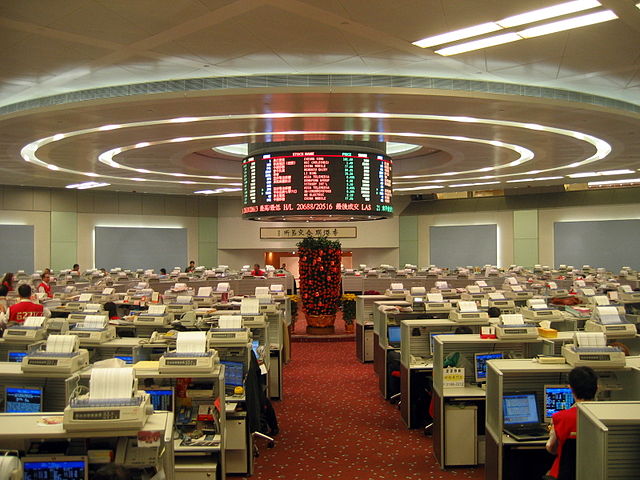
US stocks fell sharply on Wednesday. The Dow was off 365 points, dipping 2.2% at the end of trading. The S&P and Nasdaq fell 2.5% and 3.4%, respectively. All three indices have fallen more than 10% from their 52-week highs, the threshold for what is commonly considered a market correction. The slide was the first major downturn since markets hit turbulence in August. Much of the sell-off was driven by weakened oil prices and fears over the Chinese economy. A beleaguered Chinese market has stymied the country’s demand for commodities and, along with increased production from OPEC, forced a further decline in the price of oil. For the first time since 2003, the price of oil on Tuesday fell below $30 a barrel before settling at $30.48.
Lingering fears about the future of China’s economy have weighed heavily on the markets. China's Shanghai Composite fell more than 10% last week, and the Chinese yuan continues to undergo devaluation. The question remains on how far the Chinese economy will slide before a recovery begins. So far, signs have been bleak. The yuan is off 1.2% since the start of the new year, and may fall as much as by 15% in 2016. Capital continues to flee the country as fearful investors turn elsewhere. The ongoing economic turbulence has also raised questions about how the US will respond, particularly regarding whether the Federal Reserve will continue to raise interest rates, which it did last month for the first time in a decade. The Fed acted on improved data suggesting a strengthened US economy in 2015. However, if China continues its economic decline and drags other world economies with it, the Fed may need to reassess its policies yet again.
2. Let’s Dance
Venezuelan politics
The DJ just turned up the volume in Venezuelan politics all the way up to 11. And last week, both the ruling United Socialist Party of Venezuela, led by Hugo Chávez successor Nicolás Maduro, and the newly-emboldened opposition, responded: let’s dance. In December, the opposition won control of the National Assembly in a landslide with two-thirds supermajority. However, only days before the National Assembly could resume, the Venezuelan Supreme Court ruled last week that four officials could not be sworn in due to an investigation concerning electoral fraud in the state of Amazonas. Three of the four officials belong to the opposition.
The very next day, the opposition’s Henry Ramos Allup, the President of the National Assembly, swore in the three opposition officials, directly contradicting the Supreme Court’s ruling. As a result, the Supreme Court declared the National Assembly void of power until the the three opposition members were removed. As of January 13th, the opposition officials have stepped down from their positions in the National Assembly, breaking the opposition’s two-thirds supermajority, which would have allowed them to make various changes in the Supreme Court as well as in the presidential office.
The Supreme Court’s ruling on the officials comes at a time when Maduro has declared the Venezuelan Central Bank no longer under the control of the National Assembly. This allows it to withhold critical information regarding the country’s inflation rate and to fund Maduro’s budget deficit without the approval of the National Assembly. It appears that elections will be repeated in the state of Amazonas as Maduro and his party continue to hold onto power in Venezuela.
Oil prices
“Formula for success: rise early, work hard, strike oil,” the oilman Jean Paul Getty once said. That prescription has held true thus far for Saudi Aramco, the state-owned oil and gas firm and the world’s largest oil producer and almost certainly the world’s most valuable company. The world may soon find out the exact value of the company, as Muhammad bin Salman, the deputy crown prince, has said in a recent interview the kingdom will make a decision in the “next few months” regarding listing shares of the company. While only 5% or so of the company would be floated in Riyadh at first, it is unclear whether this would benefit the kingdom in the long run. The company is the root of the ruling family’s-- and the kingdom’s-- wealth, influence, and prestige.
Part of the reason may be the kingdom’s need for cash; the falling price of oil is putting many oil-producing countries in a crunch. On Wednesday, a barrel of Brent Crude, a major international benchmark for the price of oil, briefly fell below $30 for the first time in a decade. While Saudi Arabia is quickly burning through its enormous cash reserves, Russia is in much worse shape. Its prime minister warned earlier this week that tumbling oil prices could force his country to revise its 2016 budget. The finance minister said the budget could only be balanced if oil sold at $82 a barrel, which is unlikely given the current climate. The Bank of Russia has responded with high interest rates, currently at 11%. Despite President Vladimir Putin’s projected global image as a strongman, even he cannot single-handedly raise oil prices and if the price stays below $40 for the foreseeable future as current projections estimate, Mr. Putin may be hard-pressed to remain in power for much longer.
4. (Not) Loving the Alien
Tensions over refugees in Europe
Denmark is slated to vote on a controversial law that would force refugees to relinquish valuable items upon entering the country. The program would affect individuals bringing more than a $1,450 personal allowance, and sentimental items will be excluded. Proponents argue that asylum-seekers should pay for the social programs that they receive, just as is required of native citizens. Opponents, however, have compared the proposed seizure of valuables to acts of confiscation in Nazi Germany. The vote is expected to pass easily and with multi-partisan support.
Switzerland has joined Denmark and already begun seizing property from refugees who will have to hand over any assets over a value of 1,000 Swiss francs (about $994.53). Individuals who leave voluntarily within seven months can receive a refund, but those who remain and work in Switzerland will have to give up 10% of their wages for a decade or until they reach payments totaling 15,000 francs.
These measures come amid mounting political tensions over the Syrian refugee crisis. After the November 13 attacks in Paris, many Europeans fear not only the economic impact of the newcomers but also potential other dangers they may bring. More recently, news of sexual assault and theft on New Year’s Eve in Cologne, Germany has also intensified mistrust of immigrants. There, authorities are investigating 670 criminal complaints, with nearly 350 concerning the groping and robbing of hundreds of women by groups of North African men. As more and more refugees seek a path into Europe, tensions are only likely to rise.
US sailors captured and released by Iran
This week, 10 US sailors were apprehended and taken into Iranian custody after making an unintended incursion into Iranian territorial waters in the Persian Gulf. The incident elicited swift condemnation from partisan actors, including presidential candidates Senator Ted Cruz (R-TX) and Donald Trump, who asserted that Iran was holding Americans hostage and demanded their release. Republican critics used the short-lived ‘crisis’ as a platform to criticize the Obama administration’s nuclear deal with Iran. Representative Peter King (R-NY) suggested that the administration postpone part of the deal with Iran. Jeb Bush tweeted, “If our sailors aren’t coming home yet, they need to be now. No more bargaining. Obama’s humiliatingly weak Iran policy is exposed again.”
Some even alluded to the 1979 hostage crisis, when Islamic insurgents seized the US embassy in Tehran for 444 days, and suggested that the United States should prepare for something similar. However, the behavior of the Iranians was in no way reminiscent of 1979: the sailors were released unharmed in a matter of hours. Given the incident’s quick and painless resolution, the GOP’s brazen reaction revealed deep-seated partisan resentment and hostility towards the nuclear deal and Iran itself, despite reassurances from the Pentagon and State Department that the sailors would soon be freed only hours before they were released. Secretary of State John Kerry publicly thanked the Iranian government for treating the US sailors “so well,” and it could be partly attributed to his personal diplomacy with Iranian leaders that the situation was handled with minimal complications.
Don’t Care
0. Life on Mars
Powerball lottery
The biggest Powerball jackpot in history, over $1.5 billion, inspired a lot of articles and discussion in the media about what that amount of money can buy, how one should take the winnings and spend it, and what the chances are of winning. To some journalists’ credit, there have been a few outlets that have stressed the near impossibility of winning the lottery.
The novelty and sheer size of the jackpot excuse some daydreaming, but there have been too many overly optimistic articles and too much public interest in the topic for how unimportant it really is. The odds of winning were estimated at one in 292 million. Only a few people in a nation of more than 300 million will be affected by this story. If public interest were more tied to the actual odds of events happening to people, there would be more articles about how to report a sexual assault, how to treat a gunshot wound, or how to file for a divorce. The exorbitant sum of the Powerball jackpot drives interest regardless of the odds of winning. The lottery is an escapist fantasy; one pays for the opportunity to dream and hope.
While it seems harmless and all in good fun, there are many cases where people become addicted to lottery gambling, or, perhaps more tragically, win big and subsequently lose big. Additionally, these plagues disproportionately affect the poor but are promoted by the government as a means to provide public goods. The much smarter and more responsible thing to do with the money used for tickets is invest it, but that is not as exciting. All in all, while Powerball’s historic jackpot is impressive, it is little more than a diversion from more important issues.
Daniel Ruswick, Alex Velasco, David Gernon, Sean Conway, Leah Downs, and Ryan McGinnis contributed