


Starman in the Sky: David Bowie, 1947-2016
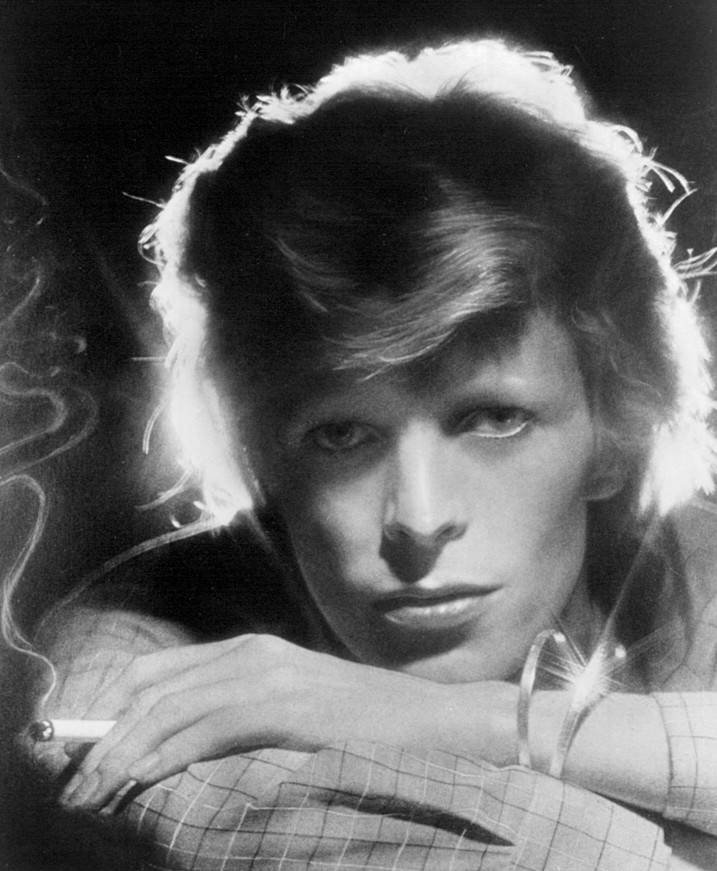
March 31, 1975. Wikimedia Commons. David Bowie in 1975, Young Americans Cover.

Starman in the Sky: David Bowie, 1947-2016
Politics & Policy reflects on the death of a rock icon whose influence on music, culture, and even politics was felt the world over.
The inimitable and enigmatic music legend David Bowie was born David Jones in 1947 in London. Initially, the name change served to differentiate a then-18 year old Bowie from another British rocker, David Jones of the Monkees, but it proved to be a permanent shift for the cultural vanguard. It was the first of many alterations in identity that have come to characterize Bowie’s career, ranging from the flamboyant Ziggy Stardust to the mythical Thin White Duke. Bowie’s first record, an assortment of mainly folk-rock songs, was released in 1967. While the album was not a huge success, his following offering, 1969’s Space Oddity, gave Bowie his first massive hit. From there Bowie would expand into a vast number of different styles. From 1972 to 1973, he took glam rock to its heights with The Rise and Fall of Ziggy Stardust and the Spiders from Mars and Aladdin Sane. He tapped into early musical of influences with the soul-routed Young Americans in 1975. He pushed rock music to new experimental frontiers with Low in 1977, recorded in Berlin with influential producer Brian Eno.
In the 1980s, Bowie continued to cement his place in popular culture, reinventing himself several more times in the process. From his massively successful single with Queen, 1981’s “Under Pressure, to the stadium-filling material on 1983’s Let’s Dance, David Bowie remained a constant innovator in pop music. Throughout the ‘90s and ‘00s, Bowie’s work persistently moved in different directions, with influences as disparate as drum and bass music and metal converging in the albums Earthling (1997) and Reality (2003). After a decade without releasing new material, Bowie put forward The Next Day in 2013, to be followed up by his final album, Blackstar in 2016, which he released as a parting gift just days before his death.
David Bowie’s influence went far beyond the musical world. In fashion, Bowie’s intricate and otherworldly costumes, which changed with his characters, set new fashion trends and inspired designers. His attire frequently broke traditional gender boundaries, mixing and matching elements of men and women’s fashion in with his own unique ideas. Most importantly, Bowie’s gender-bending identities and outfits, his rebellion against traditional gender roles and tropes, inspired generations of young gay, lesbian, transgender, bisexual, and queer youths. For many, Bowie was a hero. His music explored personal and societal changes, encouraging listeners to embrace what was perceived as “strange,” and to resist conformist forces.
Musical, cultural, and even political figures around the world paid tribute to Bowie in the days after his death. Among the many tributes that poured into the Twittersphere came one from a surprising account: that of the German Foreign Office. “Good-bye, David Bowie,” Germany’s foreign affairs bureau tweeted, “You are now among the #Heroes. Thank you for helping to bring down the #wall.” The #wall in question, of course, references the Berlin Wall that divided the German capital for nearly three decades. The #Heroes in question is one of Bowie’s most beloved anthems, the title track from his hit 1977 album, the driving record of the Berlin Trilogy he wrote in and about the city. “Heroes” tells the story of two lovers, one from West Berlin and the other from East, meeting on the wall undercover of night. In 1987, Bowie played the song in a landmark show that came to symbolize a uniting of a literally divided city. The real Berlin Wall formed the show’s backdrop and over the course of the performance, thousands of East Berliners lined the far side of the wall to listen and sing along.
The tweet underscores the important legacy of Bowie’s music in the realm of politics. That the German Foreign Office would credit a British rock star for contributions to Iron Curtain diplomacy is a remarkable testament to Bowie’s work— and to the role that Western culture, particularly rock music which became so beloved behind the Curtain, played in the waning years of the Cold War.
Bowie never broadcast his own political views or leanings over the course of his long career, but his connection to the world of politics has been cemented by the immense influence of his music and the cultural power of his many personae. In the wake of his death, many have pointed to Bowie’s flirting fluidity with gender and sexuality as one of his hallmark legacies. With his ever-changing style, personally, and self-presentation, Bowie broke barriers of identity in a time of rapid social change in issues of gender, sex, and cultural politics. A biographer said of Bowie, that he created a whole “new landscape of possibility in relation to identity” that opened the doors of cultural institutions to new identities and opened the eyes of staid institutions to new ways of being. Particularly in the 1970s, as a backlash to 1960s cultural liberation movements tore through much of the Western world, Bowie remained a chameleonic force for the weird, the strange, the different, and the liberated and openly challenged status quo political and cultural norms.