


The Week of February 1st, 2016

Care
1. Going in circles
Syria peace talks
Peace talks at the United Nations in Geneva concerning the destructive Syrian civil war were postponed after only two days earlier this week. The brief talks accomplished even less than one might expect, with the two sides never even being present simultaneously. Representatives of the rebels steadfastly maintained demands that the government release prisoners and lift several key sieges, while the government refused and countered with insistences for a written agenda from the opposition and a list of those participating. Naturally, both sides responded negatively.
Another complicating factor amidst the chaos is the cooperation of Russia with Bashar al-Assad’s regime. Russian planes have been bombing rebel strongholds, weakening their defenses and assisting the Syrian army in retaking lost ground. This has put the rebels on the defensive and caused negotiators to question what they are accomplishing in Geneva when their compatriots are being pushed back. The United States, as well as France and other Western powers, have denounced the actions of the Russian government, stating that they are prolonging the war at the expense of the Syrian people. At the same time, Russia has accused Turkey of preparing for a military invasion of Syria to oust Assad, supported by the West. Since the other nations of the world cannot agree on how the conflict should be resolved, it’s hardly surprising that the various Syrian parties involved cannot find common ground. The talks are scheduled to reconvene on February 25th.
2. Sharing is caring
US-EU data-sharing agreement
The heads of transnational technology companies breathed a sigh of relief on Tuesday upon hearing the news out of Brussels that the European Union and United States reached an agreement on a new arrangement for transferring data across the Atlantic. The new agreement allows data to be transferred freely, albeit given certain privacy guarantees, including periodical compliance checks from the US Department of Commerce. Previously, tech companies relied on a safe harbor arrangement used by thousands of firms to cheaply and easily transfer personal data to be stored in America. In October, however, the European Court of Justice struck down the provision after a legal challenge initiated by an Austrian law student.
The judgment left tech companies scrambling for alternate means for legally transferring the information. Possible alternatives include renting or building facilities in Europe for suzerainty over the data, a high-cost proposition for many companies. Facebook, Alphabet, and the like would have grumbled before begrudgingly accepting this cost; smaller companies may have been forced to suspend operations in Europe. Even following this agreement, tech companies continue to fidget; they have lost long-term confidence in the transatlantic flow of data, partly because privacy groups are also not happy. Max Schrems, the Austrian law student, believes this new agreement fails to solve the initial problems. Many data protection specialists believe this to be nothing more than a stop-gap, saying it will most likely be challenged almost immediately by civil liberties groups. Mark Zuckerberg may be fidgeting in his chair a few months longer.
3. End in sight
FARC peace deal
On Wednesday, Juan Manuel Santos asked President Barack Obama for assistance in achieving a peace deal between the government of Colombia and the FARC. Colombia’s half-century struggle with guerilla warriors and narco-terrorists has affected 6.7 million people and left at least 220,000 dead. However, hopes are high. The FARC announced a unilateral ceasefire in July 2015, and the Colombian government, as a sign of good will, pardoned and released 30 FARC rebels. Both sides desire peace and have set March 23rd as a deadline to finalize the peace process. Negotiators from both parties will be meeting in Havana, Cuba under UN supervision.
Getting to this point has not been easy. Santos’ visit to Washington marks the 15-year anniversary of the Colombia Plan, a US anti-drug initiative that has given Colombia $10 billion in foreign aid. This money has been used to fight the FARC, a hybrid guerrilla rebellion and cocaine cartel. In order to achieve lasting peace in the region, Colombia needs a new plan that will eliminate cultivation of coca and production of cocaine once and for all. This includes serious land reform, efficient crop substitution, and accessible addiction recovery programs. This is where the government of Colombia needs US assistance, and it seems that President Obama will respond positively to Mr. Santos’s request.
One problem remains. The FARC fears that once peace is declared, their members will become easy targets for the paramilitary groups of Colombia. The FARC has reason to be afraid. In 1985, paramilitary groups killed the leader and and 6,000 members of Patriotic Union, a political party which would have seen the formal entry of the FARC into the Colombian government. Mr. Santos will have to deal with the paramilitary groups if he wishes for the peace process to continue.
4. Last resort
Nigeria requests emergency loans
As oil prices continue to scrape the bottom of the barrel, oil-producing economies around the world are struggling to make up for the dramatic loss in revenue. Falling production and diminishing tax receipts have, in turn, left government finances in developing and emerging countries in tatters. Venezuela, already struggling under sustained political instability, is on the verge of economic crisis. The Russian economy, centered around oil and gas, has followed the Russian ruble into a nosedive. In response to falling prices, Saudi Arabia has desperately increased production and sought to diversify its economy. Oil-rich Iran, meanwhile, could not have chosen a worse time to be reintegrating into the global trading economy after nearly 40 years in the cold.
The latest victim of the price fall is Nigeria, the largest economy in Africa. The Nigerian government made headlines this week when it requested a multi-billion dollar loan from the World Bank and the African Development Bank to shore up its finances. Facing a $15 billion deficit – more than 3% of the Nigerian GDP – the government requested $3.5 billion from the two institutions, based in the United States and the Ivory Coast, respectively.
That the Nigerian government, led by former dictator and current “converted democrat” Muhammadu Buhari, chose to call in the World Bank and the ADB instead of the IMF came as a surprise to many. The International Monetary Fund exists to provide emergency financial assistance of the exact kind Nigeria requested, while the World Bank has a poverty-reduction mission and the ADB a continental economic development one. Why Nigeria chose those institutions over the IMF has to do with the international stigma associated with the Fund and the stringent structural reforms that often come attached with loan assistance. Calling in the IMF, an emergency lender, can be a dangerous signal to global markets and lead international investors to shy away. But if oil prices do not rise in the near term, and Nigeria cannot manage to diversify its economy in the interim, Buhari’s government may have no choice but to call in the Fund.
5. Getting started
Iowa caucuses
After more than a year’s worth of campaigning, the first votes were cast this Monday in Iowa for the Republican and Democratic 2016 presidential nominations. On the Democratic side, Hillary Clinton beat Bernie Sanders, albeit by a mere 0.2%. Early on, Ms. Clinton had a solid lead, yet as the caucusing drew closer Sanders began to surge, and some polls even predicted a Sanders victory. The final result is being played as a victory by both candidates; Ms. Clinton breathed a “sigh of relief” to avoid a result reminiscent of Barack Obama’s victory in 2008, while Ms. Sander’s insurgent campaign claims such a result shows him catching up to the former secretary of state. Mr. Sanders has been rising in the polls and will likely win New Hampshire but faces a daunting obstacle in the “Clinton Firewall”, her significant lead amongst black voters. Mr. Sanders has gained momentum off of his results in Iowa, including $3 million in new donations, but time will tell whether he can match the appeal of Obama’s secretary of state in more diverse electorates.
The Republican victory went to Senator Ted Cruz, the outsider conservative who appealed to Iowa’s Evangelicals. Donald Trump was expected to win, having trended upwards in recent polling, but Mr. Trump’s decision to skip the final debate and the caucus format requiring committed voters gave an advantage to Mr. Cruz. Mr. Trump’s defeat has been particularly harmful due to his boastful ‘winner’ narrative; his supporters’ reaction will be revealed in coming primaries. Perhaps the most significant result, however, was Marco Rubio’s third place showing, a mere 1% behind Mr. Trump. If Mr. Rubio can use the momentum of his Iowa result to gain ground in New Hampshire and consolidate the establishment vote, he may well become the frontrunner. Perhaps already afraid of losing their support to Mr. Rubio, Jeb Bush and Chris Christie quickly came out with scathing criticisms of the young senator.
Don’t Care
0. Hit and miss
The overrated aspect of the Iowa caucuses
In most American sports, a .500 winning percentage, winning as often as you lost, would ensure you finish around the middle of the pack; in American politics, a track record only slightly better has not kept the state of Iowa from voting first in every presidential election cycle. Iowa, a rural state located in the middle of the country, has held its nomination contest before all other states since 1972. In its second iteration as the nation’s first caucus, the state helped then-little known former Georgia governor Jimmy Carter catapult to the front of the Democratic Party field and eventually secure the nomination. Since then, Iowa’s track record has been mixed: Iowa nominated both Vice President Al Gore and Texas Governor George Bush in 2000 but in the last two Republican caucuses there before Monday night Iowans had nominated former governor Mike Huckabee and former senator Rick Santorum, both of whom failed to secure the nomination and dropped out on Tuesday after struggling for months to gain even a pittance of traction this cycle.
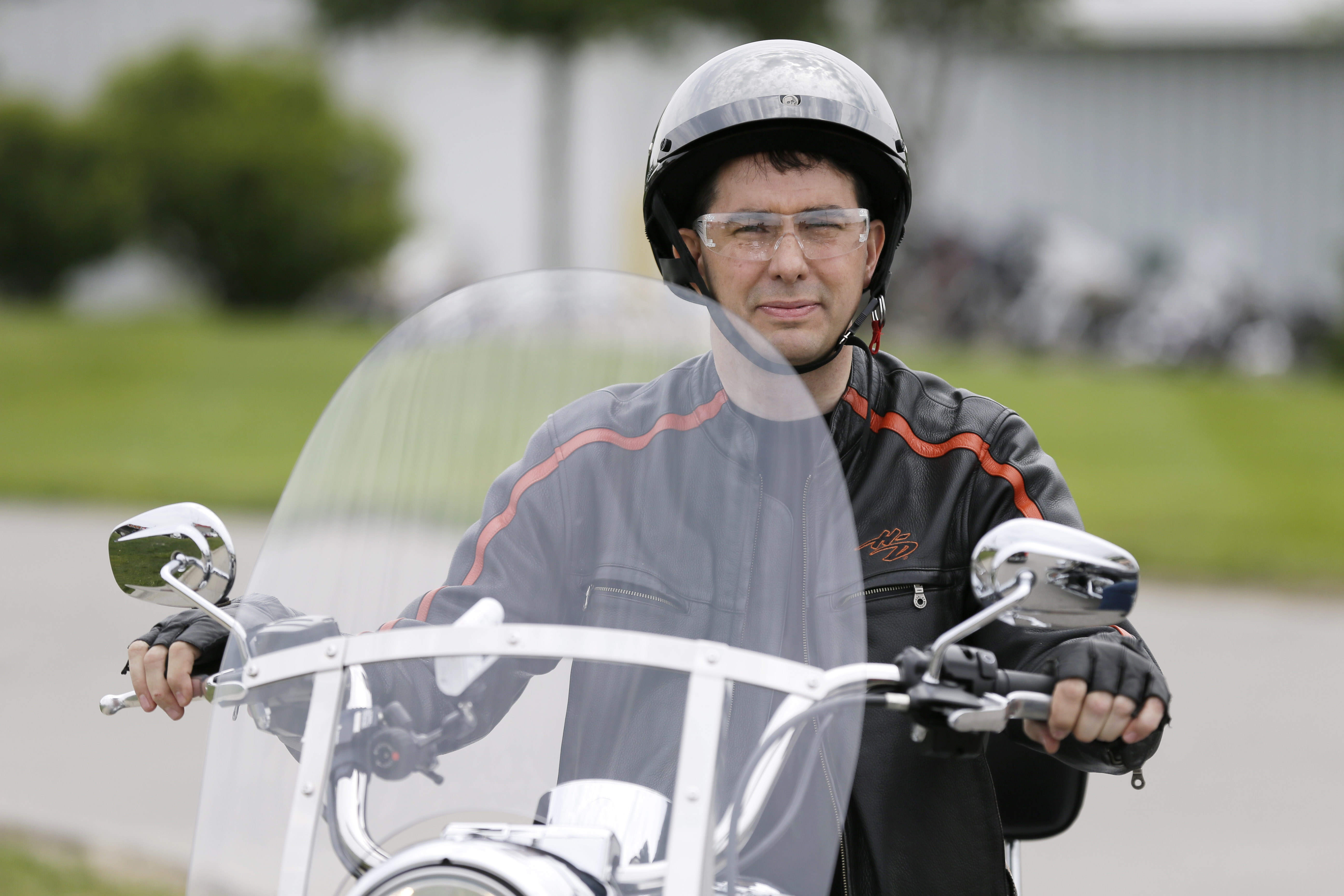
Once in Iowa, butter, like the state, seems to play an outsize role in the activities there: candidates admire butter bovine statues at the State Fair and also have the chance to eat deep-fried butter, on a stick to boot. Few could claim to enjoy seeing Governor Scott Walter giving into his worst instinct as he sat clad in leather and atop a Harley-Davidson in an attempt to win Iowans’ hearts. Even more brazen was businesswoman Carly Fiorina’s tweet in early January, announcing that although she attended Stanford University, she would be cheering for the Iowa Hawkeyes, the state’s flagship university, when the two schools played in the Rose Bowl, an annual college football contest. Connecting with Iowan voters matters less than one might think; the state is home to nine tenths of a percent of America’s population. Turnout is low anyway because of the nature of the caucuses. Its people are overwhelmingly white and Christian. Appealing to Iowans is by no means the same path as appealing to Americans. Perhaps most confoundingly, the difference between finishing first and fourth in Iowa can be as few as 4,000 votes, about the size of a large American high school. Democrats in the state do not even vote via secret ballot, potentially skewing results due to social pressures. Although little is likely to change and the oftentimes absurd events in the state can be of some entertainment value, Iowa, with its small and unrepresentative population, continues to unduly affect the race for the most powerful position in the free world. We should all hope for more calm during the next cycle’s Iowa brouhaha.
Liam Conway-Pearson, David Gernon, Alex Velasco, Will Kirkland, and Jose Trejos contributed