Weekly Focus articles are the centerpiece of our analysis. Focusing on a particular topic in politics or public policy, these articles place issues in a historical context, analyzing effects and consequences through to the present day. These articles feature additional source to allow for greater investigation by interested readers.
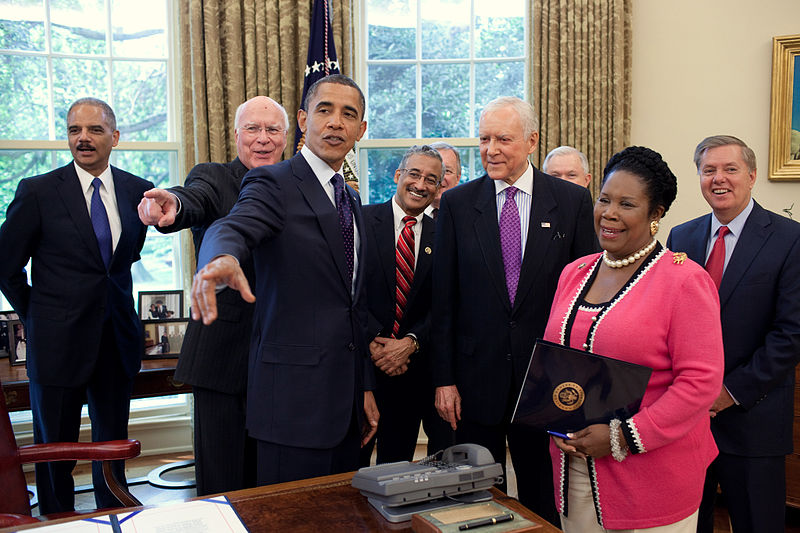
Celebrating the signing of the Fair Sentencing Act. Photo Courtesy of Wikimedia Commons.
May 5, 2026
Since the presidency of Richard Nixon, when the phrase “war on drugs” was popularized, the US has had a strict policy against illicit drugs. Despite the four decades of this harsh policy, however, there has been little to show for it other than various problems it has created. Currently, the US government spends $51 billion a year to keep millions of people in prison, incarcerated for petty nonviolent drug charges. This strict policy has not only been ineffective, it has been costly and unfairly impacted certain segments of US society.
April 28, 2026
The United States is seeing a dramatic rise in the number and strength of loosely-affiliated far-right militia movements. Although many groups have different core values, common causes between groups are white supremacy, gun rights, and the rejection of federal or even state authority.
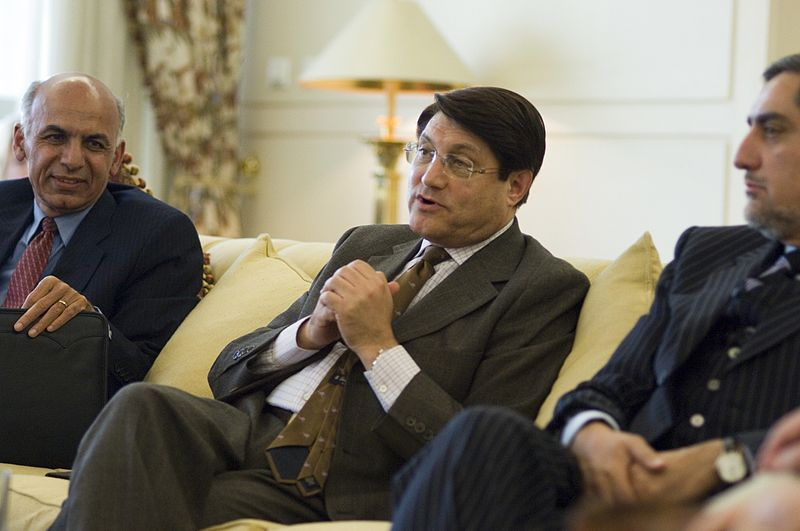
Ashraf Ghani, Anwar ul-Haq Ahadi, and Abdullah Abdullah. Photo Courtesy of Wikimedia Commons.
April 22, 2026
In an official report released this Sunday, April 13th, the Independent Election Commission announced that Abdullah Abdullah and Ashraf Ghani are the two leading candidates of the Afghan elections so far. This early data is derived from about 10 percent of the votes cast in 26 of 34 provinces, with about half a million votes counted. Voter turnout is expected to exceed seven million voters, and the total could end up at 7.5 million. Mr. Abdullah is in the lead with 212,312 votes, or 41.9 percent of the votes counted, followed by Mr. Ghani with 190,561, or 37.6 percent. Vote counting will continue over the next few weeks, and all votes are expected to be counted by April 24. According to the preliminary results based on the early data, a runoff looks increasingly likely to occur. A runoff election would be held by May 28, according to officials.
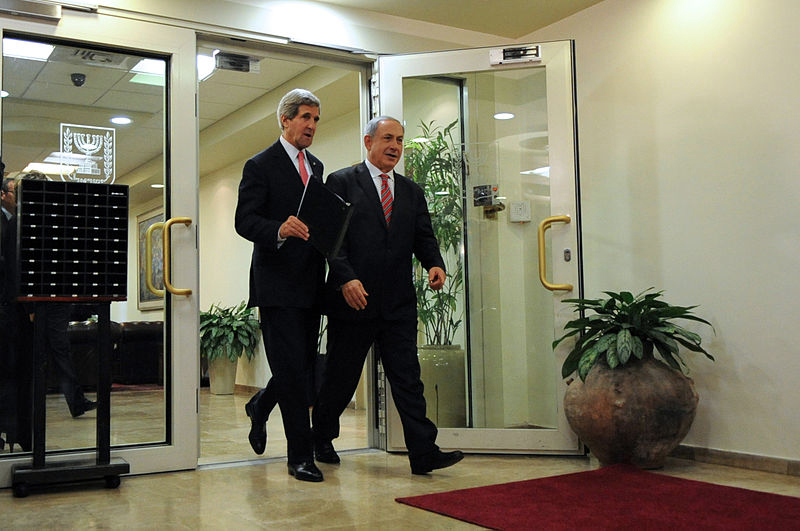
Secretary of State Kerry and Prime Minister Benjamin Netanyahu. Photo Courtesy of Wikimedia Commons
April 18, 2026
Brokering peace in the Israeli-Palestinian conflict has long been a holy grail of US presidential administrations’ foreign policy agendas. Nearly every president and secretary of state since the 1967 Six Day War, which saw the beginning of Israeli occupation of the West Bank and the Gaza Strip, has sought to be the arbiter who brings the two parties to the negotiation table and finds a lasting solution. Riding a wave of international popularity, Barack Obama came into office with such intent, reviving direct negotiations in 2010 between Israel and the Palestinian leadership with his Secretary of State Hillary Clinton taking point. Those first term talks stalled, triggering a three year hiatus in negotiations.
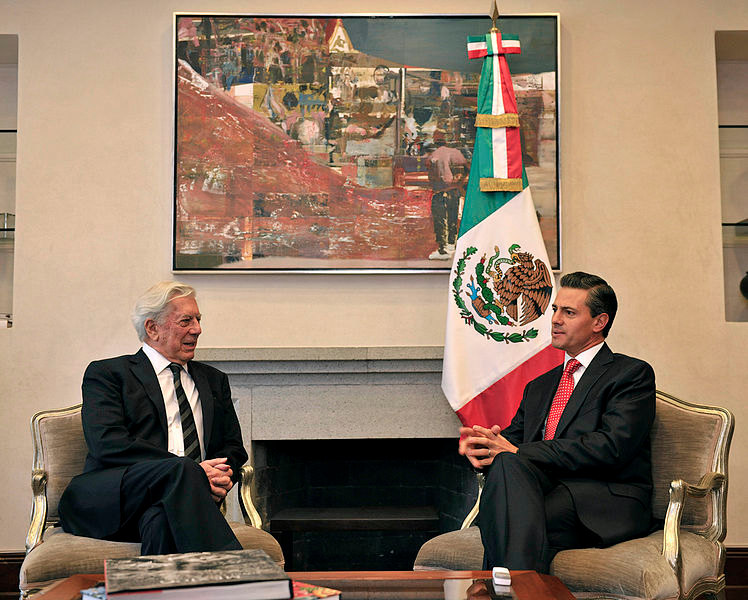
Enrique Peña Nieto. Photo Courtesy of Wikimedia Commons
March 31, 2026
Enrique Peña Nieto was elected president of Mexico for a six year term in the 2012 election. He represents the Institutional Revolutionary Party (PRI), which ruled the country for most of the 20th century with a soft authoritarian model. After the year 2000, the PRI lost the presidency for two consecutive six year terms. This end to its dominance led many to herald new maturity in Mexican democracy; the PRI’s subsequent return to the presidency with Peña Nieto’s 2012 election dismayed some who thought it could abort the country’s newfound political competition. There were some allegations of fraud in the election, but the results were upheld by the Federal Electoral Tribunal. Street protests after the election focused on this alleged fraud and perceived media bias. Peña Nieto was known as the Televisa Candidate for the media’s warm depiction of him during the campaign. Peña Nieto campaigned on raising annual GDP growth to 4% and reducing violence from the drug war. Although he hasn’t accomplished either goal so far, the scale of what he has done has astounded both domestic and international observers.
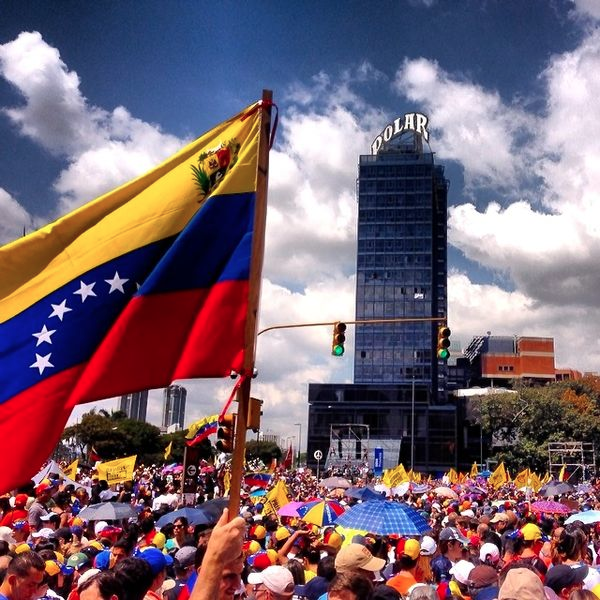
Protesters rally in Caracas. Photo Courtesy of Wikimedia Commons
March 15, 2026
For the better part of 2014, anti-government protests have been raging in Caracas, the capital of Venezuela. These protests reached international attention when three people were killed on February 12. Since then violence on the street has claimed 17 lives and injured hundreds of people. The protests, ostensibly anti-government in nature, were sparked by poor economic growth. Tensions have been brewing since the death of Hugo Chavez one year ago. Elections to replace Chavez, which brought Nicolas Maduro to power were widely viewed as fraudulent. So far, little has been done that has quieted the opposition, spurred on by the rally cries of their leader Leopoldo Lopez who was jailed for inciting violence on February 12th.
March 5, 2026
Fierce new competition to broadband may come from Google Fiber, the ambitious project from the Silicon Valley giant that seeks to revolutionize internet usage once again.
March 2, 2026
This past January a federal appeals court in Washington D.C. found that the Federal Communications Commission (FCC) did not have the legal authority to regulate how broadband providers manage data and information traffic over their networks. Proponents of net neutrality, or, as some phrase it, the Open Internet, saw the decision as a defeat for consumers and the beginning of a dramatic change in how broadband providers are able to charge internet companies or internet users for the use of their networks.
US Supreme Court Justices. Photo Courtesy of WIkimedia Commons.
February 20, 2026
This past week, a federal court judge in Virginia struck down that state’s ban on gay marriage. Earlier this week, a Kentucky federal judge ordered state officials to recognize same-sex marriages performed in other states. Earlier this month, a federal judge in Oklahoma ruled the Sooner State’s same-sex marriage ban unconstitutional, and on December 20, 2013, a federal judge in Utah struck down the staunchly conservative state’s same-sex marriage ban as well. The Supreme Court of the United States has stayed all of the aforesaid rulings against same-sex marriage bans (but not the ruling in Kentucky), while the rulings go on to federal appeals courts.
India’s states by ruling party. Photo courtesy of wikimedia commons.
February 11, 2026
The country of India--the world’s largest democracy--consists of 28 states and seven union territories holding a total population of 1.23 billion people and covering an entire sub-continent. These states are incredibly diverse in nature. For instance, the largest state, Uttar Pradesh, has a population of approximately 200,000,000. The smallest state, Sikkim, has a population of around 600,000. The state of Rajasthan in the northwest of the country covers an area of 342,269 square kilometers while tiny Goa on the southwestern coast has an area of a little over 3,700 square kilometers. As the Indian Parliament debates creating a new state, Telangana, this weekly focus will provide a background on the state system of India and explore how it will affect upcoming elections.


