


US and Russia: A New Trade Policy?
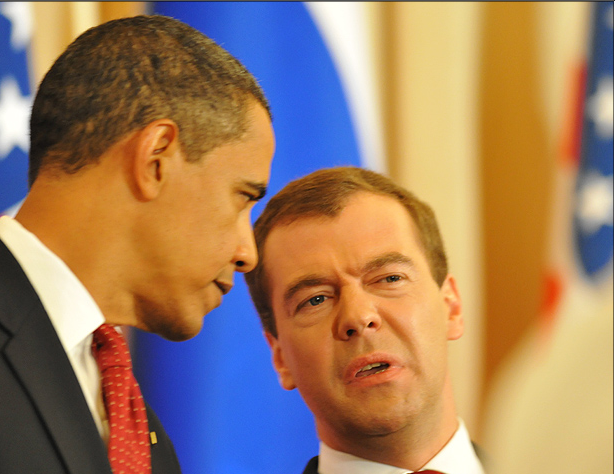
Obama and Medvedev meeting in Moscow. Courtesy of flickr.com/MikaStetsovski
Russian-American relations since the fall of the Soviet Union in 1991 have been anything but consistent. Over those past two decades, leaders in both countries have come and gone, and with them, often their broad diplomatic aims and policy goals. Trade policy between the US and Russia has come to the fore recently as Russia enters the final stages of joining the World Trade Organization. This Weekly Focus investigates the broad trends in Russian-American relations and looks closely at the contentious atmosphere surrounding their bilateral trade policies.
After the fall of the Soviet Union, Boris Yeltsin took the helm in Russia. The relationship between Yeltsin and Bill Clinton began quite cordially, and Yeltsin agreed to America's prescription of economic shock therapy. The US held faith in Yeltsin’s reformist credentials even as he imposed rule by decree. With rising discontent over economic mismanagement, Yeltsin could not play the role of reform-agent any longer and relations deteriorated between Russia and the US.
By 2001, Clinton-Yeltsin had become Bush-Putin. This period was often marked by harsh rhetoric, accompanied by some assertive actions. In the name of protecting Europe, the US installed missiles in ex-Soviet Poland; at the same time, Putin rebuilt Russian espionage in the US. When events did come to a head-- like Russia's invasion of Georgia-- America denounced the Russians but still shied from direct intervention.
With 2009's switch to Obama-Medvedev, another policy shift occurred. Obama was the first to reach out, dismantling his predecessor's missile-shield program. A two-year long "reset" in relations compelled Russia to engage in nuclear disarmament and approve sanctions on Iran. Medvedev built up a reputation of being more cooperative with the US than Putin. Since Medvedev decided not to run after his term, Putin will return to power May 7 after winning a victory in elections that inspired protests throughout Russia. Additionally, Russia has consistently been protective over its sphere of influence, decrying US efforts to intervene. These underlying tensions and lack of consistent policy have set the stage for a showdown over trade policy.
Trade between the United States and Russia has grown dramatically in the last decade, but relations have remained strained. As of 2010, Russia is the source of 1.3% of American imports, up 244% to $26.8 billion a year from 2000 levels. Exports to Russia have seen similar growth, up 343% to $9.3 billion between 2001 and 2010. The majority of US imports from Russia are inorganic chemicals and oil while exports are predominantly aircraft parts and meats. This growing trade relationship isn’t proceeding without conflict. In 2009, a dispute over quality controls caused poultry exports to Russia to drop by 59%. This dispute was seen by some as a response by Russia to their presence on an American “watch-list” of countries with difficulties protecting intellectual property rights.
This quantity of trade, while a major increase over Cold War levels, is still restricted and takes place under the umbrella of a law passed during the Cold War. The Jackson-Vanik Amendment to the 1974 Trade Relations Act prevents the implementation of permanent normal trade relations between the US and any country that denies its citizens freedom of emigration. The law was passed in reaction to Soviet efforts to restrict the movement of its citizens with graduate degrees, many of whom were Jewish. The law provides an escape clause whereby the American President can issue an annual waiver for a country if the law is judged to be counterproductive to its goals or if the country has reformed its policies to be compliant. Provisions of the Jackson-Vanik amendment are currently in place only for Cuba and North Korea. Waivers are normally issued for other states that may be in violation of the amendment.
Controversy erupted when the Obama administration proposed to repeal the law in order to bring the United States into compliance with the World Trade Organization's rules for members. Russia is likely to join the WTO sometime next year after being formally offered membership in December and WTO rules require that all countries grant “immediate and unconditional nondiscriminatory treatment to the goods and services of all other members.” Because the Jackson-Vanik amendment prevents permanent normal trade relations with Russia, the United States must either amend or repeal the law and cannot simply continue to waive Russia. In response to Administration efforts, Senator Ben Cardin (D-MI), introduced the Sergein Magnitsky Rule of Law Accountability Act of 2011. The bill is named after a Russian human rights lawyer who, after publishing information pointing to widespread tax fraud on the part of judicial officials and police, was jailed and tortured for a year until his death in 2009. The bill would place public sanctions and visa bans on all those individuals deemed to have been involved Magnitsky's death. Support has been offered by both Senator Richard Lugar (R-IN) and Senator John Kerry (D-MA) to pair a repeal of the Jackson-Vanik amendment with passage of the Act.
While the Magnitsky Act would not impose trade restrictions like those of Jackson-Vanik, the Obama Administration and State Department have opposed its passage as counterproductive and harmful to Russian-American relations. Russian officials have protested both as indicative of an unwillingness to deal with Russia on equal terms as other nations and American observers have criticized the passage and repeal arrangement as a means to publicize Russia's history of human rights abuses without actual action. Relations between the United States and Russia have undergone a “reset” during the Obama administration. The Magnitsky Act undermines this reset in relations, but does shed light on an important and disturbing trend in Russian law and politics. It is impossible to be definitive about what the future holds, but hardening attitudes towards Russia both in Congress and among the field of Republican presidential candidates, along with the return of Putin to the presidency indicate that relations will likely get worse before they get better.
Further Reading: